PANTUKAN, Davao de Oro (September 18) — Government information officers in Davao de Oro are being reminded that public communication carries a responsibility beyond getting the message out: it must also ensure that no sector is stereotyped, overlooked or excluded.
The reminder came during a training on gender-fair and inclusive communication held Sept. 16 as part of the Davao de Oro League of Information Officers (DDOLIO) Coordination Meeting at Tres Marias Beach Resort here.
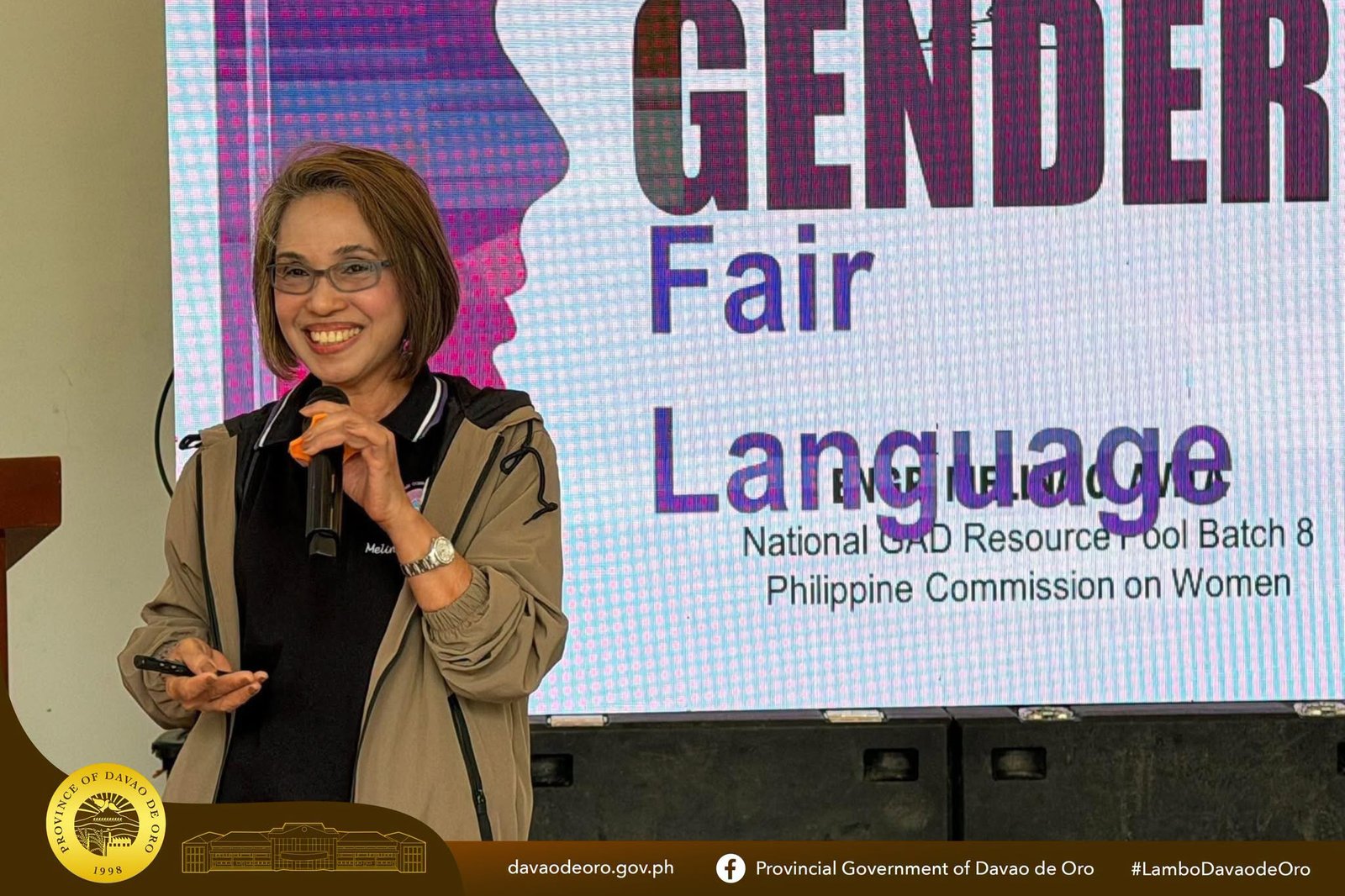
Engr. Melina C. Avila, a member of the Philippine Commission on Women National GAD Resource Pool, led the session, “Gender-Fair Language: Communicating with Inclusion and Sensitivity.”
The training challenged information officers to examine how government messages are written and presented—from press releases and social media posts to public advisories and information, education and communication materials.
The responsibility is particularly important because information officers serve as a bridge between government and the public. The language they use can influence how people understand government programs, who they believe those programs are intended for and whether they feel represented in official messaging.
The session urged communicators to avoid language that reinforces gender stereotypes or creates unnecessary barriers to understanding, while using terms that recognize the diversity of the communities they serve.
For the provincial government, the exercise also places responsibility on communicators to apply what they learn beyond the training room and make inclusive communication part of routine public service.
The Provincial Government of Davao de Oro, led by Gov. Raul G. Mabanglo, supported the activity, while Pantukan Mayor Oliver “Noy” Ceniza welcomed the participants and backed the municipality’s role as host.
The Provincial GAD Center, headed by Kristine Caballero-Rañon, and the province’s Gender and Development Focal Point System also supported the initiative.
The bigger test, however, is in the messages government releases every day: whether public information is clear, fair and representative of the people it is meant to serve.