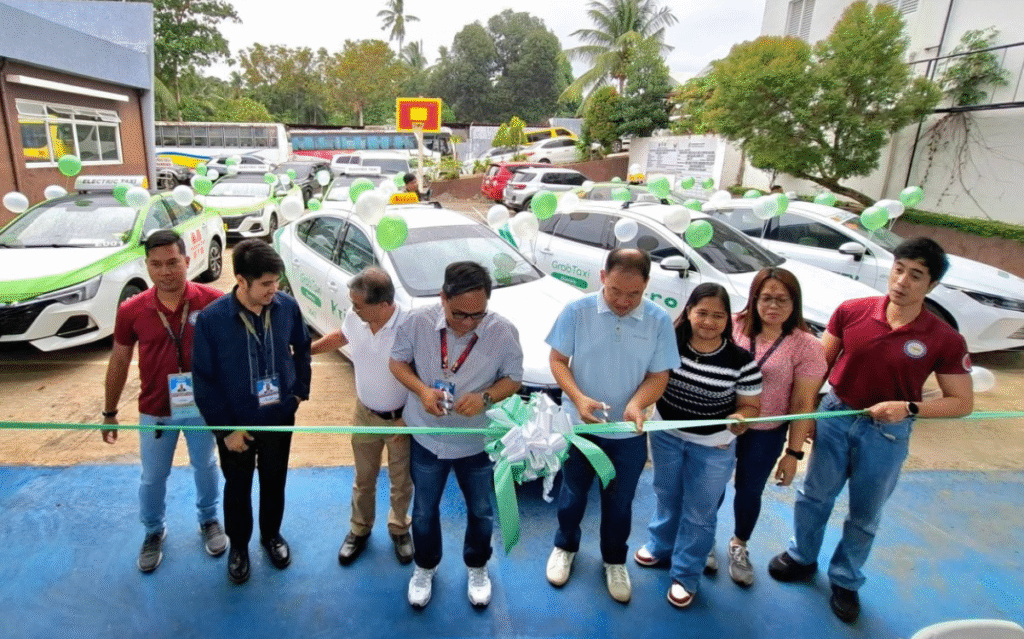
DAVAO CITY (February 23) — The engines are quieter, but the message is loud: Davao’s taxi industry is going electric.
The Regional Taxi Operators Association (RTOA), which represents roughly 70% of taxi operators in the city, has rolled out its first batch of electric taxis — positioning Davao as an early mover in the country’s shift to cleaner urban transport.
“As proud Davaoeños, we take a meaningful step forward — honoring our duty to the public and the future,” said RTOA President Ryan Sia at the launch. “We are modernizing our fleet alongside the government toward a cleaner, safer, and more progressive Davao City.”
The pilot isn’t just for show. Operators will track performance, charging patterns, operating costs, and rider feedback to see whether electric units can outpace traditional fuel-powered cabs in efficiency and savings. The findings could shape how fast — and how far — the city transitions to EVs.
Backing the move is the Land Transportation Franchising and Regulatory Board (LTFRB), which cited the Electric Vehicles Industry Development Act (EVIDA) as a push toward modernization.
“It’s very necessary that we move forward,” said LTFRB XI Regional Director Nonito “Dondon” Llanos III. “We have to transform our taxis into better, comfortable, reliable, environmentally friendly units — for the triple S: satisfaction, security, and success.”
For commuters, that could mean smoother, quieter rides with less exhaust on city roads. For drivers, the big question is whether lower fuel costs can offset charging logistics and upfront investments.
Davao has long marketed itself as environmentally disciplined. Now its largest taxi coalition is testing whether going green can also drive profits — and keep the city ahead of the curve.