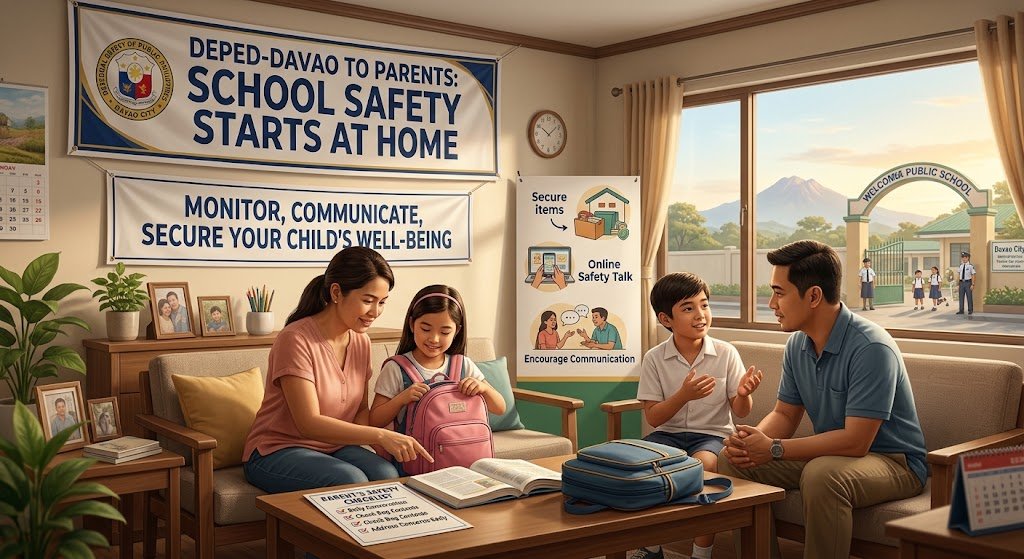
DAVAO CITY(September 14) — When a child faces danger at school, a drill can teach them where to run, where to hide and how to respond. But according to the Department of Education in Davao Region, keeping children safe cannot begin and end inside the school.
DepEd-Davao is revising its active-shooter drills and school security measures, while urging parents to take a more active role in preventing threats to children before they reach the classroom.
DepEd-Davao spokesperson Jenielito Atillo said schools and security forces cannot carry the entire burden of keeping learners safe.
Speaking at the Isyu Karon media forum at The Royal Mandaya Hotel on Sept. 11, Atillo stressed that parents remain a child’s first line of protection.
“Everything emanates from home,” Atillo said.
He warned that when the foundation at home is weak, children can become more vulnerable to harmful influences outside the family.
“If the foundation at home is quite weak, then he will be eaten up by the society,” he said.
For parents, the warning goes beyond monitoring grades or making sure children get to school on time. It means paying attention to changes in a child’s behavior, friendships, online activities and emotional well-being.
Atillo also pointed to technology as a growing source of disruption in children’s lives.
“The attitude of the child is the business of all also, specifically now that we have a lot of disruptions by technology,” he said.
The message comes as schools strengthen preparedness for an active-shooter incident—one of the most serious emergencies a school community could face.
But drills alone cannot address every risk.
Children spend much of their lives outside school, particularly at home and online. Parents therefore have an important role in spotting warning signs, listening to their children and building an environment where young people feel safe enough to report threats, bullying, abuse or disturbing behavior.
For DepEd-Davao, school safety is ultimately a shared responsibility.
Teachers and school administrators have their protocols. Security personnel have their duties. Emergency responders have their roles.
Parents, however, remain closest to the child.
And that means the first safety conversation may need to happen not during a school drill—but at the dinner table, in the living room or during an ordinary conversation between a parent and a child.