DAVAO CITY(July 16) — For thousands of overseas Filipino workers (OFWs) and their families in the Davao Region, government assistance may soon become easier to access as the Department of Migrant Workers (DMW) Region XI strengthens a growing network of agencies and organizations committed to protecting migrant workers beyond their time abroad.
At the center of this effort is the Regional Migration Network (RMN) XI, the country’s first regional migration network, which is evolving into a one-stop collaborative platform where government offices, local governments, civil society groups, schools, the private sector, and faith-based organizations work together to address the many challenges faced by OFWs—from deployment to reintegration.
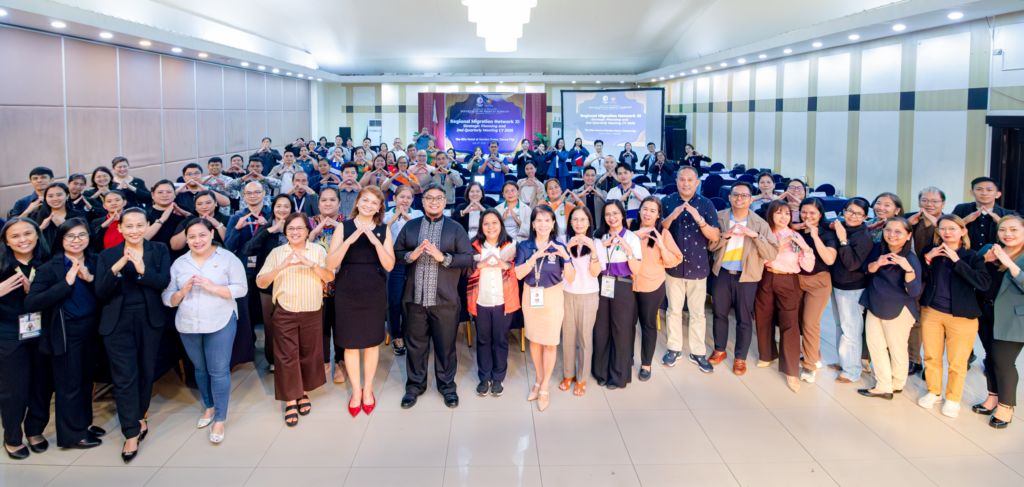
During the RMN XI second-quarter meeting and strategic planning session on July 7, DMW XI Regional Director and RMN XI Chairperson Maria Carolina B. Agdamag said protecting migrant workers requires more than financial assistance.
“We are joining forces. Every member contributes what they can so we can provide the assistance our OFWs need,” Agdamag said.
She stressed that while not every agency can provide direct financial aid, each partner has a vital role in supporting migrant workers through livelihood opportunities, legal services, healthcare, education, psychosocial interventions, skills development, and reintegration assistance.
For many OFWs returning home or families left behind, these services often become critical in rebuilding livelihoods and navigating life after overseas employment.
Agdamag said member agencies have remained actively engaged since the network was established, continuously proposing programs and strategies aimed at improving migration governance and making government interventions more responsive to the realities faced by migrant workers.
“The response from our partner agencies has been very encouraging. They continue to recommend initiatives that will strengthen the network and improve service delivery,” she said.
To sustain the initiative, DMW XI is working to institutionalize the Regional Migration Network by establishing a clearer organizational structure and developing long-term collaborative programs among its members.
“We’re looking forward to putting in place a stronger structure so our direction in delivering services becomes even clearer,” Agdamag added.
The regional director also emphasized that DMW XI continues to implement the migrant protection agenda of President Ferdinand R. Marcos Jr. through the guidance of Migrant Workers Secretary Hans Leo J. Cacdac, with a focus on safeguarding the welfare, rights, and successful reintegration of overseas Filipino workers.
The meeting also marked another milestone for the network as it welcomed new partners from the faith-based sector, broadening community support for migrant workers.
The Roman Catholic Bishop of Tagum, Inc., Jefferyi by LoveYourself, Inc., and the Episcopal Commission for the Pastoral Care of Migrants and Itinerant People–Diocese of Mati City formally joined RMN XI through the signing of a Memorandum of Commitment.
According to Agdamag, expanding the network means government services can reach more communities while strengthening partnerships that respond to the changing needs of OFWs and their families.
“Having a regional network allows us to bring services closer to our stakeholders and clients. It enables us to build stronger partnerships within the region and respond more effectively to the needs of our OFWs,” she said.
As labor migration continues to shape the lives of many Filipino families, DMW XI hopes the strengthened Regional Migration Network will serve as a model for coordinated, community-based support—ensuring that migrant workers are assisted not only while working overseas but also throughout their journey home.