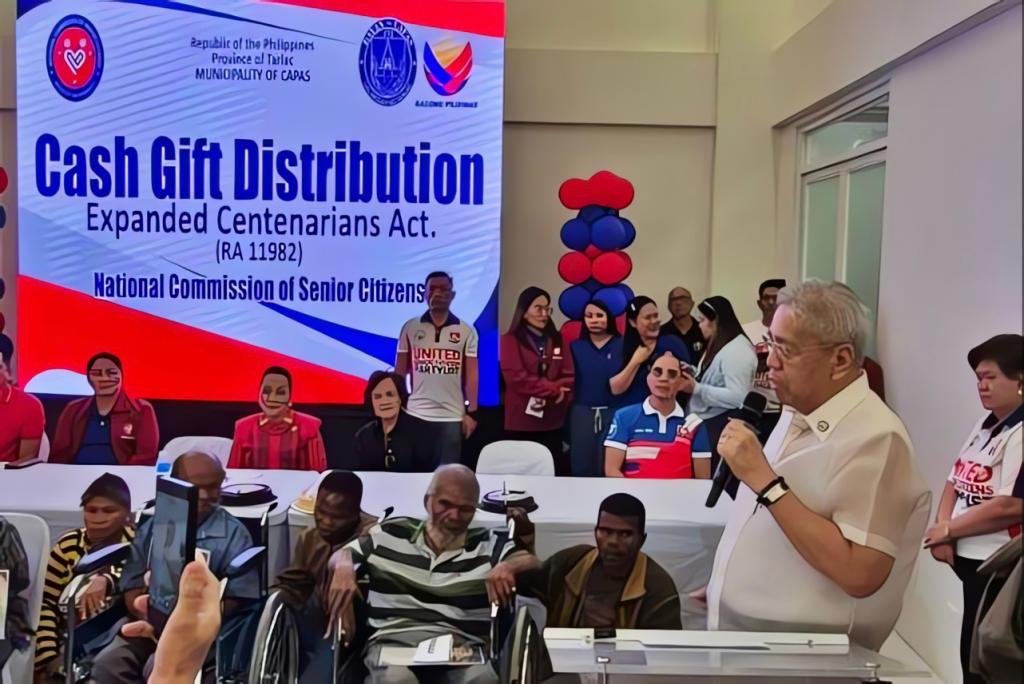
MANILA (February 18) — For many Filipino families, reaching 80, 90, or even 100 years old is more than a birthday — it is a testament to resilience, faith, and a lifetime of contribution. Through Republic Act No. 11982 or the Expanded Centenarians Act, the government has broadened both recognition and financial support for elderly Filipinos.
During a Kapihan sa Ilocos episode of the Philippine Information Agency (PIA) on February 6, National Commission of Senior Citizens (NCSC) Project Development Officer IV Immanuel Quiban outlined the expanded rights and benefits now available to senior citizens, describing the law as a significant reform in elderly welfare policy.
Broader milestone benefits
Previously, only Filipinos who reached 100 years old received a cash incentive from the government. With the enactment of RA 11982, milestone recognition now begins earlier.
Under the law:
- – Seniors turning 80, 85, 90, and 95 years old receive P10,000, claimable within one year of reaching the milestone age.
- – Seniors turning 100 years old receive P100,000, claimable within three years.
“Previously, only those who reached 100 years old received the cash gift incentive or benefit. But with Republic Act No. 11982, it has been expanded to cover milestone ages of 80, 85, 90, and 95,” Quiban said.
For many elderly Filipinos, the cash gift helps defray medical expenses, purchase maintenance medicines, support daily living costs, or contribute to family gatherings celebrating their milestone year.
Inclusive coverage
One of the law’s most notable features is its inclusivity. All Filipino senior citizens — whether residing in the Philippines or abroad — are eligible upon reaching the specified milestone age.
The measure also addresses documentation challenges faced by vulnerable sectors:
- – Indigenous Peoples (IPs) without a Philippine Statistics Authority (PSA)-issued birth certificate may submit an original or certified true copy of alternative documents, subject to validation and endorsement by the NCSC.
- – Muslim seniors outside the Bangsamoro Autonomous Region in Muslim Mindanao (BARMM) may present certification from the National Commission on Muslim Filipinos (NCMF).