TACURONG CITY (May 29) — The Philippine coffee industry is pushing deeper into the global specialty market, with government officials and industry leaders saying Filipino farmers are beginning to command premium prices once reserved for the world’s top coffee-producing countries.
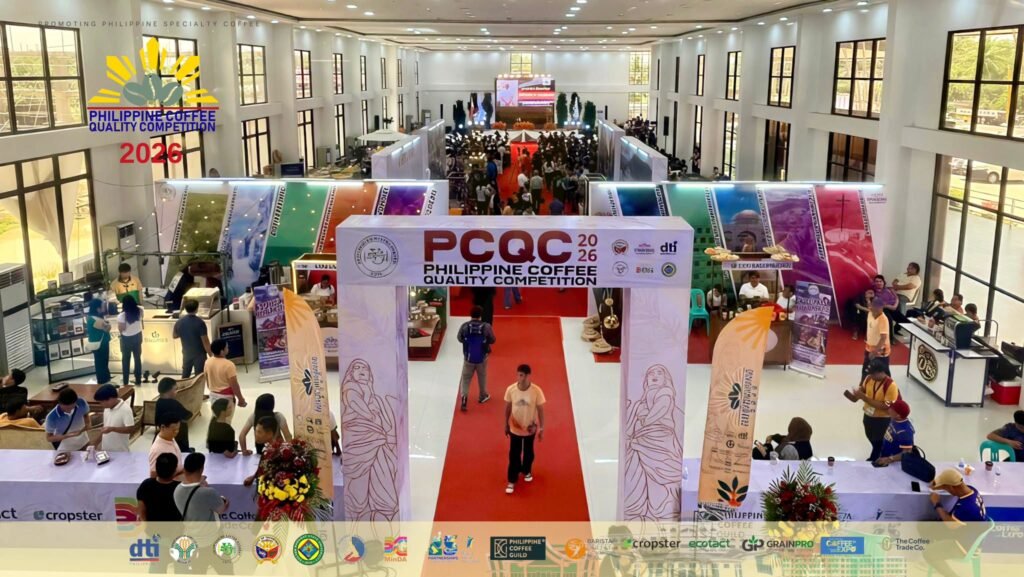
At the center of that push was the Philippine Coffee Quality Competition (PCQC) 2026, where growers, traders, coffee experts, and government agencies gathered to showcase high-grade local coffee and strengthen direct links between farmers and international buyers.
For the Department of Trade and Industry (DTI), the competition is no longer simply about awards — it is increasingly about transforming farming communities through quality-driven production.
Assistant Secretary Grace Baluyan of the DTI Regional Operations Group said the competition gives farmers technical feedback from coffee experts to improve cultivation, processing, and post-harvest practices.
“The recommendations will go back to the farmers. We work with them to improve their game plan, improve their practices, and encourage them to join the competition,” Baluyan said.
Behind the technical mentoring lies the possibility of life-changing income.
Baluyan revealed that during last year’s competition, winning arabica coffee reached bid prices of around P6,000 per kilo, while robusta entries fetched nearly P5,000 per kilo in specialty auctions.
“So kung nagsend-in ka ng 200 kilos sample, that will make you a millionaire,” she said.
The figures reflect the growing appetite among international buyers for traceable, high-quality Philippine coffee — particularly beans produced in Mindanao’s highland farming communities.
“It means that all our farmers have hope for a better life because of the quality they produce,” Baluyan added.
She said global recognition of Philippine coffee proves that Filipino farmers can compete internationally when provided with sufficient government support, training, and market access.
“Our farmers are not just producers. They are craftsmen of quality. They are storytellers of our land,” she said. “Filipino coffee belongs to the world stage.”
DTI Regional Director Flora Politud-Gabunales echoed the message, describing the PCQC as both a quality benchmark and an economic development platform.
“This is more than just a competition,” she said. “This is a platform to recognize excellence, promote quality standards, encourage innovation, and highlight the remarkable potential of our Filipino coffee farmers and producers.”
She added that coffee has evolved into both a livelihood and cultural identity for many Filipinos.
“Coffee is part of our culture, livelihood, and identity as Filipinos. It is becoming a lifestyle,” she said.
The government is also investing heavily in infrastructure aimed at supporting coffee-growing communities.
The Department of Agriculture recently committed P2.5 billion for farm-to-market road projects in Sultan Kudarat, one of Mindanao’s major coffee-producing provinces.
Officials said the road network is expected to improve access to remote farms, reduce transport costs, expand cultivation areas, and help farmers move products faster to processors and buyers.
Reading the message of Sultan Kudarat Governor Datu Pax Ali Mangudadatu, Lutayan Mayor Datu Yassin Mangudadatu emphasized that agricultural development must directly reach rural and upland communities.
“Ang tunay na kaunlaran ay hindi dapat nararamdaman lamang sa mga lungsod,” he said. “Dapat itong makarating sa mga kabundukan, sa mga bukirin at malalayong barangay kung saan tahimik na lumalaban araw-araw ang ating mga magsasaka.”
(True development should not only be felt in cities. It must also reach the mountains, farms, and remote villages where farmers quietly struggle every day.)
Launched in 2016, the Philippine Coffee Quality Competition has become one of the country’s primary gateways connecting Filipino coffee growers to specialty markets at home and abroad.
For many farmers in Mindanao, the competition now represents more than recognition — it represents entry into an industry where quality, identity, and global demand may finally turn small-scale farming into sustainable economic opportunity.