To bring news to the public, journalists in these hostile environments are susceptible to danger due to the nature of attaining information. The coverage is not a walk in the park for risks of being wounded, threatened, harassed, or worst, killed may likely to happen. Gathering information is indeed a challenge and safety must be the priority.Â
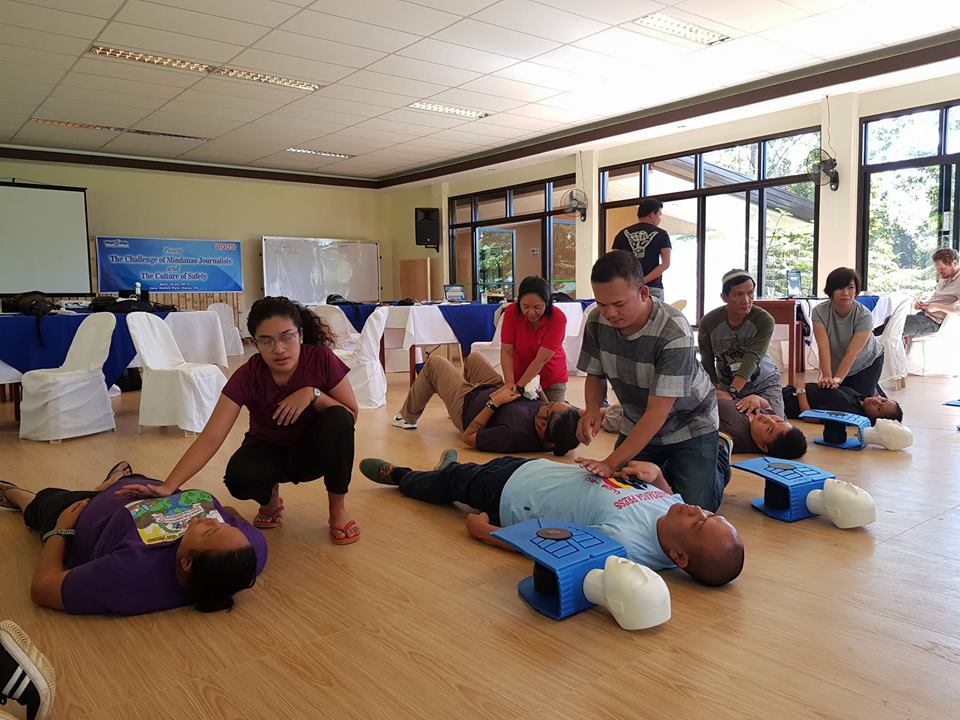
Last April 18 to 22 in Davao City, the World Association of Newspapers and News Publishers-IFRA (WAN-IFRA) and ACOS organized the first safety training for Mindanao journalists, dubbed as “The Challenge of Mindanao Journalists and the Culture of Safety”. The main objective is to equip journalists on how to survive in hostile environments such as natural disasters, war, protests and demonstration. Medical and safety training is vital in the lives of journalists.Â
As a newbie in the media industry, the safety training widened my perceptive on the media situation in Mindanao and potential threats discussed by a veteran journalist, Carol Arguillas and military officer, Major Ezra Balagtey respectively. Aside from the media in Mindanao, Eko Maryadi, the President of Southeast Asian Press Alliance also thoroughly discussed the situation of media in Southeast Asia. All speakers concluded that threats in media are present and inevitable therefore, promoting safety is essential.Â
Moreover, the training comprehensively presented what to expect and do before and during the coverage to avoid a great deal of risks. It offered skillset to ensure safety to all journalists. Indeed the safety training is a head start to journalists. Application of media theories and lessons I learned in the University cannot compare to the reality of media coverage. It is a combination of both fear and excitement.Â
As I embark on this new endeavour, I remembered my professor in journalism class in the University of the Philippines Visayas who profoundly said that there is never a story worth dying for. Thus, the initiative of conducting safety training for journalists is a necessity not just in conflict stricken areas but also to other parts of the country. The Philippines must foster a culture of safety for media practitioners as we can’t afford to lose another one. –Pia Duran/Newsline.Ph