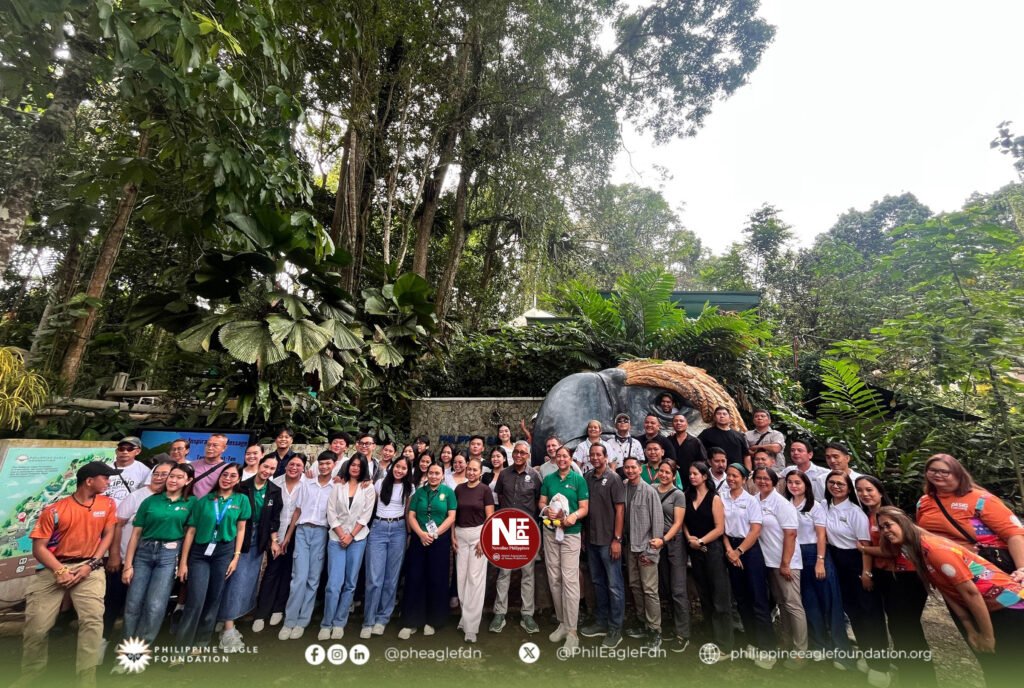
DAVAO CITY(January 20) — Framing wildlife protection as both a people’s cause and an environmental justice issue, the Department of Tourism Region XI (DOT XI) held a refresher training on January 15, 2026 at the Philippine Eagle Center, equipping tour guides and tourism students with deeper, science-based insights into conservation and community stewardship.
The training, led by experts from the Philippine Eagle Foundation (PEF), revisited the Philippine Eagle Center’s history while introducing updates on the eagle’s ecology, genomic research, and long-term conservation programs—knowledge organizers say is essential for frontliners who shape public understanding of environmental issues.
Conservation as a people’s story
Beyond biology, speakers emphasized that protecting the Philippine eagle is inseparable from protecting the forests and communities that share its habitat. As an apex predator and a symbol of Mindanao’s remaining old-growth forests, the eagle reflects the health of ecosystems that Indigenous peoples and upland communities depend on for food, water, and livelihood.
PEF officials said forest rehabilitation efforts and partnerships with local communities are central to ensuring that conservation benefits extend beyond wildlife to people—addressing historical inequalities in access to land, resources, and environmental protection.
Human hands behind survival
During the training, Dominic Tadena, a senior animal keeper at PEF, shared behind-the-scenes work on conservation breeding, including semen cryopreservation, cooperative artificial insemination, and natural pairing. He underscored that each technique represents years of human labor, patience, and ethical responsibility aimed at preventing extinction.
Meanwhile, Jay Are Montecino, PEF’s animal welfare and database officer, discussed biosecurity and animal enrichment practices, stressing strict protocols to protect the eagles from threats such as avian influenza—risks that are increasingly linked to climate change and habitat disruption.
Ecotourism with accountability
DOT XI officials said empowering tour guides with accurate and compassionate narratives helps transform ecotourism into a platform for environmental justice—where visitors are encouraged not only to admire wildlife but also to understand the social costs of deforestation and the shared responsibility to protect natural heritage.
As part of the initiative, PEF and DOT XI also released “Guide to the Philippine Eagle Center: 30 Experiences to Love,” which presents the center as a living classroom and forest sanctuary. The publication invites visitors to see conservation as a shared journey—one that honors science, community resilience, and the dignity of both people and nature.
By centering the human stories behind conservation, organizers hope the training will help tour guides become advocates—connecting visitors to a broader narrative where saving the national bird also means standing up for forests, future generations, and environmental justice in Mindanao.