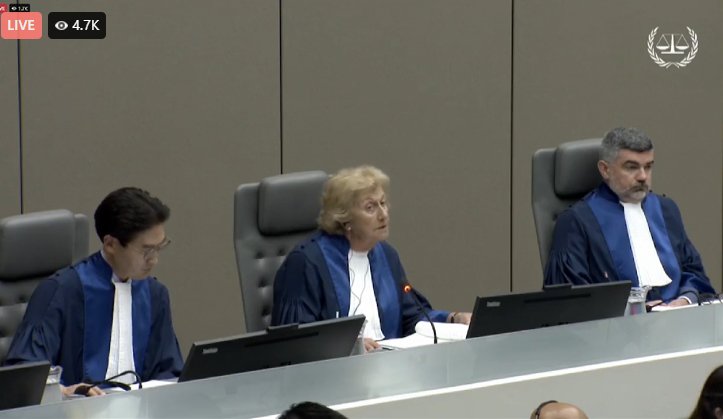
MANILA(May 29) — The International Criminal Court is moving with increasing urgency to lock down the trial of former president Rodrigo Duterte, imposing strict procedural deadlines and tightening control over evidence as judges push one of the tribunal’s most politically charged cases closer to full trial.
The ICC on Wednesday scheduled new status conferences for June 23 and July 14, signaling an accelerated pre-trial phase marked by aggressive case management, mounting disclosure obligations, and growing concern over Duterte’s health.
At the center of the latest proceedings was a clear message from ICC Trial Chamber III: the court intends to keep the case moving — fast.
Presiding Judge Joanna Korner said the chamber is prepared to hold continuous hearings through the Christmas recess if necessary, depending on updated medical assessments that will determine Duterte’s fitness to stand trial.
The remarks underscored the balancing act now confronting the Hague-based tribunal: maintaining procedural momentum while managing the realities of prosecuting an aging former head of state with unresolved medical issues.
Korner made clear that Duterte’s health could directly affect the pace, duration, and structure of hearings, including possible adjustments to courtroom schedules.
At the same time, the chamber moved to impose tighter discipline over what is shaping up to be a sprawling evidentiary battle tied to the Duterte administration’s anti-drug campaign.
Prosecutors were ordered to submit provisional witness and evidence lists by June 29, followed by final trial briefs, witness lists, and complete evidence inventories by Aug. 31.
That same deadline will also apply to any attempts by prosecutors to introduce additional incidents, expert reports, or new evidence — a critical restriction that appears aimed at preventing the case from continuously expanding while trial preparations are already underway.
The court’s concerns became more apparent as judges warned against excessive and repetitive documentary submissions that could overwhelm proceedings.
The prosecution is reportedly reviewing more than 600 documentary items, but judges signaled they expect a significant narrowing of the evidence package before trial begins.
Only evidence deemed directly relevant and probative will be entertained, the chamber warned, signaling stricter scrutiny over documents, videos, and materials connected to alleged drug war killings.
The move reflects growing judicial concern over the sheer scale and complexity of the case — one involving thousands of alleged deaths, competing narratives, and immense political consequences both inside and outside the Philippines.
The defense, meanwhile, has until Oct. 30 to identify the issues it plans to contest during trial, while victims’ legal representatives must submit their own trial briefs by Sept. 28.
Judges also instructed parties to agree on as many uncontested facts as possible in an effort to streamline proceedings and reduce courtroom disputes over basic issues.
The chamber further confirmed it would generally follow the procedural framework used in the Al-Rahman case, although key evidentiary rulings may instead be decided in real time during trial rather than through broad pre-admission procedures.
Even logistical details reflected the court’s awareness of the case’s global visibility.
Judges directed the ICC Registry to ensure interpretation services are ready for opening statements, emphasizing the need for accessibility in a multilingual proceeding expected to draw intense international attention.
The developments mark a significant transition in the Duterte case — from broad investigative preparation toward a more tightly controlled, trial-centered process.
But beneath the procedural scheduling lies a deeper institutional challenge for the ICC itself: how to prosecute a former president accused of crimes against humanity while managing political sensitivities, witness security, enormous evidentiary volumes, and the physical condition of the accused.
For now, the court appears determined to avoid delay.
And with each new deadline imposed, the ICC is steadily transforming the Duterte case from a historic investigation into an approaching courtroom reckoning.