DAVAO CITY (May 18) — The long-awaited international trial over Rodrigo Duterte’s bloody drug war may finally begin in November 2026, as prosecutors at the International Criminal Court push to move one of the most politically explosive cases in Philippine history into full trial.
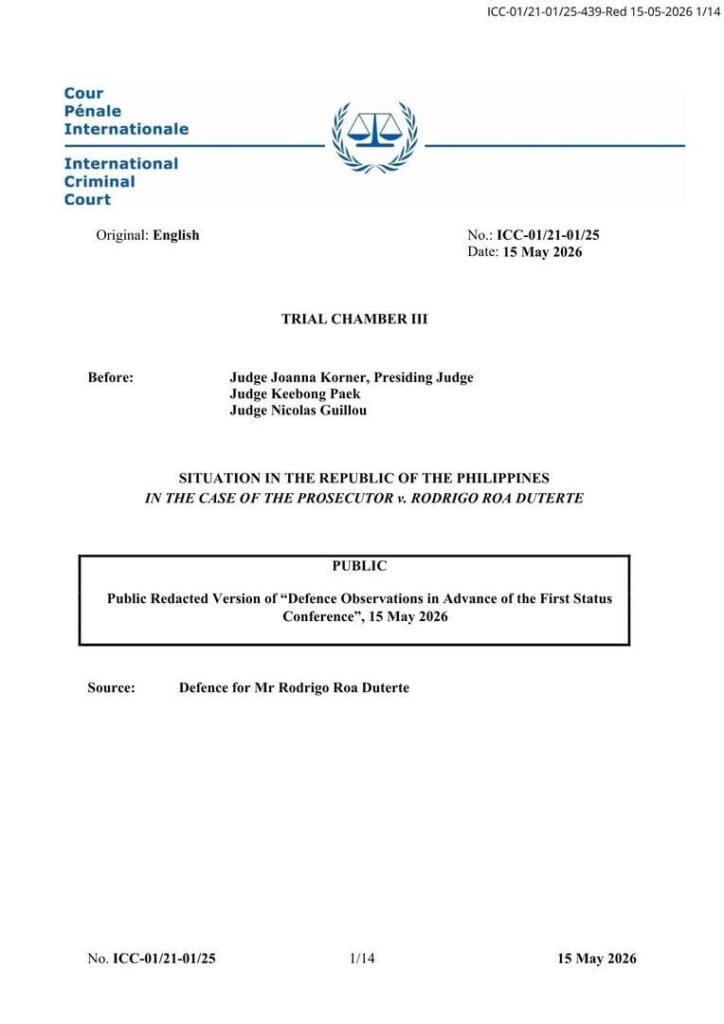
In a May 15 submission, ICC prosecutors proposed opening proceedings on Nov. 30, 2026, saying all pre-trial preparations could be completed by the end of September.
The move signals that the case against Duterte — once dismissed by his allies as politically impossible — is now entering a decisive stage.
But even before trial begins, Duterte’s defense team is already trying to slow the process down.
His newly appointed lead counsel, British lawyer Peter Haynes, argued that no trial date should be finalized until judges again assess Duterte’s health and mental fitness, claiming the former president’s condition continues to deteriorate.
The defense insists that while an earlier medical assessment found Duterte fit to participate in proceedings, his health must be “more fully reviewed” before trial can proceed.
The 81-year-old former president remains detained as he faces three counts of murder and attempted murder as crimes against humanity tied to thousands of killings linked to his anti-drug campaign — first during his time as mayor of Davao City and later as president.
For families of drug war victims, the proposed trial date represents a rare moment of momentum after years of waiting for accountability.
Victims’ lawyers are even pushing for an earlier September 2026 opening, arguing that justice has already been delayed long enough for families who lost relatives in police operations and vigilante-style killings during Duterte’s years in power.
Human rights groups estimate that thousands died in the drug war, many in controversial police operations where suspects were reported to have “fought back.” Critics have long accused authorities of fostering a climate of impunity, allegations Duterte repeatedly denied while openly defending his brutal anti-crime campaign.
The ICC formally confirmed charges against Duterte on April 23 after an independent medical review concluded he was fit to stand trial. The case has since been transferred to Trial Chamber III, bringing the former president a step closer to facing full prosecution before international judges.
The looming trial is expected to reignite fierce political divisions in the Philippines, where Duterte still commands strong support despite international condemnation of the drug war.
For supporters, Duterte remains the leader who imposed order through an uncompromising crackdown on crime. For critics and victims’ families, the ICC proceedings are a historic test of whether powerful leaders can ultimately be held accountable for state violence.