
International Criminal Court prosecutors outline crimes vs Rodrigo Duterte in landmark hearing

Date:

Share post:

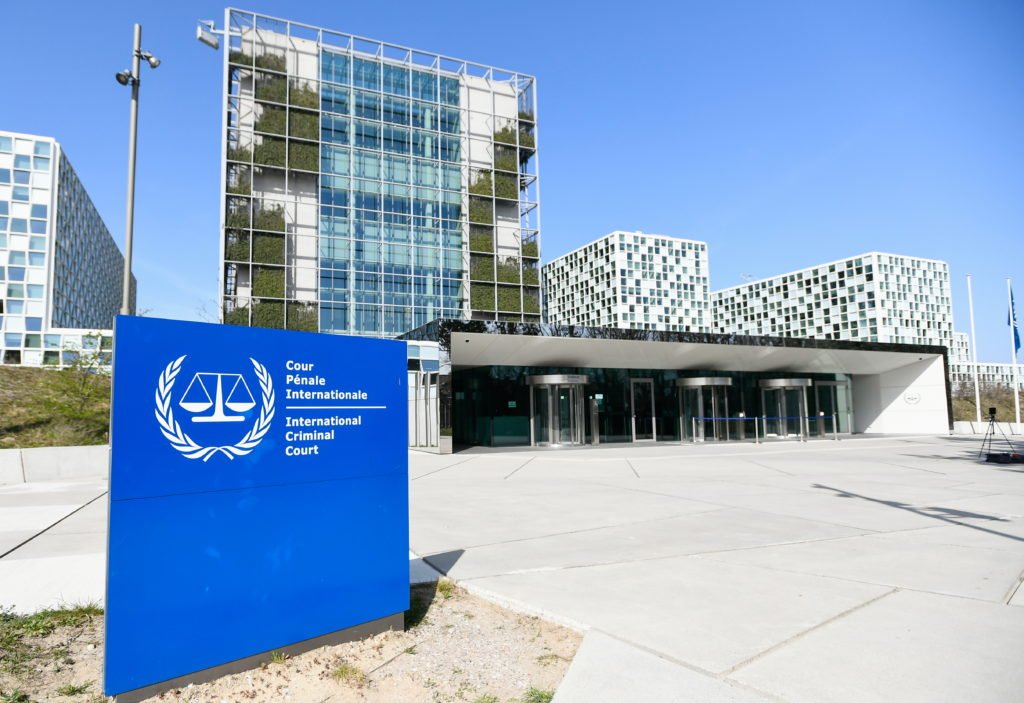
An exterior view of the International Criminal Court in the Hague, Netherlands.

MANILA (February 25)  — Prosecutors at the International Criminal Court (ICC) on Monday laid out their case against former president Rodrigo Duterte, accusing him of orchestrating a widespread and systematic campaign of killings tied to his bloody anti-drug crackdown.

The four-day “confirmation of charges” hearing in The Hague will determine whether there is sufficient evidence to send Duterte to trial for crimes against humanity. Judges are expected to issue a written ruling within 60 days after the hearings conclude.

Duterte, 80, did not attend the opening session after the court granted a defense request to waive his appearance, despite earlier rulings that he was fit to participate.

Prosecution: ‘No one is above the law’

ICC Deputy Prosecutor Mandiaye Niang outlined allegations that Duterte personally designed, promoted and enforced a policy of “neutralizing” suspected criminals through violent means — first as mayor of Davao City and later as president.

“Today marks an important day for international justice, for the people of the Philippines, for the victims, and for this court,” Niang said. “No individual, regardless of office, is above the law.”

The charges cover alleged crimes committed between Nov. 1, 2011 and March 16, 2019, involving 49 incidents that resulted in 78 deaths, including children.

Prosecutors structured the case into three counts:

  • Count One: Murder of 19 victims in or around Davao City between 2013 and 2016, allegedly carried out by members of the so-called Davao Death Squad (DDS) during Duterte’s mayoral term.
  • Count Two: Murder of 14 high-value targets nationwide between July 2016 and July 2017, allegedly executed by state actors under a “National Network” during his presidency.
  • Count Three: Murder and attempted murder of 45 victims — 43 killings and two attempted killings — during barangay drug-clearing operations from July 2016 to September 2018.


The prosecution argues Duterte bears individual criminal responsibility as an indirect co-perpetrator, and alternatively for ordering, inducing, or aiding and abetting the crimes.

Among the allegations: that he established and supervised the DDS and later the national anti-drug campaign known as “Double Barrel,” provided weapons and incentives to perpetrators, publicly named alleged targets, and repeatedly made statements encouraging killings while assuring immunity to law enforcers.

Evidence and scope

Prosecutors cited witness testimonies, official documents, financial records and audiovisual materials to argue that the anti-drug campaign led to thousands of civilian deaths.

Niang said Duterte’s control over operations was demonstrated by instances in which he temporarily halted police activities following public backlash — orders that were allegedly obeyed without exception.

The prosecution also pointed to public speeches in which Duterte appeared to endorse lethal force and mock victims of extrajudicial killings.

Victims’ plea

Human rights lawyer Joel Butuyan, representing 497 victims, called the hearing the victims’ “last boat” for justice, saying domestic accountability mechanisms in the Philippines had effectively collapsed.

He expressed disappointment over Duterte’s absence in court, saying victims had hoped to see him confronted with the charges.

Outside the court, rival groups of demonstrators gathered. Some described the proceedings as a historic step toward accountability, while others denounced the ICC case as an affront to Philippine sovereignty.

Defense: Challenge the evidence

Duterte’s lead counsel, Nicholas Kaufman, said the confirmation stage is a procedural filter where judges assess whether the prosecution has presented sufficient evidence to proceed to trial.

“The defense does not need to prove innocence,” Kaufman said in a statement, emphasizing that their task is to show there are no substantial grounds to believe the alleged crimes were committed.

PNP on alert

PNP chief Gen. Jose Melencio Nartatez Jr. said security measures are in place to ensure peaceful assemblies, with civil disturbance teams and emergency responders on standby.

spot_img

Related articles

Solon pushes suicide prevention, campus mental health safety in Agusan Norte

BUTUAN CITY (February 25)  --- Mental health protection may soon get stronger institutional backing as Dale Corvera filed...

Road collapse in Lake Sebu squeezes livelihoods as trade grinds slow

GENERAL SANTOS CITY (February 25)  — What used to be a busy farm-to-market corridor in upland South Cotabato...

Japan Maritime Self-Defense Force warships return to Davao City, renewing maritime ties

DAVAO CITY (February 25)  — After three years, Japanese warships are back in Davao waters — and their...

Bureau of Fisheries and Aquatic Resources pushes conservation as sardine season reopens in Zamboanga Peninsula

ZAMBOANGA CITY (February 25) – Conservation took center stage as the 15th open fishing season for sardines officially...