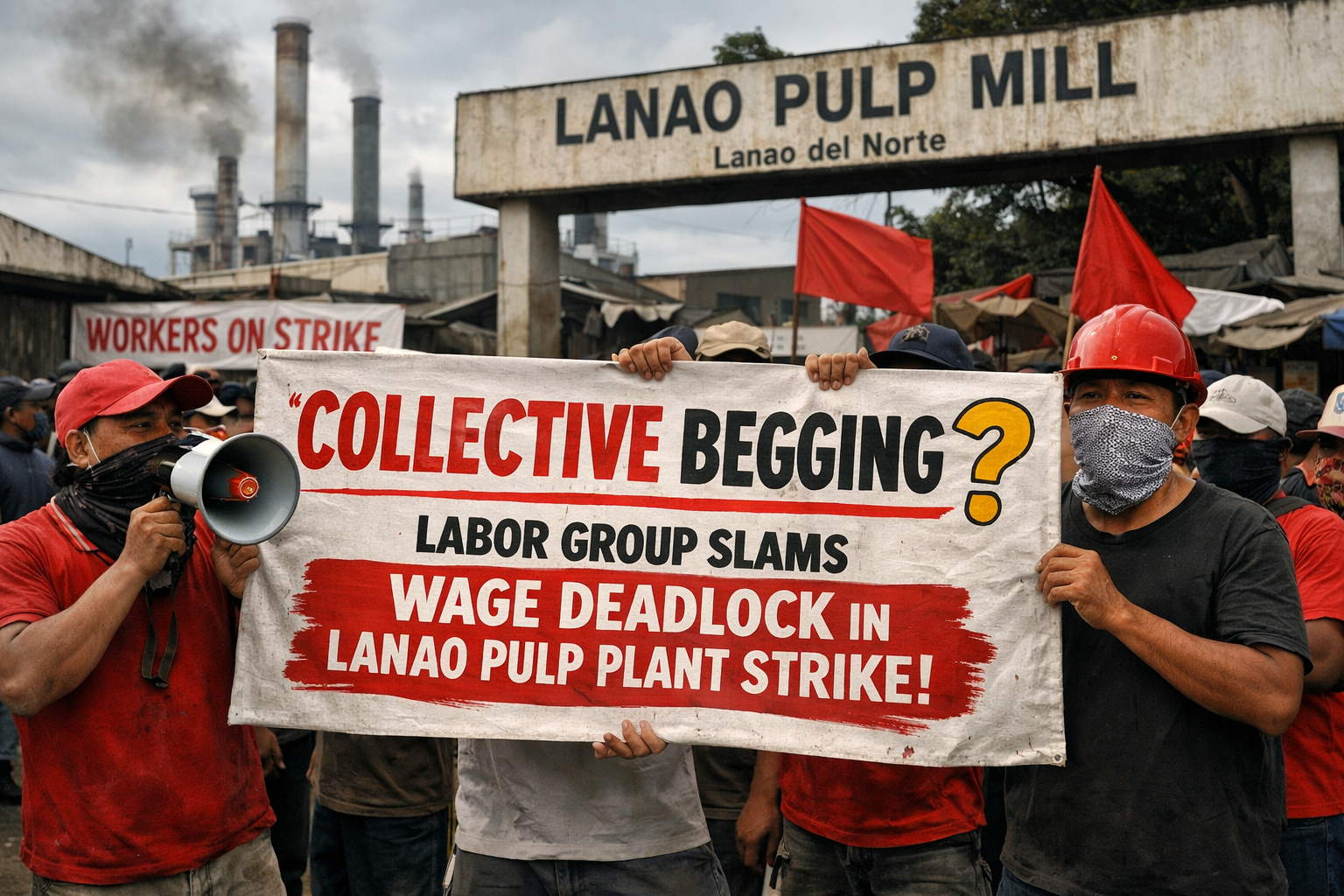
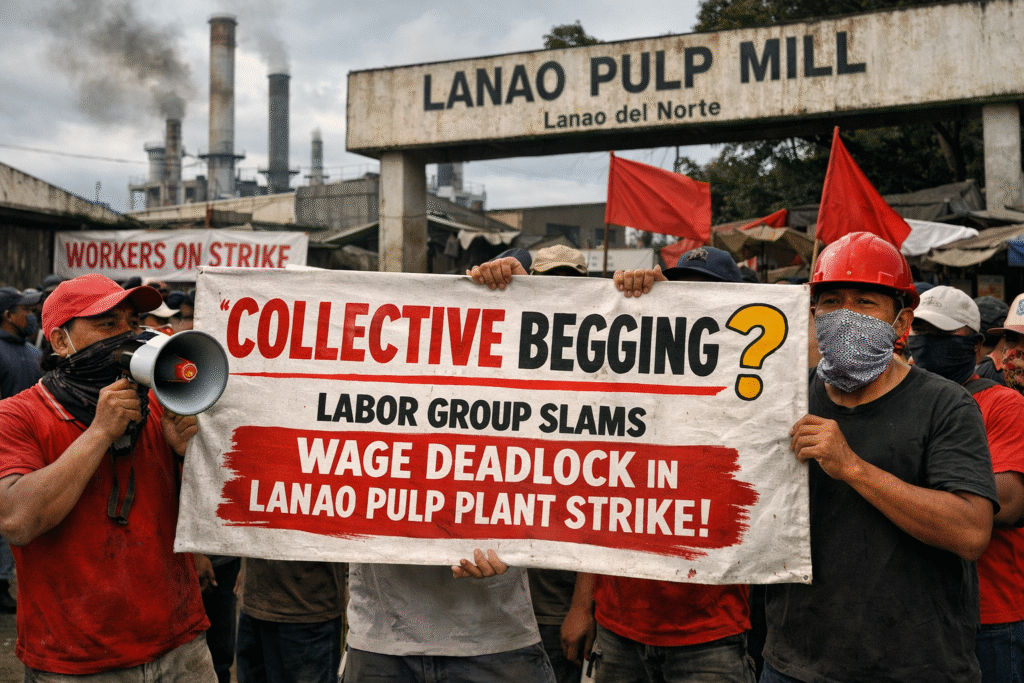
CAGAYAN DE ORO CITY (April 6) — A Holy Week appeal from the Federation of Free Workers has cast a harsh spotlight on a deepening labor dispute in Lanao del Norte, where striking workers accuse management of bad-faith bargaining amid rising living costs.
In a strongly worded statement issued on Good Friday, FFW president Sonny Matula likened the plight of workers at Newtech Pulp Inc. to a modern-day crucifixion — enduring heat, uncertainty, and economic strain on the picket line as negotiations over their collective bargaining agreement (CBA) remain stalled.
“This Holy Week, the workers of Newtech are carrying their own cross,” Matula said, framing the labor struggle as both a moral and economic issue.
At the core of the deadlock is a widening gap between workers’ scaled-down wage demands and what unions describe as a regressive counteroffer from management.
After weeks of strike action that began March 6, both unions — NewTech Pulp Supervisory and Staff Union and NewTech Pulp Workers Union — said they had already lowered their demands in an attempt to reach a compromise.
Supervisory employees reduced their proposed increase to P2,000, while rank-and-file workers brought theirs down to P1,800.
Management, however, offered significantly less: P1,000 for supervisors and P850 for rank-and-file workers — figures even lower, unions noted, than gains secured in the previous CBA cycle.
The company reportedly justified the reduced offer by citing losses tied to the ongoing strike — a move labor leaders criticized as punitive rather than constructive.
“Collective bargaining should mean real bargaining, not collective begging,” Matula said, arguing that the dispute has moved beyond numbers and into questions of intent.
For workers, the issue is not just wage increments but survival. With inflation continuing to erode purchasing power — particularly for food, electricity, water, and fuel — unions say the company’s offer fails to reflect current economic realities.
“The unions moved down in the spirit of compromise, but management moved backward in the spirit of punishment,” Matula added.
The standoff underscores a broader tension playing out across the country: as workers moderate demands in the face of economic pressure, employers are increasingly invoking business losses and instability to justify restraint — leaving negotiations stuck in a cycle of mutual distrust.
Labor advocates warn that prolonged deadlocks like this risk normalizing strikes not as a last resort, but as an inevitable outcome of failed dialogue.
“A strike is never the workers’ first draft,” Matula emphasized. “It is what happens when management keeps rejecting every reasonable revision.”
As of posting, no breakthrough has been reported, and workers remain on the picket line — their Holy Week marked less by rest than by a continuing fight for what they say is a fair share of the value they produce.