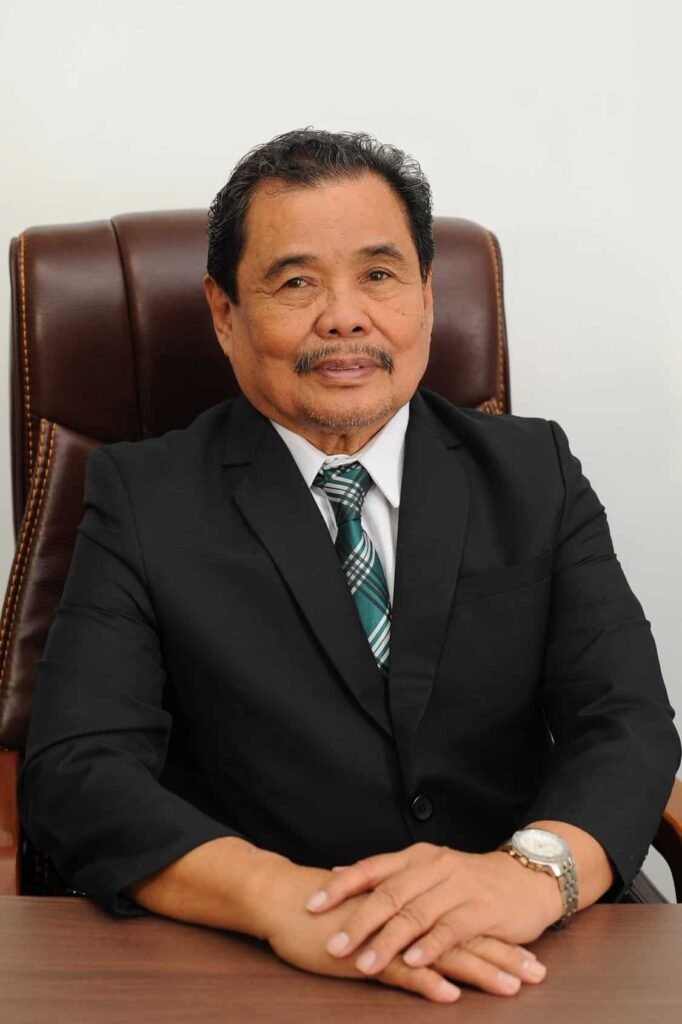
COTABATO CITY (May 21) — A growing political crisis inside the Bangsamoro Autonomous Region in Muslim Mindanao has exposed rare internal tensions within the Moro Islamic Liberation Front after embattled Education Minister Mohagher Iqbal refused to resign over a multibillion-peso audit controversy while signaling he is prepared to be removed from office.
“I respectfully decline to resign at this time,” Iqbal told interim Chief Minister Abdulraof Macacua, who earlier ordered him to step down or be “deemed resigned” following a Commission on Audit report flagging alleged procurement irregularities worth more than P2.2 billion involving the Ministry of Basic, Higher and Technical Education.
Iqbal argued that resigning could be interpreted as an admission of guilt, stressing that the audit findings remain preliminary and are still under review by the Commission on Audit.
Still, he acknowledged Macacua’s authority to remove him.
“Should you determine that the proper course is to exercise your authority to relieve me from office, I will respect that decision,” he said.
But what began as an accountability issue has rapidly evolved into a deeper struggle over authority, loyalty, and political control inside the Bangsamoro transition government months before the region’s first parliamentary elections.
On Monday, more than 20,000 MILF members and supporters staged an emergency rally outside the BARMM compound in Cotabato City, demanding Iqbal’s retention and invoking the movement’s long-standing “brotherhood.”
The public show of force underscored how politically sensitive the issue has become inside the former rebel movement that now leads the Bangsamoro government.
Both Iqbal and Macacua occupy influential positions within the MILF hierarchy. Iqbal serves as the group’s first vice chairman, while Macacua is chief of staff of the Bangsamoro Islamic Armed Forces.
The tension escalated further after MILF chairman Ahod Ebrahim issued a memorandum reminding Macacua that the removal of key MILF officials from the BARMM Cabinet was “not solely yours to make.”
Ebrahim argued that major decisions affecting the Bangsamoro transition should involve consultation with the MILF leadership, particularly when such actions could affect the implementation of the Comprehensive Agreement on the Bangsamoro.
The 2014 peace agreement paved the way for the creation of the Bangsamoro government under the Bangsamoro Organic Law and formally transitioned the MILF from an armed revolutionary movement into a governing political force.
The dispute now threatens to test the very structure of that transition.
Macacua, however, pushed back against suggestions that his authority was limited by internal party considerations.
He maintained that removing Cabinet members remains his prerogative as interim chief minister, regardless of whether formal administrative or criminal charges have been filed.
The chief minister also rejected claims of personal conflict with Iqbal, saying he considered the minister a “brother” both in Islam and in the MILF.
At the same time, Macacua framed his decision as part of a broader commitment to “moral governance” — a reform principle originally championed by Ebrahim during the early years of BARMM governance.
In a social media post written in the Maguindanaon dialect, Macacua said he underwent deep prayer and reflection before deciding to call for Iqbal’s resignation, saying the move was guided by his oath to uphold accountability in government.
He also pointed out that previous MILF officials had been removed from BARMM ministries over administrative lapses during Ebrahim’s own administration, including officials in the health and transportation sectors.
The controversy arrives at a politically delicate moment as the Bangsamoro transition government prepares for the region’s first regular parliamentary elections in September — a vote expected to redefine power arrangements inside the MILF-led administration.
Beyond the fate of Iqbal, the confrontation is increasingly being viewed as a test of whether BARMM’s promise of “moral governance” can survive internal political pressures, factional loyalties, and the realities of power inside the Bangsamoro peace process.