
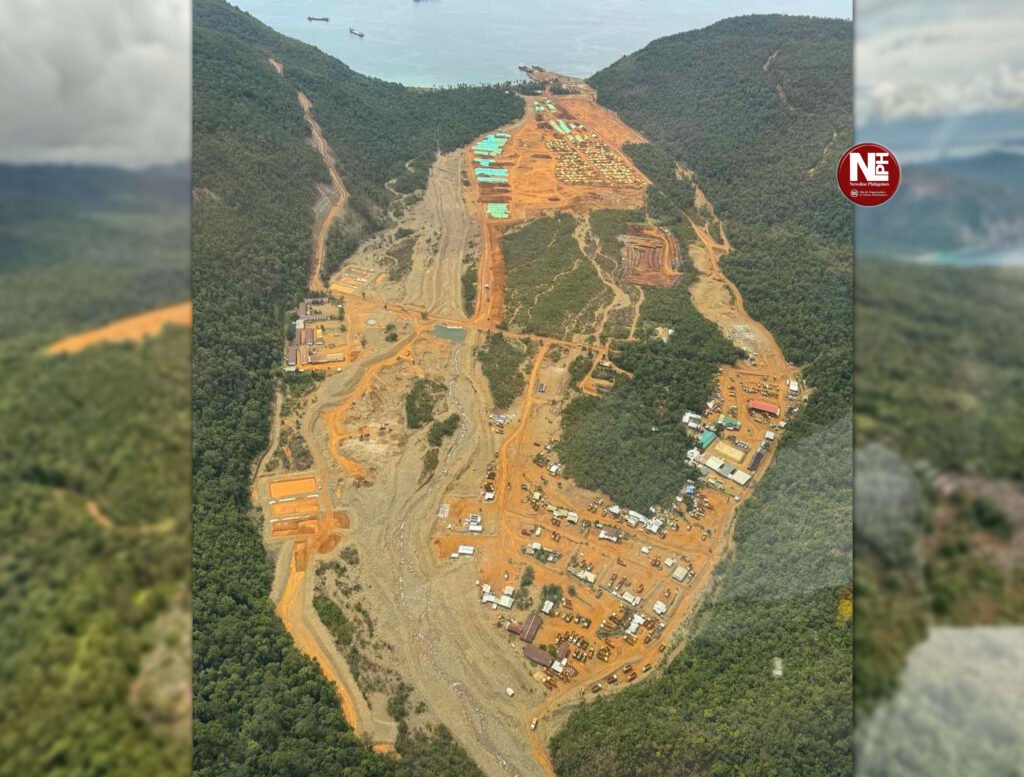
DAVAO CITY (October 7) — Mining activities in Barangay Macambol, Mati City, are facing growing public scrutiny for allegedly threatening over 200 hectares of land and endangering key development and conservation projects in Davao Oriental.
Provincial officials, environmentalists, and residents are voicing concern that the operations could harm the Mount Hamiguitan Range Wildlife Sanctuary, a UNESCO World Heritage Site known for its rare pygmy forests and endemic wildlife, and derail the government’s MACALULA Road Network Loop Project, a vital link connecting remote barangays.
Governor warns: “We cannot compromise Mount Hamiguitan”
During a stakeholders’ dialogue held on October 6 at the Subangan Tourism Complex in Mati City, Governor Nelson Dayanghirang said the province must take a firm stand against activities that risk long-term environmental and developmental damage.
“We cannot compromise the integrity of Mount Hamiguitan and our infrastructure projects for short-term gains,” Dayanghirang said.
He added that the mining site’s proximity to the protected area makes it especially vulnerable to erosion, pollution, and other ecological disruptions.
Road network project at risk
The MACALULA Road Network Loop Project — designed to connect the barangays of Macambol, Cabuaya, Luban, and Lanca — is a flagship development meant to improve accessibility and boost local trade and tourism in eastern Davao Oriental.
But local engineers fear that mining could destabilize the terrain and compromise the road’s safety.
“Once the land is disturbed, slope stability becomes a major issue,” said a provincial engineer. “It will be difficult to maintain the integrity of the road if mining continues near the route.”
Environmentalists raise red flags
Mount Hamiguitan, inscribed as a UNESCO World Heritage Site in 2014, is home to hundreds of species found nowhere else on Earth. Conservation groups warn that continued mining around its buffer zone could have irreversible effects.
“Mount Hamiguitan represents the Philippines’ commitment to global biodiversity conservation,” said environmental scientist Dr. Elena Villanueva. “Any activity that compromises its protection will reflect poorly on our environmental governance.”
Calls for accountability and balance
While mining firms claim to hold valid permits, provincial officials are coordinating with the Department of Environment and Natural Resources (DENR) to review compliance with environmental and land-use laws.
Residents, meanwhile, are divided — some calling for a suspension of operations, others stressing the need for livelihood opportunities.
“We want progress, but not at the cost of our environment,” said Macambol resident Liza Mision. “Once the mountain is damaged, we lose something we can never rebuild.”
Toward sustainable development
Dayanghirang said the provincial government’s position is clear: development must not come at the expense of ecological integrity.
“We can’t build a better future if we destroy what makes Davao Oriental truly special,” he said.
As the review of mining operations continues, Davao Oriental faces a defining test — balancing growth and environmental protection in one of Mindanao’s most ecologically sensitive regions.