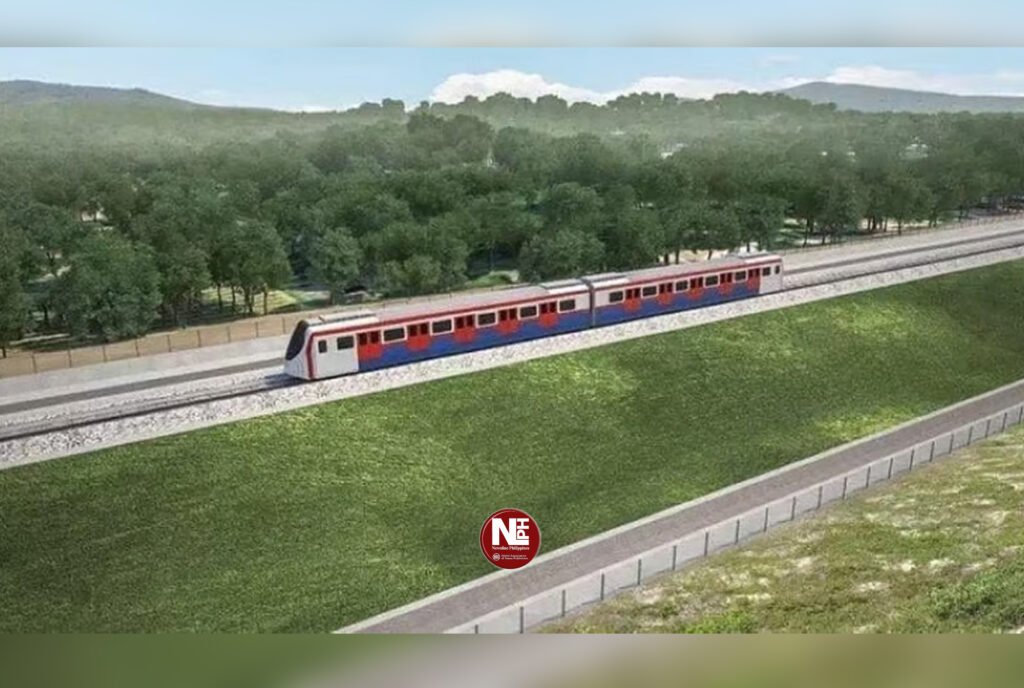
DAVAO CITY(January 21) — After nearly nine decades of false starts, the long-delayed Mindanao Railway is once again moving forward—this time with a major change that officials say could finally turn plans into trains on the ground.
Instead of relying on a single foreign government, the Philippine government has tapped the Asian Development Bank (ADB) to conduct a new feasibility study, a shift that opens the door for any interested country or consortium to build and operate the railway.
For local planners, that distinction matters.
“The advantage of having ADB procure the feasibility study is that it is not hinged on one government like China,” said Priscilla R. Sonido, regional director of the Department of Economy, Planning, and Development–Davao Region (DEPDev-Davao).
She made the remarks during Kapehan sa Dabaw on January 19 at SM City Davao.
Why the study matters
Under previous arrangements, the feasibility study for the Mindanao Railway was conducted by China—meaning only China could implement the project. When the China-backed loan was canceled in 2023, the entire plan stalled and the study was eventually scrapped.
With ADB stepping in, the project now follows a multilateral model, allowing wider competition, potentially better financing terms, and fewer geopolitical constraints.
For many Mindanaoans who have watched the railway proposal rise and fall for decades, the change offers cautious hope.
What happens next?
The new ADB-led feasibility study is expected to begin in 2026, followed by concession and bidding activities from 2026 to 2028. If timelines hold, railway operations could start by 2031.
While the popular Tagum–Davao–Digos corridor is not yet officially listed as part of the first rollout, Sonido said guidance from the DEPDev central office points to ADB financing Phase 1, with consultant procurement expected to begin soon.
Meanwhile, Phase 3—covering Laguindingan, Cagayan de Oro, and Villanueva—is still undergoing review under the Project Development and Monitoring Facility (PDMF) with a French firm.
Quiet progress on the ground
Even as planning continues, the government has been moving ahead with right-of-way acquisition—often one of the biggest obstacles to large infrastructure projects.
In November 2025, the Department of Transportation (DOTr) fast-tracked payments to landowners who accepted offers to sell properties needed for the railway.
As of November 26, authorities had already served 3,291 Notices of Taking, covering 92 percent of affected parcels across Davao City, Panabo, Tagum, Carmen, Santa Cruz, and Digos.
More than 1,100 landowners have already accepted offers, with hundreds signing deeds of sale—an early sign, officials say, of growing local buy-in.
A railway almost 90 years in the making
The idea of a Mindanao Railway dates back to 1936, but it has never materialized despite repeated revival attempts. The current plan, launched in 2018, envisions a 2,278-kilometer rail network linking key cities, ports, and growth areas across the island.
Financing setbacks, political shifts, and logistical challenges have slowed progress—but with ADB now steering the feasibility study, planners say the project has a stronger chance of surviving changes in administrations and international relations.For communities long burdened by high transport costs, traffic congestion, and uneven development, the question now is no longer whether Mindanao needs a railway—but whether this renewed push will finally deliver one.