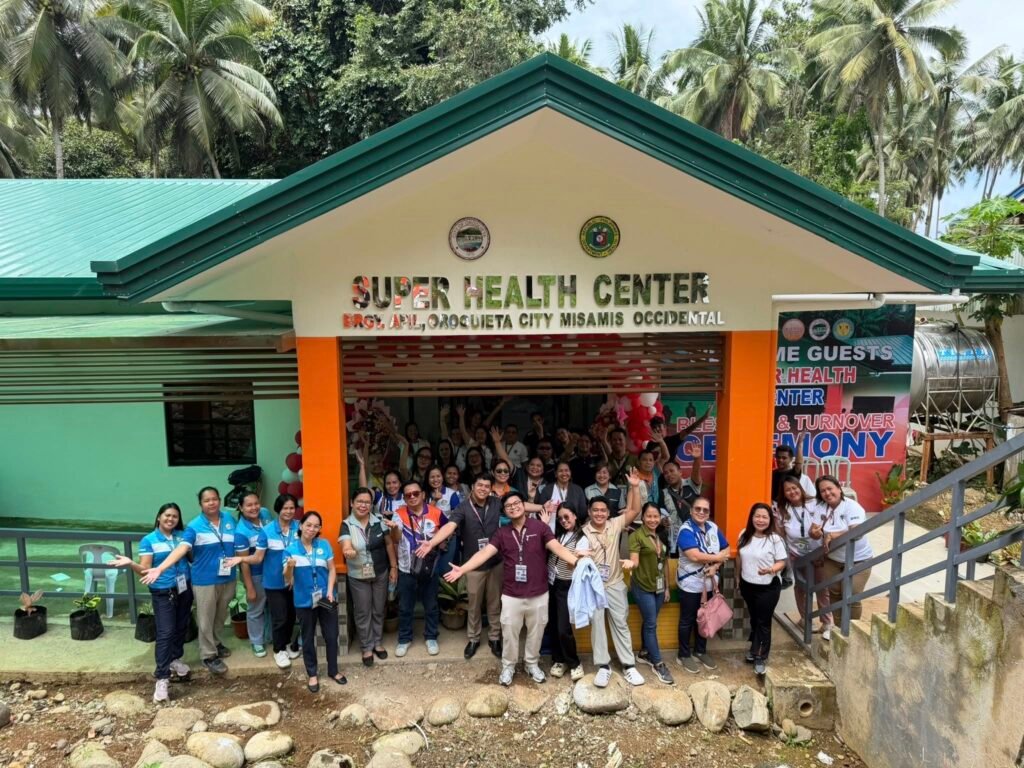
OROQUIETA CITY, Misamis Occidental (March 18) — For residents of Barangay Apil, the opening of a new Super Health Center promises something long out of reach: nearby, affordable medical care. But beyond the ribbon-cutting, the question remains whether expanded infrastructure will meaningfully address persistent gaps in the local health system.
The facility, inaugurated on March 10, is part of the national government’s push to establish “Super Health Centers” in underserved areas—mid-level polyclinics designed to bridge the gap between basic rural units and full-service hospitals.
Mayor Lemuel Meyrick Acosta described the center as a major step forward, noting that residents can now access consultations, laboratory tests, maternal care, vaccinations, and essential medicines without traveling long distances.
“This is a very big step toward strengthening health services,” Acosta said.
Access Improved—But Systemic Gaps Remain
On paper, Super Health Centers offer an upgrade from traditional rural health units: equipped with diagnostic tools such as X-ray machines, laboratories, and even dialysis facilities, they are meant to decentralize care and decongest hospitals.
The program, led by the Department of Health with infrastructure support from the Department of Public Works and Highways, reflects a broader strategy to improve healthcare access through infrastructure expansion.
But health advocates caution that buildings alone do not guarantee better outcomes.
Many rural facilities across the country continue to struggle with shortages of doctors, nurses, and medical supplies—raising concerns that newly built centers may face the same limitations if staffing and operational budgets are not sustained.
Prevention vs. Capacity
City Health Officer Dr. Al Joseph J. Guantero emphasized that the center is designed not only for treatment but for prevention—through regular check-ups, health education, and early detection of diseases such as hypertension and diabetes.
These services are critical in a country where non-communicable diseases remain leading causes of death. However, preventive care requires consistent patient engagement and long-term program funding—areas where local health systems often fall short.
Devolution Pressures on LGUs
The rollout of Super Health Centers also intersects with the ongoing devolution of healthcare services to local government units. While national agencies fund construction, LGUs are responsible for day-to-day operations, including staffing, maintenance, and service delivery.
For smaller cities like Oroquieta City, this can strain already limited resources—potentially affecting the quality and sustainability of services over time.
Bridging Distance, Not Inequality
For residents of Barangay Apil and nearby communities, the immediate benefit is clear: reduced travel time and cost for basic medical needs.
But the broader challenge is ensuring that access translates into equity.
Without addressing underlying issues—such as poverty, health literacy, and uneven resource distribution—new facilities risk becoming underutilized or overstretched.
A Promising Step, With Caveats
The Super Health Center represents a tangible investment in public health and a step toward decentralizing care. It brings services closer to communities that have long been underserved.
Yet its success will depend less on the structure itself and more on what happens after the opening: sustained funding, adequate staffing, and effective integration into the wider health system.
For now, the center stands as both a symbol of progress—and a test of whether healthcare reforms can move beyond infrastructure to deliver lasting impact.