
CAGAYAN DE ORO CITY (March 20) — Northern Mindanao’s plan to cut adolescent pregnancies by 25% by 2028 is being rolled out with urgency—but in high-burden provinces like Bukidnon, the scale of the problem is already testing the limits of government response.
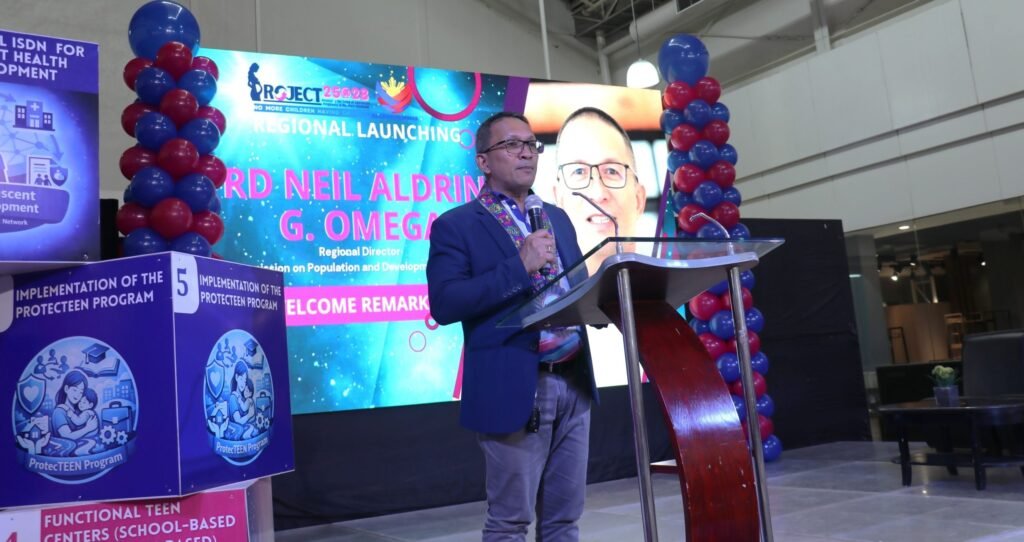
The Commission on Population and Development (CPD) Region 10 launched Project 25@28 on March 13 in Cagayan de Oro City, aiming to reduce adolescent births, prevent repeat pregnancies, and eliminate pregnancies among girls aged 10 to 14.
But regional data shows why officials face an uphill battle.
In Northern Mindanao, adolescent birth rates have remained persistently high over the past decade, with thousands of girls aged 15 to 19 giving birth each year. Health data from recent years indicate that Region 10 consistently ranks among areas with elevated teenage pregnancy incidence outside Metro Manila, with rural provinces driving the numbers.
Bukidnon, in particular, has repeatedly been flagged by regional planners as a hotspot—accounting for a significant share of adolescent births due to its large rural population, high poverty incidence, and limited access to adolescent-friendly health services in geographically isolated communities.
In some municipalities, local health workers report that teenage pregnancies are not isolated cases but “clustered realities,” where early childbearing becomes normalized across generations.
More alarming are cases involving girls aged 10 to 14—small in number but critical in implication. These cases are widely treated by child protection experts as indicators of sexual abuse, coercion, or exploitation, raising serious concerns about gaps in law enforcement and social services.
Programs exist—but access remains uneven
Project 25@28 consolidates interventions that have long been in place: comprehensive sexuality education, youth centers, reproductive health services, and barangay-level protection mechanisms.
Yet in provinces like Bukidnon, implementation often lags behind policy.
Far-flung barangays face shortages of trained health personnel, irregular service delivery, and limited youth-friendly spaces. Even where services exist, stigma and confidentiality concerns discourage adolescents from seeking care.
A youth participant from an upland community shared:
“We’re told services are available, but sometimes the clinic is far, or we’re afraid people will judge us if we ask.”
This gap between availability and accessibility continues to undermine prevention efforts.
Targets sharpen accountability pressure Neil Aldrin G. Omega, CPD regional director, said the goal is clear: “No more children having children.”
Meanwhile, Mylah Faye Aurora B. Cariño of the Department of Economy, Planning, and Development (DepDev)-10 emphasized that the program introduces measurable targets and stronger coordination.
But those targets also highlight a persistent question: why have previous efforts not produced sustained declines in high-burden areas?
Key support systems—such as Sangguniang Kabataan programs, TEEN Centers, and Barangay Violence Against Women and Children (VAWC) desks—vary widely in functionality. In some Bukidnon municipalities, these mechanisms are active; in others, they are underfunded or largely inactive.
Structural drivers remain entrenched
In hotspot areas, adolescent pregnancy is closely tied to overlapping risks:
- poverty and early economic pressure
- school dropout and limited re-entry pathways
- weak enforcement of child protection laws
- gender inequality and power imbalances
- limited access to confidential reproductive health services