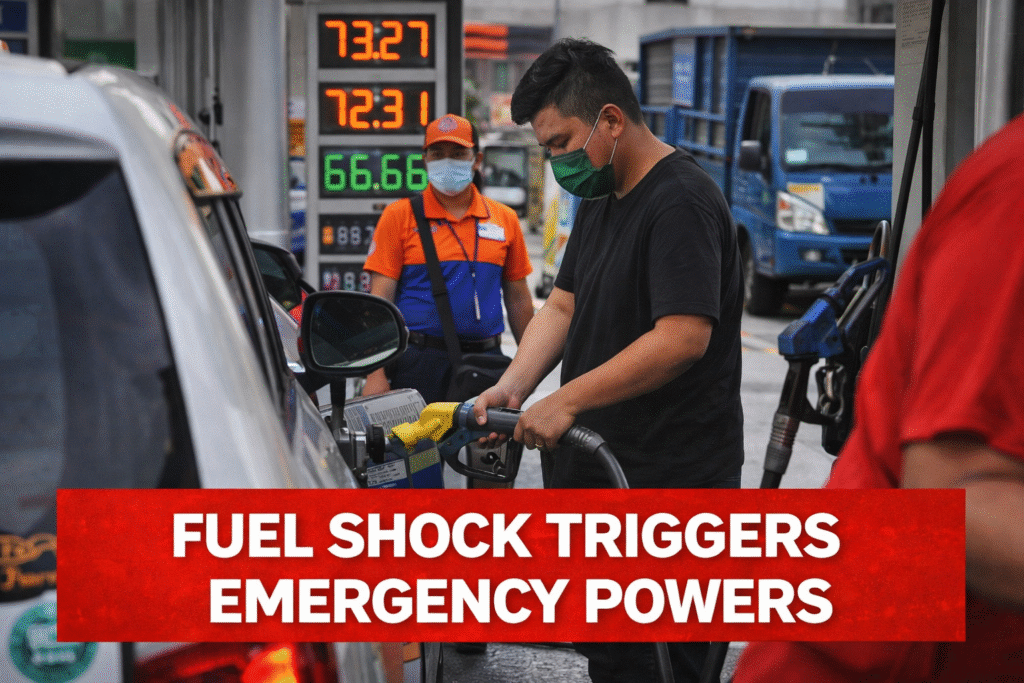
CAGAYAN DE ORO CITY (April 8) — Calling the oil price surge a crisis, Cagayan de Oro City has declared a state of energy emergency—freeing up PHP400 million in calamity funds and fast-tracking cash aid for sectors already reeling from rising fuel costs.
The city council’s Resolution No. 2026-203 greenlights at least PHP2,000 for transport workers, farmers, fisherfolk, senior citizens, persons with disabilities, and solo parents. Officials say the move aligns with Executive Order No. 110, which declared a national energy emergency and opened the door for local governments to tap disaster funds.
But the headline move—treating fuel inflation like a disaster—raises a sharper question: when everything is an emergency, what gets priority?
Cash now, questions later
City hall insists the fund will be released in phases, not all at once—an early sign that demand will outstrip supply. With multiple vulnerable sectors on the list, the real battle shifts to who gets aid first—and who waits.
Majority Floor Leader Edgar Cabanlas framed the measure as necessary to unlock funds. But it also exposes a widening gray area in governance: using disaster budgets to absorb economic shocks that may persist, not pass.
Patchwork relief, uneven reach
The Land Transportation Franchising and Regulatory Board is simultaneously rolling out fuel subsidies for taxi operators, creating a layered but fragmented safety net. Some groups may receive overlapping support; others risk being left out entirely.
Without a unified targeting system, aid risks becoming piecemeal—fast for some, delayed for others.
A dangerous precedent?
CDO’s move delivers immediate relief—but it also redraws the line between disaster response and economic management.
If fuel prices stay high, will cities keep dipping into calamity funds? And when the next typhoon hits, will there be enough left in the emergency pot?
For now, the city has acted decisively. But the bigger test isn’t speed—it’s whether emergency spending today solves the crisis, or simply spreads it thinner across the next one.