COTABATO CITY (February 7) — Christian settler communities in the Bangsamoro Autonomous Region in Muslim Mindanao (BARMM) are urging the Senate to protect their guaranteed representation after recent changes threatened their reserved seats in the Bangsamoro Parliament.
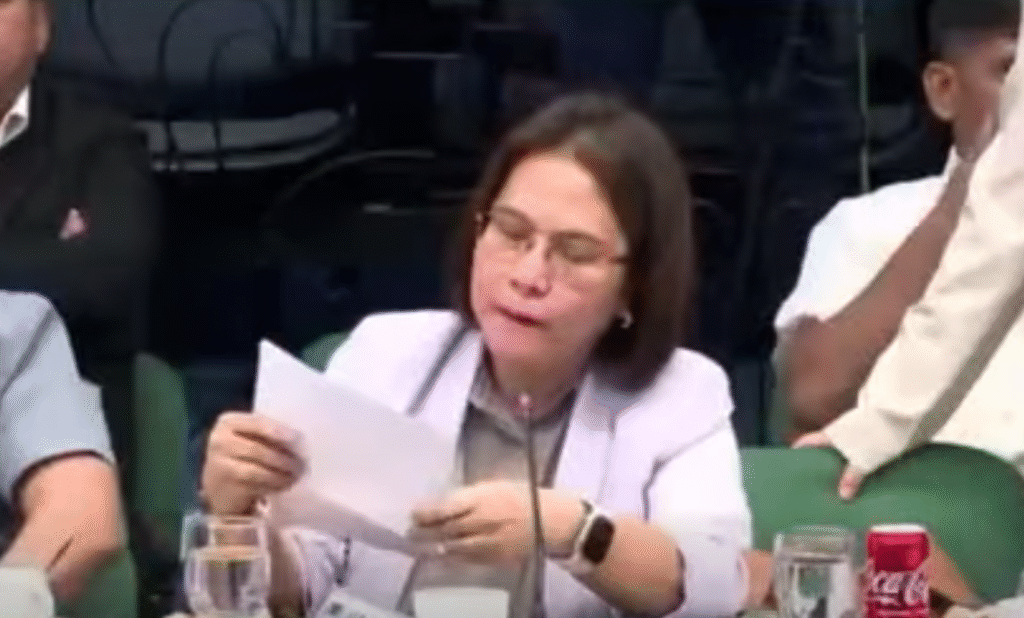
The call was made in a position paper read by Atty. Mary Ann Arnado, Vice President for Settler Communities of the United Bangsamoro Justice Party (UBJP), during a Senate hearing on Friday.
The paper said Christian settlers—mostly farmers, workers, teachers, and small entrepreneurs—have long lived “on the edges of political power,” present in the region but largely unheard.
“Participation felt risky, and silence became a way to endure,” the statement noted.
That began to change with the passage of the Bangsamoro Organic Law (BOL).
A Promise of Inclusion
“The Bangsamoro Organic Law was very clear—peace cannot be sustained if entire communities are excluded from governance,” Arnado read.
Under the BOL, Christian settlers—now a numerical minority in BARMM—were granted reserved seats in the Bangsamoro Parliament, a safeguard meant to ensure minority voices would not be overwhelmed by the majority.
“For the first time, settler communities were assured that our voices mattered—not as an afterthought, but as a matter of law,” the paper said.
From Silence to Solidarity
Following the establishment of BARMM, settler communities across Maguindanao, Lanao del Sur, Basilan, Tawi-Tawi, the Special Geographic Areas, and Cotabato began organizing, many for the first time.
“Many of our communities had never participated in regional politics before,” the statement said, citing years of fear, indifference, and political isolation.
By 2024, settler groups had formed networks and federations, working alongside other marginalized sectors such as women, youth, Ulama, traditional leaders, and non-Moro Indigenous Peoples.
“This was inclusion in practice—dialogue of life and faith, not competition,” the paper added.
Recognition, Then Reversal
Their efforts were formally recognized when the Office for Settler Communities certified 268 settler organizations, each with a verified track record of service and advocacy.
“That certification was not symbolic,” the statement stressed. “It reflected years of community work and compliance with government standards.”
Encouraged by this, settler groups entered the Commission on Elections’ accreditation process ahead of the May 2025 polls, despite technical requirements, high fees, and limited access to legal assistance.
“But we persisted because we believed the transition government was serious about reform,” the paper said.
That belief was shaken on January 28, 2026, when the Bangsamoro Transition Authority (BTA) Parliament amended the Bangsamoro Electoral Code, revoking the certification of all sectoral organizations, including those of settler communities.
“There was no consultation,” the statement said. “Years of organizing were erased by a single legislative act.”
The amendments also changed the election of sectoral representatives from sectoral assemblies to direct plurality elections.
Why Settlers Are Alarmed
Under the Bangsamoro Electoral Code, popular elections for sectoral seats may only proceed after the establishment of a Special Registration of Sectoral Voters, which ensures that only legitimate sector members vote for their representatives.
“That system does not exist,” the paper said. “Without it, the majority can effectively choose who represents minorities.”
Settler leaders warned that this could render the reserved seats meaningless.
“Reserved seats were created precisely because minorities cannot win in a popular vote,” the statement said. “If the rules are changed, those seats stop being reserved.”
Beyond Politics
For settler communities, the issue goes beyond parliamentary procedure.
“When representation is taken away, access to livelihoods, land dispute mechanisms, education, and social services is also taken away,” the paper said. “This affects real families, not abstract politics.”
Appeal to the Senate
With regional remedies exhausted, settler communities are appealing to the Philippine Senate to intervene through Senate Bill 1587, urging lawmakers to uphold the intent and integrity of the Bangsamoro Organic Law.
“We are not asking for special treatment,” the statement stressed. “We are asking that what was promised by law be honored.”
For Christian settlers in BARMM, the message is clear: inclusive autonomy must mean everyone has a voice.