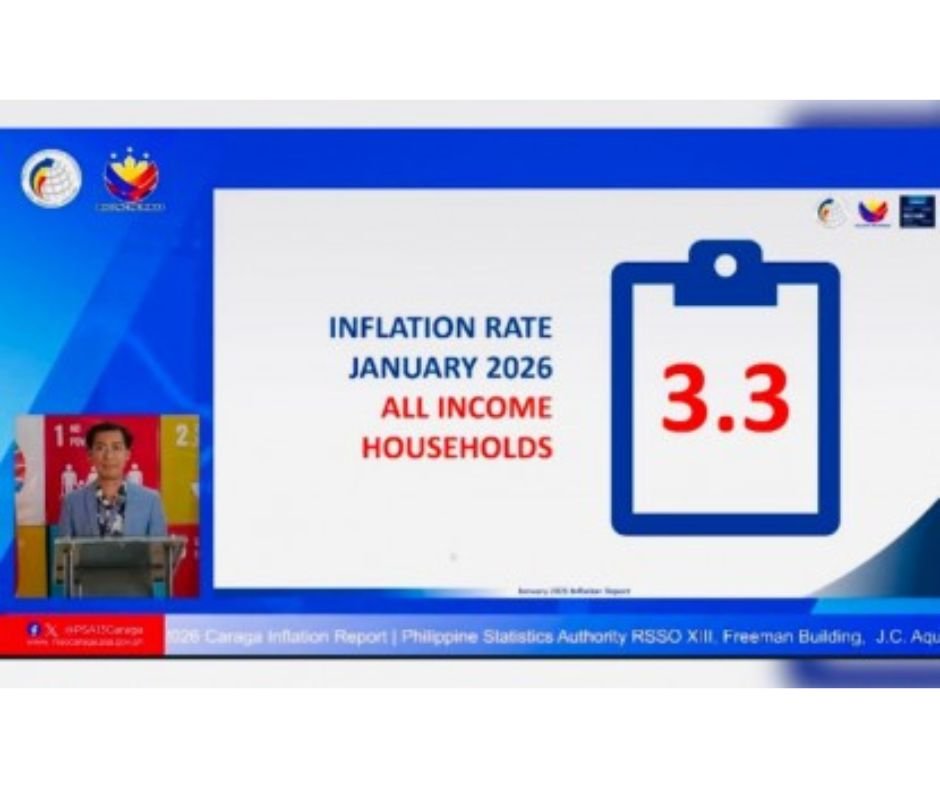
BUTUAN CITY (February 13) — Inflation in Caraga climbed to 3.3 percent in January 2026, up from 2.6 percent in December, according to the Philippine Statistics Authority (PSA-13). On paper, the increase may seem modest. But for many families across the region, the impact is already being felt in the kitchen, at the payment counter, and in monthly rent bills.
The biggest driver? Food.
Food and non-alcoholic beverages accounted for nearly 75 percent of the inflation uptrend, rising from 0.8 percent in December to 2.1 percent in January. At the same time, housing and utility costs continued their steady climb, with rental rates posting an 8.5 percent increase.
For ordinary households, this means stretching budgets further — and making harder choices.
When Prices Rise, Families Adjust
In Caraga, food makes up a large portion of household spending, especially among low-income families. When prices of rice, vegetables, fish, and other staples go up, families often respond by:
- Buying smaller portions
- Switching to cheaper alternatives
- Cutting back on protein-rich food
- Reducing savings
Rising rental and electricity costs add another layer of strain. Urban renters in Butuan and other growing towns may find fewer affordable options, while rural households grapple with higher energy expenses.
Inflation is not just a number — it’s fewer items in a market basket and tighter monthly budgeting.
Why Is This Happening?
Several structural factors may be contributing:
- Supply chain vulnerabilities that affect food availability
- Limited cold storage and post-harvest facilities, leading to waste and higher prices
- Increased demand for housing in urban centers
- Energy cost adjustments that trickle down to consumers
When food and housing — two basic needs — drive inflation, the effects ripple across all sectors.
What Can Caraga Do?
While inflation is influenced by national and global forces, local governments and communities are not powerless.
Strengthen Local Food Systems
Supporting farmers through farm-to-market roads, irrigation, and direct market linkages can help stabilize supply and reduce price volatility. Encouraging barangay-level gardens and cooperatives can also cushion households from market shocks.
Protect Vulnerable Sectors
Local governments can activate targeted safety nets when food and housing inflation rise. These may include:
- Expanded lifeline electricity rates
- Temporary food assistance
- Rental mediation programs
- Fuel support for transport drivers
Inflation-sensitive policies can prevent economic stress from turning into social distress.
Improve Price Transparency
Regular publication of updated market prices empowers consumers and discourages profiteering. Strengthened monitoring by Local Price Coordinating Councils can promote fair pricing.
Encourage Community Solutions
Communities themselves can play a role:
- Consumer cooperatives to buy goods in bulk
- Church and civic-led food-sharing initiatives
- Youth volunteers helping track local price trends