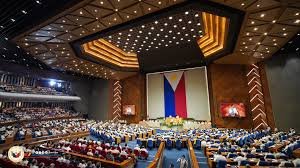
COTABATO CITY (March 5) — After four postponements and a string of legal setbacks, the Senate has unanimously approved a bill fixing Sept. 14, 2026 as the date for the first regular parliamentary elections in the Bangsamoro Autonomous Region in Muslim Mindanao (BARMM).
Voting 21-0-0, senators passed Senate Bill 1823 on third and final reading, setting what supporters describe as a long-awaited turning point for the region’s transition to full parliamentary governance.
For interim officials of the Bangsamoro Autonomous Region in Muslim Mindanao, the measure signals a decisive step toward democratic normalization.
Rasol Mitmug Jr., lawyer-member of the Bangsamoro Transition Authority (BTA), called the Senate’s approval a “historic milestone,” saying it will finally allow voters to choose the 80 officials who will run the regular operations of the country’s first parliamentary-style regional government.
A test of legitimacy
The Office of Interim Chief Minister Abdulraof Macacua welcomed the unanimous vote, saying it complements the Marcos administration’s position that current BARMM officials should seek a fresh public mandate — pushing back against criticism that transition leaders were benefiting from repeated extensions.
The Commission on Elections (Comelec) also reacted positively. Chairman George Erwin Garcia expressed hope that the House of Representatives would swiftly pass a counterpart bill so the measure can be enacted without further delay.
Four deferments, one reset
The Sept. 14, 2026 schedule is intended to break what Sen. Juan Miguel Zubiri, the bill’s sponsor, earlier described as a “cycle of disenfranchisements.”
The maiden BARMM parliamentary elections were originally set under Republic Act 11054 — the Bangsamoro Organic Law — for May 2022, synchronized with national and local polls. But Congress first moved the date to May 2025 after the BTA failed to pass a regional electoral code.
Subsequent delays followed legal and structural complications, including the exclusion of Sulu from BARMM’s core territory and disputes over district allocations.
In October 2025, the Supreme Court of the Philippines declared Bangsamoro Autonomy Acts 58 and 77 unconstitutional, ordering a redistricting fix and further pushing back the election timetable.
Comelec later cited “legal and operational” constraints and asked Congress to formally reset the poll date — paving the way for Senate Bill 1823.
What happens next
Under the Senate-approved measure:
- The BTA will continue serving as interim government during the extended transition unless replaced by the President.
- The automated election system used in the May 2025 national and local polls will be deployed.
- Eighty members of Parliament will be elected:
- 40 through a party-list proportional system
- 32 via district-level voting
- 8 representing youth, women, non-Muslim settlers, ulama, traditional leaders and Indigenous peoples