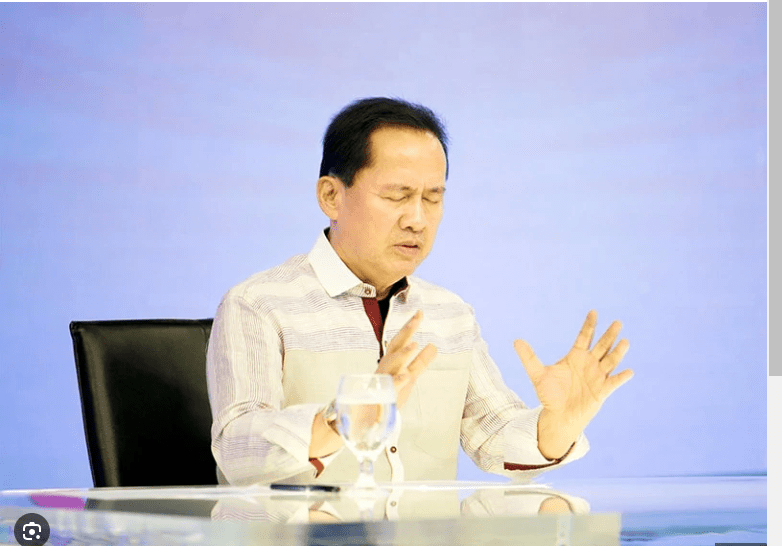
DAVAO CITY, Philippines — In a significant judicial move, the Supreme Court’s Second Division has granted the request of Department of Justice (DOJ) Secretary Jesus Crispin C. Remulla to transfer the venue of two high-profile criminal cases against Apollo C. Quiboloy from the Regional Trial Court (RTC) of Davao City to the RTC of Quezon City. This decision is rooted in the constitutional mandate to prevent a miscarriage of justice.
Context and Justification
The decision, encapsulated in A.M. No. 24-04-29-RTC, pertains to Criminal Case Nos. R-DVO-24-1439-CR and R-DVO-24-01440-CR. The Court recognized the public interest involved and the influence wielded by Quiboloy, a prominent religious leader in Davao City. The potential for local biases and the intimidation of witnesses underlined the necessity for the venue change to ensure a fair trial.
Court Directives
The Supreme Court directed the Branch Clerk of Court of Branch 12, RTC, Davao City, to transfer the complete records of the aforementioned cases to the Office of the Executive Judge of the RTC, Quezon City within three days from notice. Subsequently, the Quezon City RTC Executive Judge is instructed to raffle the cases among the judges in the station to expedite the judicial process.
Furthermore, the Court mandated that any future related cases involving Quiboloy and his co-accused, filed in Davao City or other Mindanao stations, should be transferred to the RTC and Metropolitan Trial Court in Quezon City to preserve the integrity of the proceedings.
DOJ’s Request
In his letter dated April 4, 2024, DOJ Secretary Remulla emphasized the broader national implications of the cases and the necessity to avoid local biases that could undermine the trial’s impartiality. Citing Article VIII, Section 5 (4) of the 1987 Constitution, Remulla stressed the Court’s authority to change the venue to prevent a miscarriage of justice due to serious and substantial reasons.
Implications
This move highlights the judiciary’s commitment to impartiality and the protection of witnesses in high-stakes cases. It underscores the importance of maintaining public trust in the judicial process, especially in cases involving influential figures.
Source: Supreme Court Public Information Office