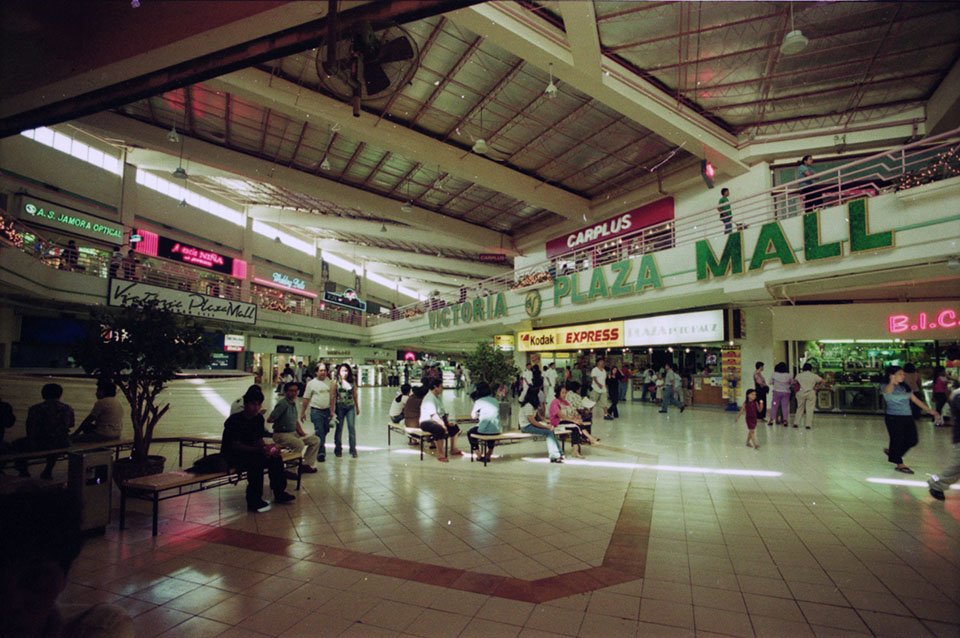
The historic Victoria Plaza in its early days. The late veteran photojournalist Rene B. Lumawag captured it all.
DAVAO CITY (December 31) — “But there are dreams that cannot be… and there are storms we cannot weather.” With these words, Lafayette Alvarez Lim, chief executive officer of Victoria Plaza VIP Mall, marked the end of an era as Davao City’s first modern shopping mall formally closed its doors—bringing to a close more than three decades of commerce, memory, and urban growth in Mindanao.
Victoria Plaza opened in 1993, when Davao City was beginning its transformation into a regional business hub. Lim recalled that year vividly: he was a third-year student at De La Salle University, majoring in BS Computer Science with a concentration in Information Technology. Back home, employees of the then 14-year-old New City Commercial Center (NCCC) worried that the arrival of the city’s first mall might threaten their livelihood.
“Thank God, we were able to co-exist,” Lim said—an early lesson in how competition in Davao eventually matured into coexistence, collaboration, and shared growth. That arc would come full circle in 2019, when NCCC acquired Victoria Plaza after years of negotiations. Rather than erase its identity, management chose to honor its legacy by renaming it NCCC Mall VP.
Plans for a major redevelopment followed. The mall’s aging air-conditioning system was overhauled, and potential partners, local and national, expressed interest in revitalizing the iconic structure. At the time, Davao’s consumer market remained resilient, buoyed by Mindanao’s growing middle class and the city’s reputation as a stable investment destination.
Then the pandemic hit.
“And everything changed,” Lim said.
Like many enterprises across Mindanao, Victoria Plaza’s revival plans were derailed by prolonged lockdowns, disrupted supply chains, and a sharp shift in consumer behavior toward online shopping and decentralized commercial spaces. While NCCC gradually recovered, the corporate focus shifted to rebuilding its flagship, NCCC Mall Davao, which was destroyed by fire in 2017 and later reopened as NCCC Mall Ma-a.
As the years passed, the economics grew harsher. Rising maintenance costs, altered foot traffic patterns, and post-pandemic uncertainties made the original vision for Victoria Plaza increasingly untenable.
“As one year after another passed, it was clear we could no longer pursue our original dream for VP,” Lim admitted.
The decision to close, he stressed, was not merely operational but reflective of broader business realities facing legacy malls in regional cities: aging infrastructure, changing retail formats, and the need for capital-intensive redevelopment in a cautious investment climate.
Still, Lim emphasized that the property’s story is not ending in neglect. “We made sure that it would still get the iconic redevelopment it deserves,” he said, offering no specifics but signaling that the site remains part of Davao’s long-term urban future.
In its final days, Davaoeños streamed into the mall for one last walk through corridors that once hosted first dates, family Sundays, movie nights, and teenage milestones. The farewell was as emotional as it was historic.
“So as many Davaoeños do their sentimental goodbyes to Victoria Plaza, we lift up to God with thanksgiving and faith everything according to His perfect Will,” Lim said.
For Davao City, the closure of Victoria Plaza is more than a business decision. It is a marker of transition—of how Mindanao’s economy continues to evolve, leaving behind some landmarks while making room for new forms of growth. Like the city it once helped shape, Victoria Plaza had its season—and its legacy is now part of Davao’s shared history.- Editha Z. Caduaya
Edith Z Caduaya studied Bachelor of Science in Development Communication at the University of Southern Mindanao.
The chairperson of Mindanao Independent Press Council (MIPC) Inc.