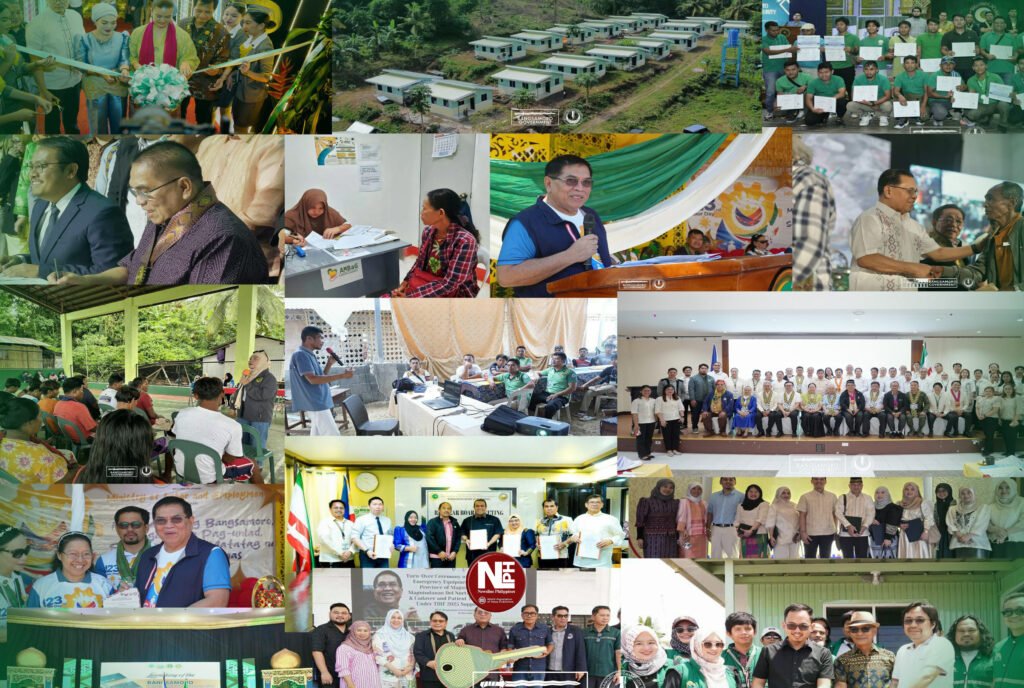
Photo courtesy: Bangsamoro Autonomous Region in Muslim Mindanao
COTABATO CITY (January 3) — In villages once defined by conflict, long travel to clinics, and scarce jobs, 2025 marked a year of visible if uneven gains for communities across the Bangsamoro Autonomous Region in Muslim Mindanao (BARMM).
Regional officials say nearly ₱5 billion in investments, expanded health and welfare programs, and stepped-up peacebuilding efforts helped translate policy reforms into services that reached households — from newly built roads and shelters to hospital bills paid and students kept in school.
While challenges persist, the year closed with signs that the Bangsamoro bureaucracy is gradually shifting from transition to delivery.
Work and income: modest gains, wider reach
Investment inflows in agribusiness, fisheries, housing, and logistics generated new jobs, particularly in rural areas where employment options remain limited.
Labor officials reported expanded job fairs, student employment, and internship programs that benefited thousands of young people, easing entry into the workforce.
A ₱50 daily minimum wage hike and the enactment of the Bangsamoro Labor and Employment Code set new labor standards, signaling stronger worker protection in a region long marked by informal employment.
Health and welfare closer to home
For many families, the most tangible change came through health and social services.
Medical missions, free medicines, and hospital assistance programs covered hundreds of thousands of patients, with most beneficiaries reporting zero hospital balance — a critical relief in a region where out-of-pocket health costs often push families deeper into poverty.
Housing assistance under the government’s shelter program handed over hundreds of core shelters, with thousands more under construction for displaced and indigent families.
Emergency response teams maintained full coverage during disasters, speeding up the delivery of food packs, transport, and relief in flood- and conflict-affected areas.
Schools, skills, and keeping children in class
Scholarship grants, feeding programs, and technical training helped keep children and youth in classrooms and training centers.
Thousands of students received tuition support, while vocational programs posted high certification rates, improving employability for young Bangsamoro workers.
For Indigenous Peoples and alternative learners, targeted assistance expanded access to education in geographically isolated areas.
Women, youth, and peace on the ground
Women’s organizations gained stronger institutional support, while barangay officials received training to respond to violence against women — a persistent issue in conflict-affected communities.
Youth programs focused on leadership, peacebuilding, and environmental action, reflecting efforts to prevent the next generation from being drawn into violence.
On the peace front, the settlement of hundreds of family and clan feuds, alongside faith-based peace advocacy, reduced community-level tensions in several hotspots.
Roads, ports, and basic connectivity
Infrastructure projects — from farm-to-market roads and bridges to water systems and ports — improved mobility and access to services, particularly in island and interior municipalities where isolation remains a barrier to development.
Expanded digital coverage and planned e-services also began to change how residents access government assistance, though uneven internet access continues to limit impact in remote areas.
A year of transition, a test ahead
The peaceful leadership transition within the Bangsamoro government helped maintain program continuity, but officials acknowledge that sustaining gains will require stronger local implementation, transparency, and monitoring.
With a ₱114-billion budget set for 2026, the test for BARMM will be whether increased funding translates into faster service delivery, deeper poverty reduction, and more durable peace — especially in communities that have yet to feel the full impact of autonomy.
For many Bangsamoro families, the question moving into the new year is simple: will the progress seen in 2025 reach them next?