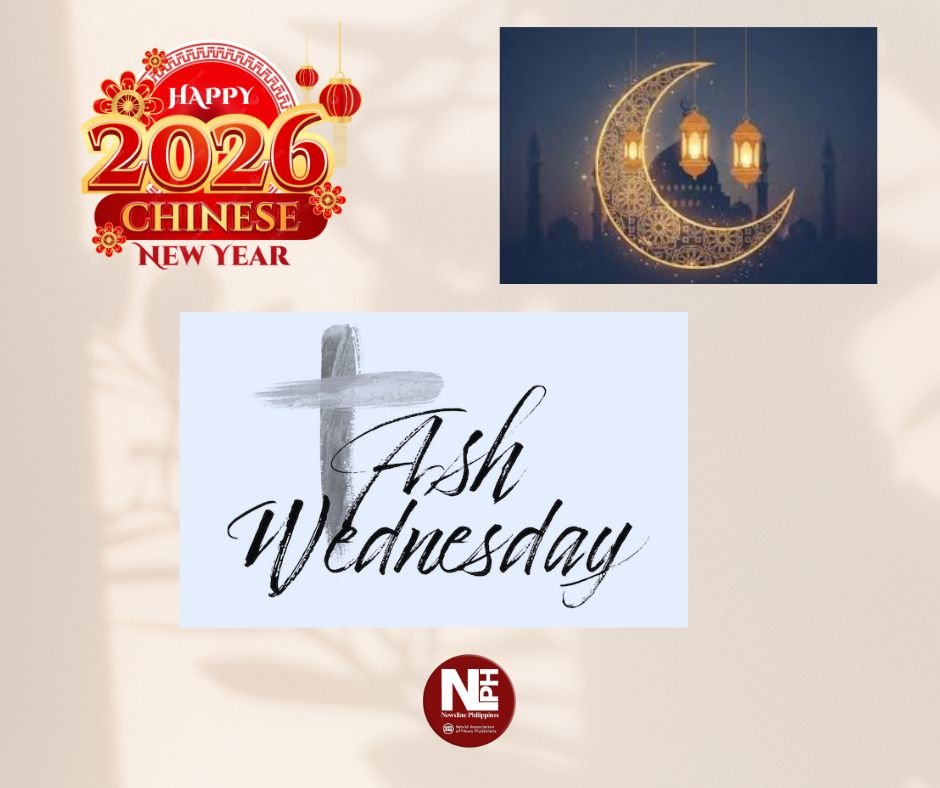
CAGAYAN DE ORO CITY (February 18) — In Mindanao, the turning of the season is not marked by weather alone—it is marked by faith.
Within weeks, communities across the island move from the color and clang of Chinese New Year to the quiet discipline of Ramadhan, and then into the solemn stillness of Lent.
In cities like Davao City, Cagayan de Oro, Zamboanga City, and Cotabato City, these observances do not happen in isolation. They unfold in shared streets, markets, offices, and neighborhoods.
Red and Gold in Mindanao’s Commercial Hubs
Chinese New Year celebrations in Mindanao may not rival Manila’s Binondo in scale, but in cities like Davao and Cagayan de Oro, they are deeply visible and economically significant.
In Davao City’s Chinatown district along Ramon Magsaysay Avenue, lion dances weave through storefronts while drums and cymbals echo through the streets—replacing the firecracker bursts common elsewhere, as the city strictly enforces its long-standing ban on firecrackers and fireworks.
Filipino-Chinese entrepreneurs—many whose families have lived in Mindanao for generations—close shops early for reunion dinners heavy with tikoy, pancit, and round fruits symbolizing prosperity.
In Cagayan de Oro’s Divisoria and Zamboanga’s downtown commercial strips, malls decorate in red lanterns. City governments issue official proclamations recognizing the Lunar New Year, underscoring how the Chinese-Filipino community has long shaped Mindanao’s trade networks.
For many Mindanaoans, the celebration is less about ethnicity and more about shared optimism—a cultural reset after the holidays, and a hopeful nod toward better business and better harvests.
Ramadhan in the Bangsamoro Heartland
As the lanterns come down, attention turns southward. In the Bangsamoro Autonomous Region in Muslim Mindanao, the sighting of the crescent moon transforms daily life.
In Cotabato City, Marawi, and towns across Maguindanao del Sur and Lanao del Sur, the rhythm shifts overnight. Before dawn, households rise for suhoor. By sunrise, eateries close their doors out of respect. Government offices adjust work hours. Markets grow busiest after sunset.
Mosques fill for Taraweeh prayers. Charity initiatives multiply. Families who may struggle economically throughout the year stretch resources to ensure that iftar—the breaking of the fast—is shared, not solitary.
Even in predominantly Christian cities like Davao and General Santos, Ramadhan has become more visible. Restaurants offer iftar buffets. Workplaces accommodate fasting employees. Public greetings of “Ramadan Mubarak” reflect a growing awareness that Islam is not peripheral to Mindanao—it is central to its identity.
For many Bangsamoro families, Ramadhan is not only a religious duty but also a symbol of resilience. After years of conflict and transition, especially under the evolving governance of BARMM, the holy month stands as a reminder of continuity, discipline, and hope.
Lent Across Parishes and Provinces
Then comes Ash Wednesday. In Catholic parishes across Mindanao—from small chapels in Bukidnon’s highlands to packed churches in Davao City—foreheads are marked with ash.
In urban centers, lunchtime Masses overflow with professionals in office attire. In rural areas, farmers and fisherfolk arrive early, some traveling hours from upland barangays. The message is simple but stark: “Remember you are dust.”
Holy Week preparations begin almost immediately. In Zamboanga and parts of Misamis Occidental, families organize pabasa chanting of the Passion. In Davao del Norte and South Cotabato, youth groups rehearse for Senakulo reenactments. Coastal towns anticipate the exodus of travelers seeking beaches during the long break—an annual reminder that faith and festivity often coexist.
For Mindanao’s Catholic majority, Lent is a season of sacrifice and reflection—but also of community gatherings and shared rituals that bind generations.
Where Faiths Meet in Daily Life
What makes Mindanao distinct is not merely the presence of these observances—but their proximity.
A Chinese-Filipino shop owner in Davao may prepare for Lunar New Year while coordinating Ramadan supply deliveries to Muslim clients. A Catholic teacher in Cotabato City may attend Ash Wednesday Mass while respecting fasting colleagues. In public schools, children from different faiths learn why their classmates may be absent, fasting, or attending church.
Markets in Mindanao illustrate this layered reality best: stalls selling tikoy one week may stock dates and halal-certified goods the next. Radio stations broadcast Lunar New Year greetings, Ramadan advisories, and Lenten reflections in the same news cycle.
This coexistence does not erase economic pressures—rising food prices, transport fares, or power costs. In fact, these challenges sharpen the meaning of each season.
Prosperity wishes during Chinese New Year carry weight in a fragile economy. Fasting during Ramadhan becomes both spiritual discipline and lived empathy. Lenten sacrifice resonates deeply in communities already familiar with hardship.
A Mindanao Mosaic
Mindanao has long been portrayed through the lens of conflict. But in these overlapping sacred seasons, another story emerges: one of shared space and layered identity.
Chinese New Year highlights the island’s commercial dynamism. Ramadhan anchors its Islamic heritage.
Lent reflects centuries of Catholic tradition.
Together, they form a mosaic that is uniquely Mindanaoan—complex, diverse, and deeply communal.
As drums resound in Davao’s Chinatown, crescent moons are sighted in Cotabato, and ashes are traced in parish churches across the island, Mindanao reminds the rest of the country that pluralism here is not theoretical.
It is practiced—every day, in markets, in mosques, in churches, and in the quiet respect neighbors extend to one another.