PAGADIAN CITY (May 13) — As the government expands free internet access in far-flung communities, the Department of Information and Communications Technology (DICT) says digital connectivity must go hand in hand with online safety, responsible internet use, and community accountability.
During the rollout of free public Wi-Fi sites in Pagadian City, DICT officials assured parents, teachers, and students that safeguards are already embedded in government-funded internet connections to block harmful online content, particularly in schools.
DICT Assistant Secretary for Regional Development June Vincent Manuel-Gaudan said pornographic and gambling sites are strictly prohibited on DICT-managed free Wi-Fi networks.
“Bawal po ang porn sites sa ating free Wi-Fi. Bawal ang gambling sites sa ating free Wi-Fi,” Manuel-Gaudan said.
The official explained that filtering systems and blocking technologies have been integrated into the network infrastructure to prevent access to illegal and harmful websites, especially in learning environments where students are among the primary users.
But beyond technology, DICT emphasized that digital safety is also a shared social responsibility involving schools, parents, local communities, and internet users themselves.
“DICT will give the technology and the connectivity, and at the same time, DepEd will make sure that our learners will use the internet responsibly,” Manuel-Gaudan added.
The initiative highlights the growing challenge faced by governments as internet access rapidly expands across underserved communities: ensuring that digital inclusion does not expose young users to cyber risks, online exploitation, gambling addiction, misinformation, and other harmful content.
DICT Regional Director Cheryl C. Ortega said the agency is complementing connectivity projects with orientations on cybersecurity awareness, responsible social media use, and digital literacy.
“We’re not just giving the infrastructure, we’re not just giving the connectivity, but we are giving complementary content or applications and orientation on the proper use of it,” Ortega said.
She stressed that cybersecurity should not be treated solely as a technical concern, but as a community-wide responsibility requiring cooperation among educators, families, and government institutions.
Officials admitted that some users may still attempt to bypass restrictions through virtual private networks (VPNs) and similar tools, prompting the agency to continuously strengthen monitoring and cybersecurity measures.
Aside from content filtering, DICT said it deploys firewalls and monitoring systems to protect public internet infrastructure from cyber threats. The agency’s Cybersecurity Bureau reportedly blocks thousands of cyberattacks daily while assisting government offices in improving data protection practices.
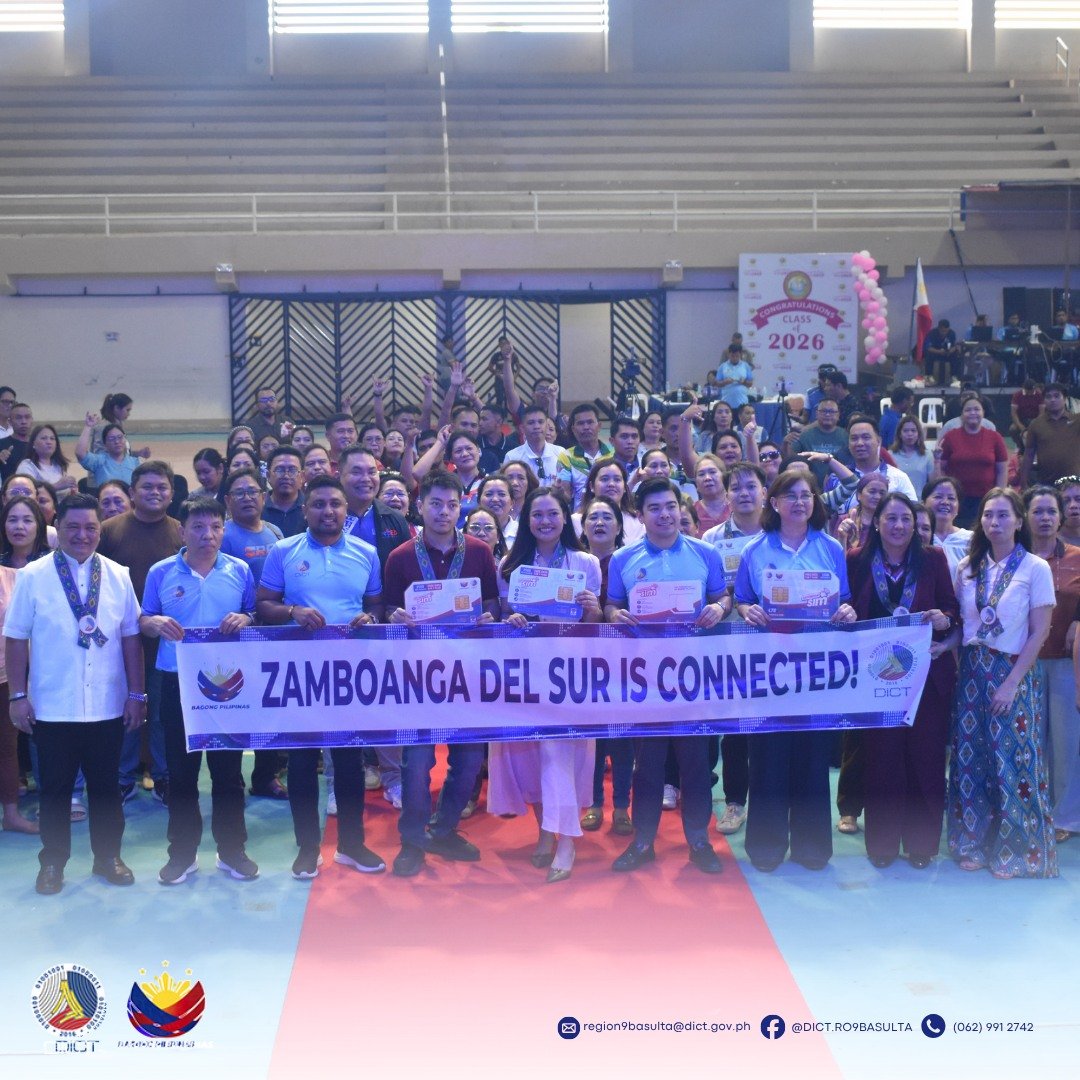
The DICT recently activated 324 free Wi-Fi hotspots across 108 schools in Zamboanga del Sur, many of them located in geographically isolated and disadvantaged areas (GIDA) where digital access remains limited.
For communities long disconnected from reliable internet services, officials said the program is not only about access to technology but also about building safer and more inclusive digital spaces that support education, communication, and long-term community development.