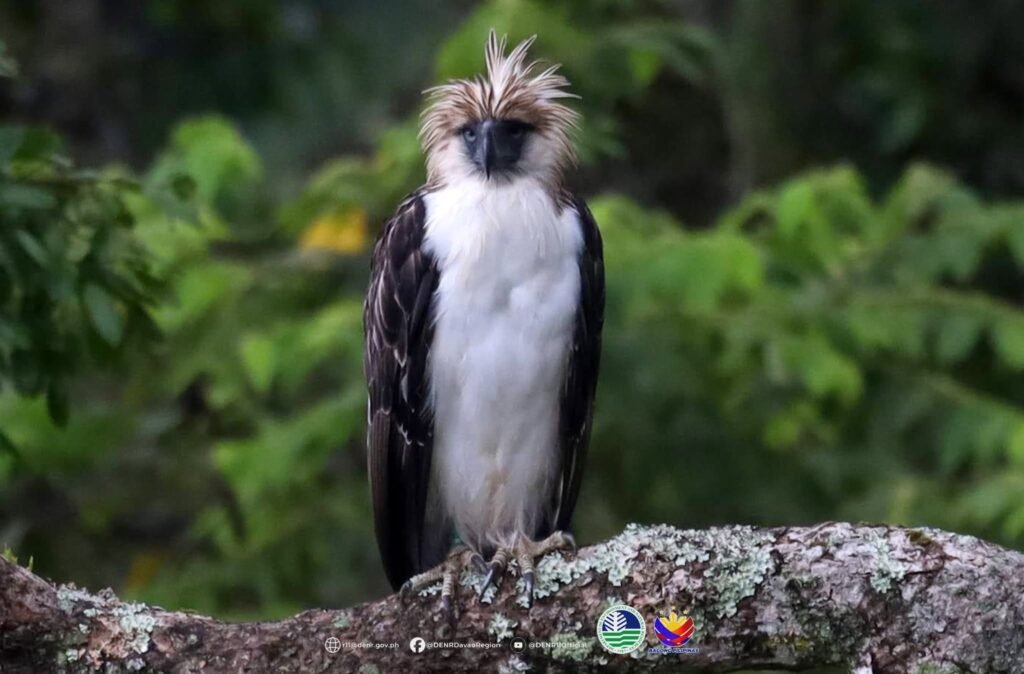
DAVAO CITY (May 13) — The future of the critically endangered Philippine Eagle may hinge not only on scientists and conservationists, but on whether ordinary Filipinos choose to help sustain the country’s most urgent wildlife protection effort.
In Davao City, the Philippine Eagle Foundation (PEF) is appealing for public support to complete new breeding facilities at the National Bird Breeding Sanctuary (NBBS) in Barangay Eden, Toril — a project conservationists say is critical to preventing further decline in the eagle population.
PEF Director for Operations Jayson Ibañez said the foundation urgently needs funding for three additional breeding cages that will allow more Philippine Eagles to be transferred from the older Malagos facility into a safer and more sustainable breeding environment.
Each cage costs around P350,000.
“We need to act now. One way of acting is supporting the conservation breeding program,” Ibañez stressed during the recent Kapehan sa Dabaw forum.
The appeal comes as conservationists warn that the species is facing an alarming decline in genetic diversity — a silent but dangerous threat that weakens the eagle population’s ability to survive disease outbreaks, climate pressures, and environmental changes.
For PEF, the issue goes beyond wildlife conservation. It is also about long-term ecological sustainability and collective responsibility.
The Philippine Eagle sits at the top of the forest food chain, making it an indicator of the health of the country’s remaining forests. Protecting the species also means protecting watersheds, biodiversity, and ecosystems that communities themselves depend on for water, food, and climate resilience.
“Genetic diversity is the survival kit of a species,” Ibañez explained. “The more genetic diversity you have, the more a population can adjust to a changing world.”
The breeding sanctuary in Eden is now emerging as a critical conservation refuge.
Located within a forested area at the foot of Mount Apo, the sanctuary provides a quieter and more secure environment compared to the aging Philippine Eagle Center in Malagos, which is now surrounded by banana plantations, poultry operations, and human activity that increase disease risks.
Unlike the public-facing Malagos facility, the Eden sanctuary remains off-limits and protected by Bantay-Bukid forest guards, allowing eagles to breed with less stress and exposure.
The sanctuary has already delivered encouraging results.
On December 5, 2025, a new eaglet named “Bayani” successfully hatched at the facility — a milestone that conservationists see as proof that the new sanctuary can help secure the future of the species.
Since operations began, four eggs have already been laid by breeding pairs in Eden.
PEF is also looking at the possibility of relocating captive-bred eagles to other habitats in the country, including Samar, where isolated eagle populations are believed to be suffering from inbreeding after nearby populations in Leyte were devastated by Typhoon Haiyan.
Conservationists say sustaining the breeding program will require broader community participation — not only from donors, but also from local governments, schools, businesses, environmental advocates, and ordinary citizens willing to support long-term conservation work.
To help raise funds, PEF launched “Bayani Merch,” a fundraising campaign featuring shirts, mugs, hats, and wristbands inspired by the newly hatched eaglet.
For the foundation, every purchase is more than a donation — it is an investment in the survival of a national symbol and the ecosystems it represents.Supporters may contribute through Philippine Eagle Foundation or through the foundation’s official Facebook page.