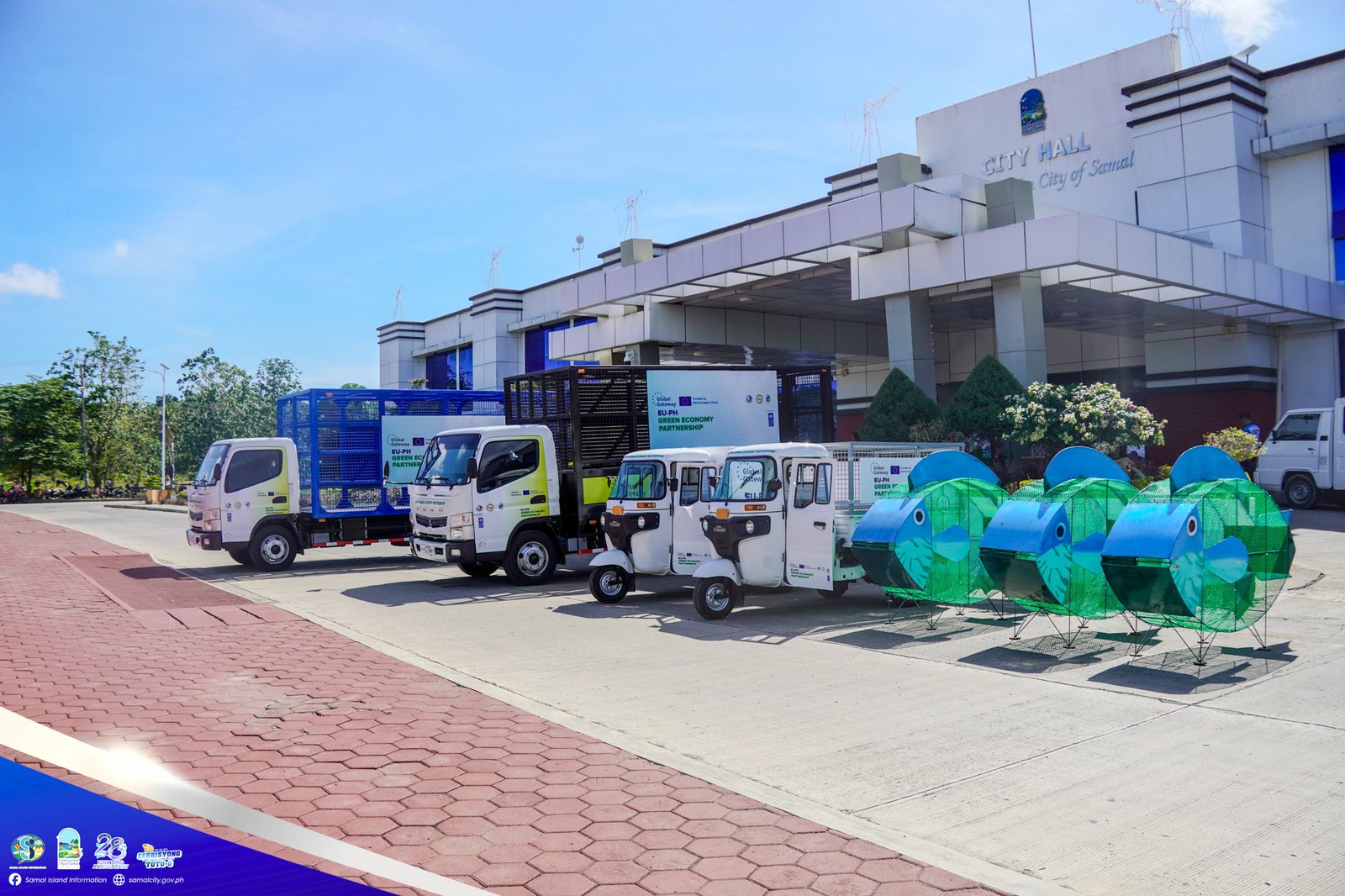
DAVAO CITY(May 13) — The Island Garden City of Samal (IGaCoS) is scaling up its solid waste management system with new equipment and facilities aimed at cleaner communities and more efficient waste recovery, under the European Union–Philippines Green Economy Partnership.
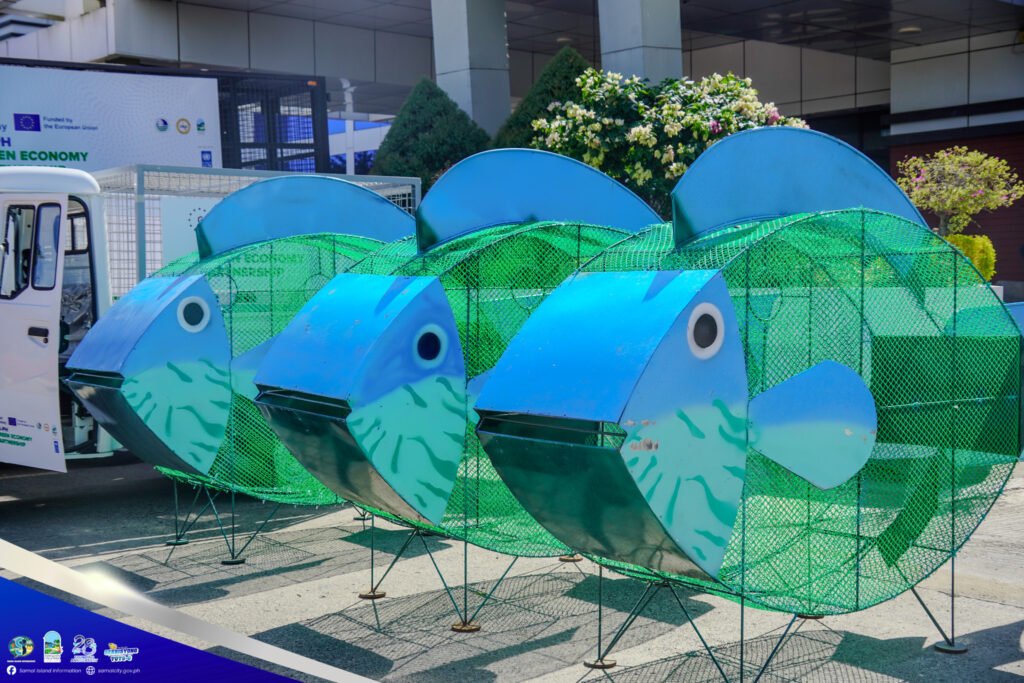
In a blessing and turnover ceremony held earlier Tuesday, the city received two trucks for plastic and food waste collection, two gas-fed tricycles for narrower routes and hard-to-reach barangays, 50 steel bins for plastic recovery, and 100 drums—split into blue and perforated containers—for food waste segregation, particularly in restaurants and tourism areas.
City officials said the new fleet and materials are expected to improve collection efficiency, strengthen segregation at source, and reduce improper dumping, especially as the island continues to grow as a tourism destination.
A key upgrade is the newly completed weighbridge at the Ecopark Facility, which now allows the city to accurately measure incoming waste.
Officials said the system will strengthen monitoring, reporting, and long-term planning by grounding waste management decisions on actual data.
Adding a “biotech” layer to its waste strategy, IGaCoS is also preparing to establish a ₱1-million Black Soldier Fly composting facility. The project will convert food waste into compost and support upcycling efforts, offering a low-cost, nature-based solution to organic waste management.
To complement infrastructure with information campaigns, the city also received a podcast set intended for environmental education and public awareness drives, helping engage communities on proper waste segregation and sustainability practices.
The initiatives form part of the EU–Philippines Green Economy Partnership, a ₱3.67-billion (€60 million) grant program running from 2023 to 2028 and implemented through the Department of Environment and Natural Resources, in coordination with the Department of Trade and Industry, Department of Energy, and Department of the Interior and Local Government.
For IGaCoS, officials said the upgrades signal a shift from basic waste collection toward a more integrated system—combining infrastructure, data, and community behavior change to build a cleaner and more sustainable island.