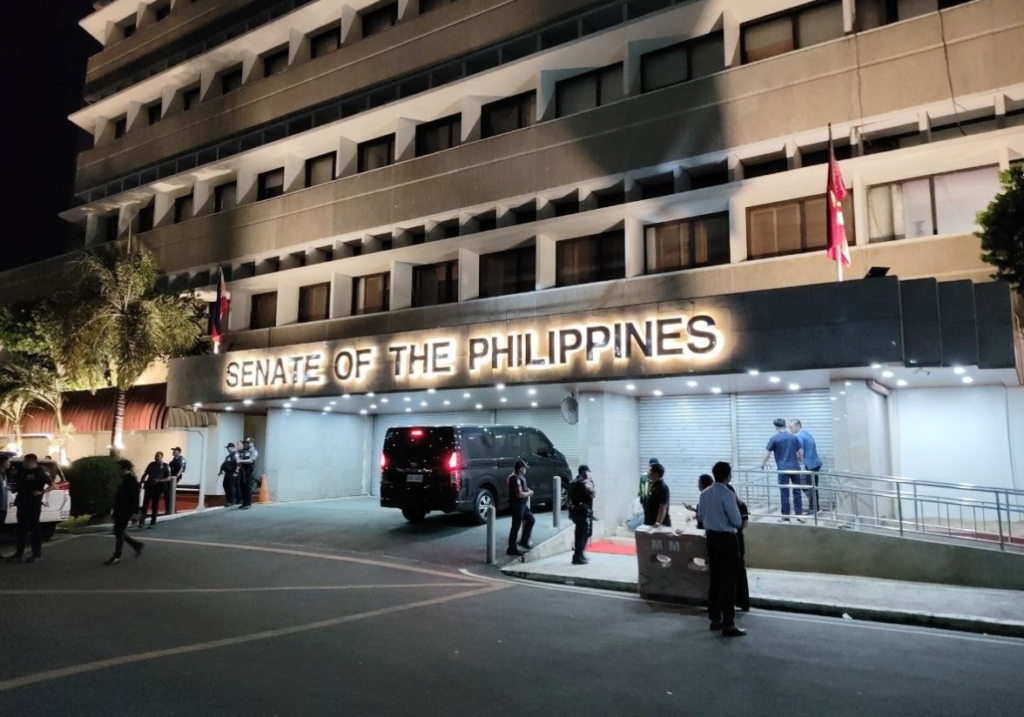
CAGAYAN DE ORO CITY (May 18) — The Philippine National Police now finds itself battling questions of credibility and accountability after allegations surfaced that police officers may have helped Senator Ronald dela Rosa quietly leave the Senate compound amid mounting legal pressure tied to the Duterte drug war.
What initially appeared to be a routine security movement has quickly escalated into a controversy threatening to deepen public suspicion over whether influential political figures continue to enjoy special treatment inside the country’s law enforcement system.
PNP chief Jose Melencio Nartatez Jr. on Sunday ordered an internal investigation into reports that policemen escorted Dela Rosa out of the Senate grounds before dawn on May 14.
The probe will review CCTV footage, logbooks, and police radio dispatches after a video surfaced showing a white police vehicle leaving the Senate compound alongside a black van suspected of carrying Dela Rosa.
Pasay City police chief Joselito de Sesto later admitted he was inside the police vehicle but denied providing an escort.
Still, the images have intensified speculation that state security forces may have played a role in facilitating the senator’s departure.
“If the investigation reveals that there was any unauthorized coordination, false reporting, or logistical support given to evade legal processes, those involved will face the full brunt of administrative and criminal sanctions,” Nartatez warned.
The controversy strikes at the heart of long-running concerns about impunity within Philippine policing — particularly involving officials linked to former president Rodrigo Duterte’s brutal anti-drug campaign.
Dela Rosa, Duterte’s former police chief and one of the principal architects of the drug war, resurfaced publicly at the Senate on May 11 after months out of sight amid rumors of possible action from the International Criminal Court.
He later stayed under Senate custody before suddenly leaving the premises hours after a gunfire incident triggered heightened police deployment around the area.
Nartatez strongly denied authorizing any covert operation or logistical assistance from Camp Crame, insisting police presence near the Senate was strictly for perimeter security and crowd control following the shooting incident.
But critics say the incident raises troubling questions that go beyond one senator’s movements.
At issue is whether the same police institution repeatedly accused by human rights groups of shielding officers implicated in drug war killings can credibly police itself when allegations involve one of its most influential former chiefs.
For accountability advocates and families of drug war victims, the investigation is becoming an early test of whether the PNP is willing to confront possible abuse of power within its own ranks — or merely contain political fallout.
As the ICC case against Duterte-era officials continues to gain momentum, the latest controversy risks reinforcing a perception that accountability in the Philippines remains uneven, especially when powerful allies and former security officials are involved.