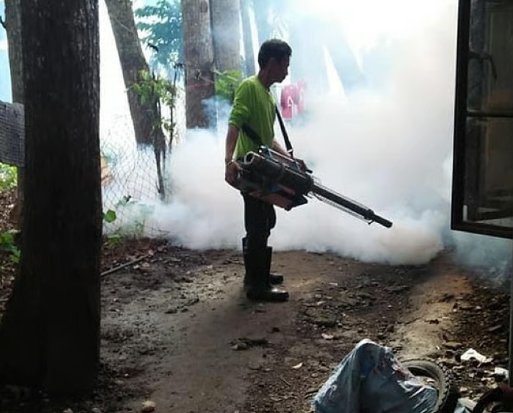
DIGOS CITY(June 8)— As dengue cases continue to rise across Davao del Sur, provincial officials have taken the unusual step of shortening government work hours throughout June to mobilize thousands of employees for daily mosquito-control and community cleanup operations.
Under Memorandum Order No. 533, Series of 2026, Governor Yvonne Roña Cagas directed all regular, contractual, and job order personnel of the provincial government to observe a temporary 8 a.m. to 4 p.m. work schedule from June 1 to June 30.
The move comes as dengue infections in the province reached 455 cases, including one death, according to data from the Philippine Integrated Disease Surveillance and Response (PIDSR) system covering the period from January 1 to June 6.
Provincial officials said the shortened workday is intended to encourage participation in community-wide anti-dengue campaigns in line with Presidential Proclamation No. 1204, which designates June as National Dengue Awareness Month.
The extra hour will be devoted to what health workers have long promoted as the “4:00 PM Habit” — a synchronized search-and-destroy campaign targeting stagnant water where Aedes aegypti mosquitoes breed.
The decision reflects growing concern over the spread of dengue, particularly among children.
More than half of all recorded cases involve children aged 14 years old and below.
Data showed that youngsters account for 228 of the province’s 455 reported infections, representing 50.1 percent of all cases.
Children aged 0 to 4 years old emerged as the most affected age group, with 83 reported infections. They were followed by children aged 5 to 9 years old with 79 cases and those aged 10 to 14 years old with 66 cases.
Health officials note that the concentration of infections among children is especially concerning because Aedes aegypti mosquitoes are aggressive daytime biters, placing young people at greater risk while attending school, playing outdoors, or spending time around residential areas.
Digos City recorded the highest number of dengue cases with 127 infections, consisting of 37 confirmed, 16 probable, and 74 suspect cases.
Bansalan followed with 98 cases but has drawn particular concern after recording the province’s lone dengue-related death this year.
Other municipalities under close monitoring include Santa Cruz with 63 cases and Magsaysay with 48.
Padada reported the lowest number of cases, with only eight suspect infections and no confirmed transmissions.
While confirmed dengue cases account for 95 infections, health authorities said a much larger number of patients remain under observation.
Of the province’s total caseload, 284 cases—or 62.4 percent—are still classified as suspect cases, indicating that hundreds of residents are exhibiting dengue-like symptoms while awaiting laboratory confirmation.
Another 76 cases have been classified as probable dengue infections.
The provincial government’s response underscores concerns that the rainy season could accelerate mosquito breeding and fuel additional infections if preventive measures are not intensified.
Despite the temporary reduction in office hours, the Provincial Government assured residents that public services would remain uninterrupted, with department heads instructed to maintain normal operations and ensure continued service delivery.
For provincial officials, the one-hour adjustment is more than an administrative change.
It is a public health intervention aimed at transforming every government employee into a frontline participant in the fight against dengue—before the virus gains a stronger foothold in communities and among the province’s most vulnerable residents.