MANILA (June 17) — The House prosecution panel’s announcement that it will present more than 30 witnesses in the impeachment trial of Vice President Sara Duterte signals what could become one of the most consequential political and constitutional proceedings in recent Philippine history.
But beyond the witness list and legal preparations lies a larger question: Can the country’s institutions conduct an impeachment trial that is seen as credible, transparent, and fair by a deeply divided public?
House prosecutors formally submitted their pre-trial brief to the Senate impeachment court this week, outlining the witnesses, evidence, and factual stipulations they intend to present against the Vice President.
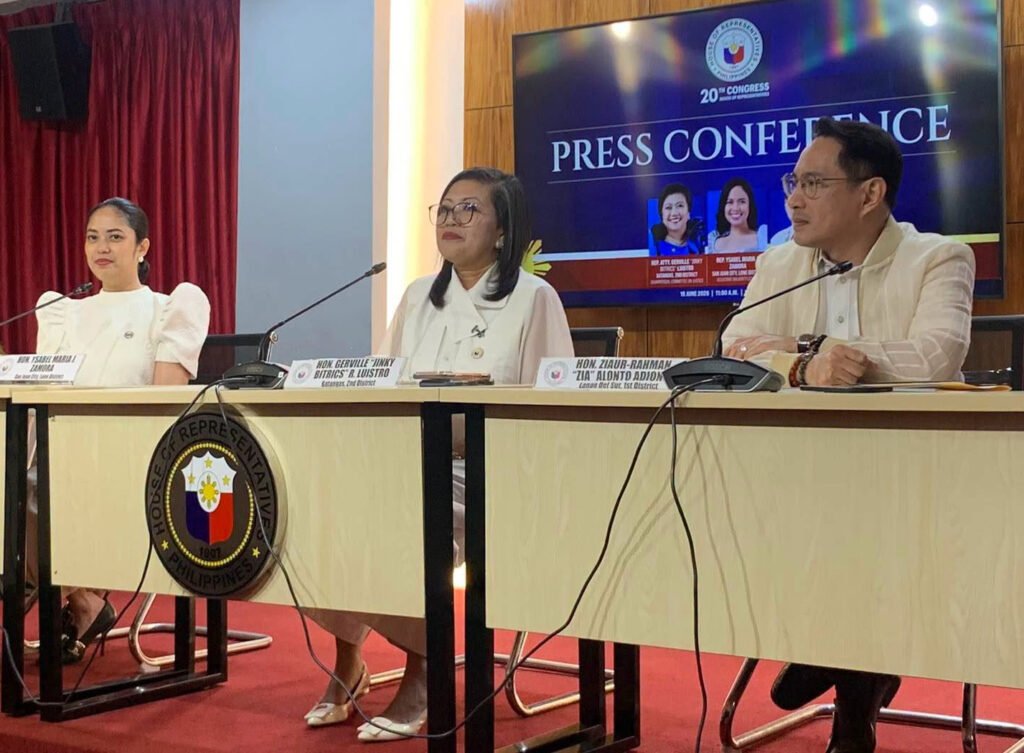
Lead prosecutor and Batangas Rep. Gerville Luistro said the prosecution is prioritizing a systematic presentation of evidence rather than dramatic courtroom surprises.
“There will be no surprise witnesses,” Luistro said, emphasizing that the impeachment court’s rules require all witnesses and evidence to be disclosed during pre-trial proceedings.
The move marks a departure from the impeachment trial of former President Joseph Estrada, where surprise witness Clarissa Ocampo became a pivotal figure after testifying about the controversial “Jose Velarde” bank account.
Transparency Versus Political Theater
The prosecution’s decision to identify its witnesses in advance reflects a broader effort to frame the proceedings as a legal and constitutional process rather than a political spectacle.
Yet impeachment, by its nature, occupies a space where law and politics intersect.
Unlike ordinary criminal cases, impeachment trials are conducted by elected officials and ultimately involve questions of public trust, accountability, and political legitimacy.
The Senate, sitting as an impeachment court, will not only evaluate evidence but will also face intense public scrutiny over whether the process remains impartial.
The challenge is compounded by the country’s increasingly polarized political environment, where supporters and critics of Duterte often view developments through partisan lenses.
Making the Trial Understandable
Recognizing the complexity of impeachment proceedings, prosecutors are proposing the use of Filipino and regional language translations to make the trial more accessible.
The proposal reflects concerns that legal jargon and technical arguments could alienate ordinary citizens from a process conducted in their name.
House Impeachment spokesperson and Lanao del Sur Rep. Zia Alonto Adiong noted that many Filipinos may struggle to understand highly technical legal discussions.
For governance advocates, public understanding is crucial because impeachment is not merely a legal proceeding—it is a constitutional mechanism designed to hold high-ranking officials accountable to the people.
If citizens cannot understand the issues being debated, public confidence in the outcome may be weakened regardless of the verdict.
The Leadership Question
Complicating matters is uncertainty within the Senate itself.
Questions remain over who will preside over the impeachment court amid ongoing leadership issues in the chamber.
Prosecutors have acknowledged Acting Senate President Sherwin Gatchalian but are urging senators to quickly resolve leadership questions to avoid procedural uncertainty.
Legal analysts warn that ambiguity in leadership during a major constitutional proceeding could provide grounds for future challenges to the legitimacy of the process.
A Constitutional Debate Over Numbers
One of the most significant issues raised by the prosecution concerns the number of votes required for conviction.
Under existing impeachment rules, conviction requires a two-thirds vote of all senators, currently interpreted as 16 votes.
However, Luistro suggested that the threshold may need reconsideration if senators become unable to participate because of arrest, suspension, or other legal impediments.
She cited the Supreme Court’s ruling in Avelino vs. Cuenco, which addressed the calculation of legislative quorum based on members who are able to perform their duties.
The issue could evolve into a major constitutional debate with implications extending beyond the current impeachment case.
Legal scholars note that any attempt to adjust the conviction threshold would likely face intense scrutiny because it directly affects the balance between accountability and due process in impeachment proceedings.
A Test for Democratic Accountability
At its core, the impeachment trial is not simply about the political future of Vice President Duterte.
It is also a test of whether Philippine democratic institutions can effectively enforce constitutional accountability mechanisms while protecting the rights of all parties involved.
Supporters of impeachment argue that the process demonstrates that no public official is above scrutiny.
Critics warn that impeachment can become a tool for political retaliation if not anchored in strong evidence and procedural fairness.
The Senate’s handling of the proceedings will likely influence public trust in government institutions long after the trial concludes.
What Is at Stake?
For ordinary Filipinos, the outcome will affect more than the career of a single political leader.
The trial could shape public perceptions of the rule of law, constitutional governance, and the ability of democratic institutions to resolve political disputes peacefully.
Whether the proceedings end in conviction, acquittal, or dismissal, their long-term significance may rest on a different question: Did the process strengthen public faith in democratic accountability, or deepen existing political divisions?
As the Senate prepares to convene as an impeachment court, that question may prove just as important as the verdict itself.