CAGAYAN DE ORO CITY (August 26) — For thousands of young Bangsamoro voters, the Sept. 14 parliamentary elections are more than a first trip to the ballot box. They are a test of whether a new generation can help shape a democratic culture in a region emerging from decades of conflict and political transition.
That makes voter education especially critical.
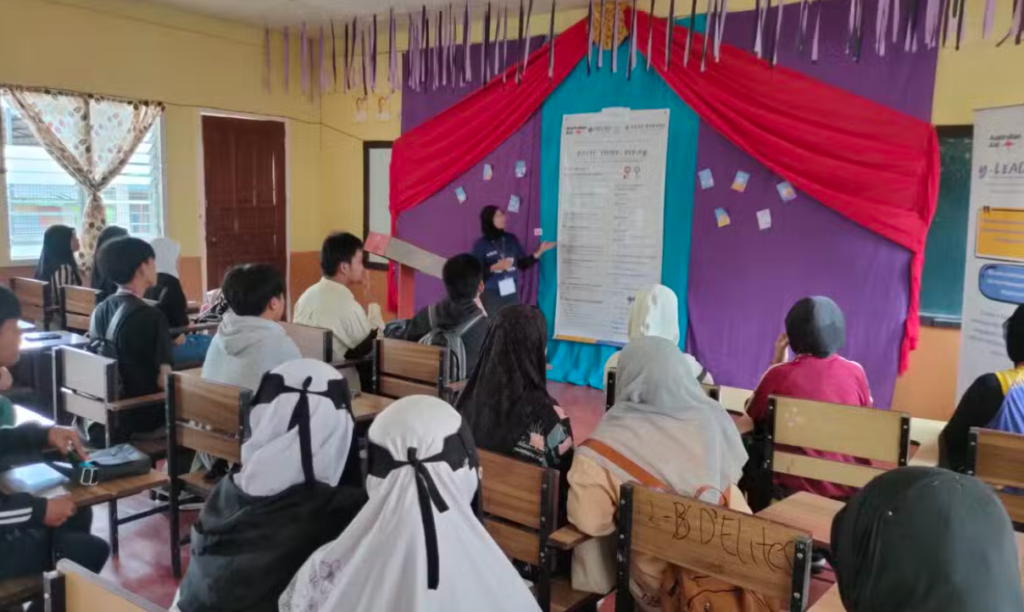
In Lanao del Sur, youth volunteers are taking that challenge into classrooms through a grassroots campaign designed to help first-time voters understand not only how to vote, but why informed and peaceful participation matters.
Supported by the Australian Government and implemented by Relief International in partnership with the United Youth for Peace and Development-Relief Assistance Network and Organization (UNYPAD-RANAO), the initiative has brought election education to schools in Balindong, Binidayan, Madamba and Masiu.
The campaign comes as the Bangsamoro Autonomous Region in Muslim Mindanao (BARMM) prepares for its first parliamentary elections—a milestone in the region’s transition toward an autonomous parliamentary form of government.
For young voters, however, the significance of the exercise can easily be overshadowed by the realities of local politics: political loyalties, family influence, misinformation, vote-buying and personality-driven campaigns.
That is where youth participation becomes more than a numbers game.
After undergoing a Peer Election Educators’ Training of Trainers, 36 student leaders and peer educators have been conducting learning sessions aimed at giving their fellow students the tools to make independent electoral choices.
The school caravan visited Unda Memorial National Agricultural School in Masiu on Aug. 12, Madamba National High School on Aug. 17, Balindong National High School on Aug. 20 and Sittie Ayeesha National High School in Binidayan on Aug. 23.
The organizers hope to reach about 1,000 young and first-time voters across the four municipalities.
The sessions use interactive booths to explain regional governance, parliamentary positions, voting procedures and the responsibilities of voters. Mock elections give students a chance to go through the mechanics of voting before they face the real thing.
But the more important lesson is arguably what happens after the ballot is cast.
Democratic participation does not end with voting. It requires citizens who can distinguish facts from propaganda, question candidates, evaluate platforms, respect political differences and reject violence as a means of settling political disputes.
The young participants appear to understand that responsibility.
Sittie Raymah Abdullah, Sangguniang Kabataan Federation member from Binidayan, said she would use her position to educate peers about voting rights while refusing to participate in smear campaigns or spread unverified political information.
At Balindong National High School, student leader Sonaya Asgar said young voters should choose leaders based on qualifications, integrity and platforms rather than political pressure.
She also pledged to discourage vote-buying and the circulation of unreliable information.
Such commitments may sound simple, but they address some of the most persistent vulnerabilities of elections: misinformation, patronage and the tendency to treat political competition as a contest between personalities rather than competing visions for government.
For the BARMM, the stakes are particularly high.
The parliamentary elections are expected to help define how the region’s new political institutions function in practice. The credibility of those institutions will depend not only on election officials and candidates, but also on whether voters—especially a generation coming of age under the Bangsamoro political transition—can exercise their choices freely and responsibly.
Jerome Balinton, Relief International Philippines country director, said youth-centered initiatives such as Y-LEAD BARMM are increasingly relevant as the region approaches its first parliamentary elections.
By training young peer educators, he said, the program seeks to develop voters who can participate peacefully, think critically and contribute to stronger democratic governance.
Yet voter education campaigns can only go so far.
Young voters will ultimately exercise their democratic rights in an environment shaped by the conduct of political leaders, the integrity of election institutions, access to reliable information and the willingness of communities to respect the choices of others.
That is why the youth caravan should not be viewed merely as an election activity.
It is an investment in democratic citizenship.
For a generation born or raised during the Bangsamoro transition, the Sept. 14 elections offer a defining opportunity: to inherit politics as it has traditionally been practiced—or help build a political culture where informed choice, peaceful dissent and accountability become the stronger traditions.
The ballot is only the starting point. The real measure of youth participation will be what they do with their voices before, during and long after election day.