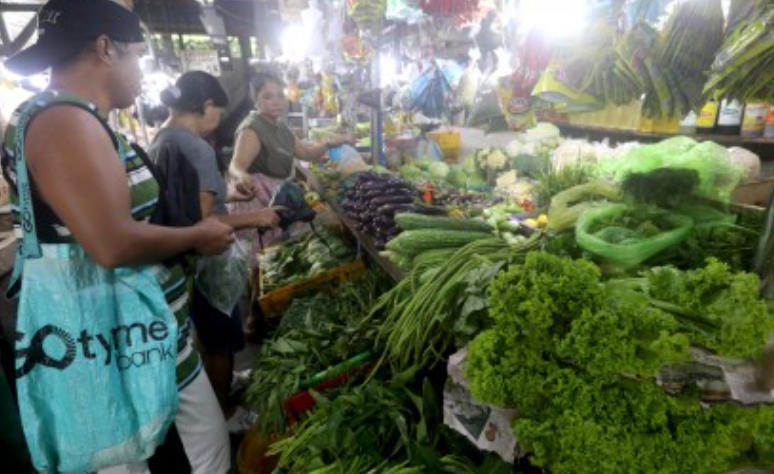
MANILA (September 5) — The agricultural damage from floods and heavy rains has climbed to P3.62 billion, and while most of the destruction is in Luzon and the Visayas, the impact could eventually reach Mindanao markets and consumers through the country’s food supply chain.
The Department of Agriculture (DA) said Thursday that the enhanced southwest monsoon and Tropical Cyclones Luis, Maymay and Neneng had affected 86,466 farmers, damaged 74,809 hectares of agricultural areas and wiped out an estimated 87,745 metric tons of farm production.
The damage increased by about P230 million in just 20 hours, from P3.39 billion reported Wednesday afternoon.
The affected areas cover eight regions: Cordillera, Ilocos, Cagayan Valley, Central Luzon, CALABARZON, MIMAROPA, Bicol and Western Visayas.
For communities in Mindanao, the concern is simple: if farms in these regions produce less food, where will traders get the supplies they need?
One possible answer is Mindanao.
But that could bring both opportunities and risks for the region.
Rice takes the biggest hit
Rice accounts for the largest share of the damage at P1.90 billion.
The DA estimates that 59,872 metric tons of rice production were lost across 67,921 hectares of rice areas.
High-value crops suffered another P1.03 billion in damage, including vegetables, fruits, spices and other crops.
Fisheries and aquatic resources sustained P412.84 million in losses, while corn damage reached P119.84 million.
Additional losses were recorded in livestock, poultry, cassava, farm machinery and agricultural infrastructure.
These losses matter beyond the affected farms.
When production falls sharply, supplies available to traders and markets can also decline. Traders may then look elsewhere for rice, vegetables, fruits and other commodities.
That is where Mindanao could come into the picture.
Why Mindanao matters
Mindanao is not simply a consumer of food shipped from other parts of the country. It is also a major agricultural production and trading hub.
Philippine Statistics Authority (PSA) data show that Davao Region recorded the country’s largest domestic commodity outflow in the first quarter of 2026, at about 1.94 million tons.
That represented about 19.1 percent of the country’s total domestic commodity outflow during the period.
The figure highlights Davao’s role in moving commodities to markets outside the region.
Northern Mindanao is also a major player in the national supply network. In 2025, the region recorded a 2.27-million-ton favorable domestic trade balance, showing the scale of commodities moving out of the region compared with those coming in.
But the trade flows are not one-way.
In the second quarter of 2026, Davao Region recorded a 240,000-ton unfavorable domestic trade balance, meaning more commodities entered the region than left it during the period.
The numbers show how interconnected Mindanao’s markets are with the rest of the country.
More demand could mean more income for farmers
If production losses in Luzon and the Visayas continue, traders may look to Mindanao for alternative supplies.
That could be good news for Mindanao farmers.
More buyers could mean stronger demand and better opportunities to sell rice, vegetables, fruits and other agricultural products.
Farmers who have enough produce to bring to market could benefit if traders begin looking south for supplies.
But there is another side to the story.
Consumers could also feel the pressure
If more Mindanao produce is shipped to other parts of the country, the amount available for local markets could become tighter.
And when supply gets tight while demand remains strong, prices can come under pressure.
This could be particularly noticeable in vegetables and other perishable products, whose prices can change quickly when weather, transportation and supply are disrupted.
It could also affect low-income families the most because even relatively small increases in the prices of rice, vegetables and other basic food items can take a bigger share of household budgets.
There is no evidence yet that the latest Luzon and Visayas farm damage has caused food prices to rise in Mindanao.
The current price figures provide a baseline, but the September 3 calamity assessment is still new. What happens to Mindanao prices will depend on how long production remains disrupted, how quickly affected farms recover and how traders respond.
The damage is still growing
The DA said 53,114 hectares, or 71 percent of the affected agricultural areas, can still recover.
Another 21,695 hectares, or 29 percent, are considered beyond recovery.
The government has begun providing assistance.
The DA said it has distributed P609.79 million worth of agricultural inputs, including seeds, planting materials and more than 9,000 bags of rice.
It has also released P35.67 million in insurance payments to more than 5,000 insured farmers.
Affected farmers may also borrow up to P25,000 without interest, payable over three years, under the agency’s Survival and Recovery Program.
The DA is also monitoring food prices and transportation to prevent price gouging and keep agricultural products moving to markets.
What happens next matters to Mindanao
For Mindanao communities, the coming weeks will be important.
If damaged farms in Luzon and the Visayas recover quickly, the impact on other regions could remain limited.
But if losses continue and supply shortages emerge, traders may increasingly turn to Mindanao to fill the gap.
That could give Mindanao farmers new markets and better selling opportunities.
At the same time, it could put pressure on the supply available to Mindanao consumers.
The challenge will be keeping enough food moving both out of Mindanao to help meet national demand and into local markets to keep food affordable for communities here.
The latest P3.62-billion damage figure is therefore more than a tally of destroyed crops and flooded farms.
It is an early warning of how a disaster in one part of the country can travel through roads, ports, traders and markets—and eventually reach the food stalls, public markets and dinner tables of Mindanao.