
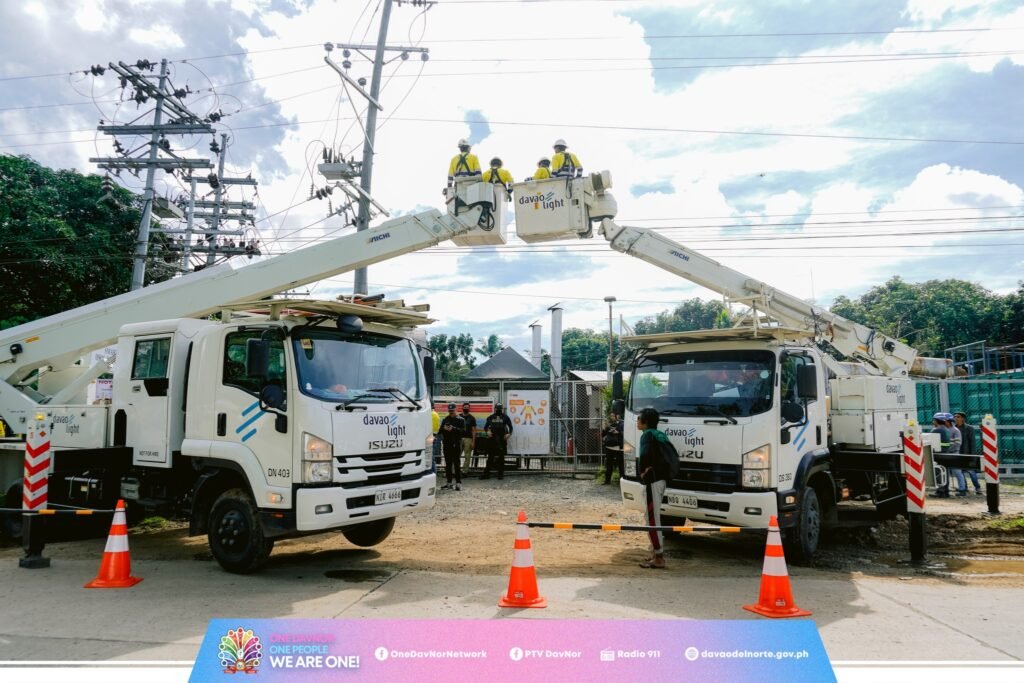
DAVAO CITY (March 2) — Consumers are paying less for electricity this February — but in the Island Garden City of Samal (Igacos), the bigger issue is no longer just the rate per kilowatt-hour. It’s who is accountable when the lights go out.
Rival distributors Davao Light and Power Co., Inc. and Northern Davao Electric Cooperative (Nordeco) both announced rate cuts, crediting lower generation charges.
Davao Light reduced residential rates to ₱10.30 per kWh for the Feb. 11–March 11 billing cycle — down ₱1.42 from January. A household using 200 kWh saves roughly ₱283.
Nordeco slashed its residential rate from ₱14.90 to ₱12.12 per kWh, a ₱2.7759 drop, with similar reductions for low- and high-voltage customers.
Both utilities said the lower generation costs cushioned an increase in the Universal Charge for Missionary Electrification ordered by the Energy Regulatory Commission (ERC), which funds power subsidies in remote areas.
But while February bills went down, tensions on the island surged.
A 30-Minute Blackout, a Longer Legal Fight
On Feb. 25, Samal experienced a 30-minute island-wide blackout that coincided with the enforcement of a writ of possession issued by a Panabo court in favor of Davao Light.
Nordeco accused Davao Light of illegally implementing the writ and interfering with its operations, alleging that personnel manually opened reclosers at the power plant of Phil Power Ventures Corporation (PPVC), its generation provider. The cooperative described the act as “tortious interference” and claimed it caused revenue losses and disrupted an existing supply agreement.
Nordeco insists its franchise remains valid until 2033 and cited a ruling of the Supreme Court of the Philippines, which it said granted Davao Light operational responsibility but not exclusive control.
Davao Light has yet to issue a detailed public response to the accusations but earlier announced it had begun operations on Samal.
For residents and businesses, the legal back-and-forth is more than a courtroom dispute — it’s about service stability and clarity.
Who Answers When the Lights Go Out?
Samal’s economy depends heavily on tourism. Resorts, restaurants, and transport operators require uninterrupted power for bookings, refrigeration, and water systems. Even a half-hour outage can ripple through operations, especially during peak travel season.
Yet as both utilities assert authority over the same service area, accountability becomes blurred:
- Who compensates businesses for losses during transition-related outages?
- Who ensures safety protocols are followed during facility turnover?
- Who guarantees long-term reliability if legal challenges continue?