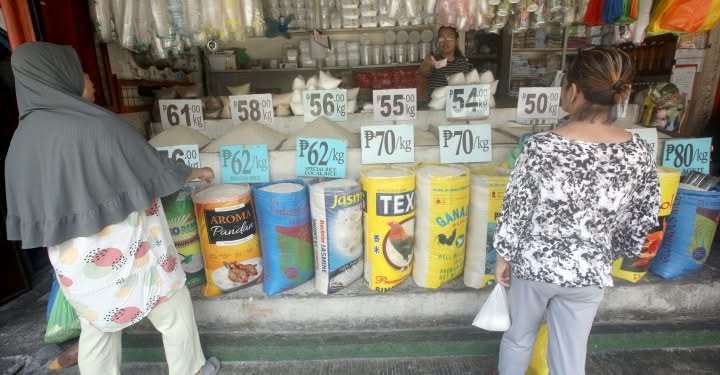
MANILA (June 3) — The Department of Agriculture (DA) has intensified nationwide inspections to enforce the government’s P50-per-kilo price cap on imported rice, issuing dozens of notices of violation against retailers accused of selling above the mandated ceiling.
The crackdown comes as the government seeks to bring down rice prices amid rising food costs, but questions remain over how much ordinary consumers—particularly in Mindanao—will benefit from the policy.
Under Executive Order No. 118, imported rice with 5 percent broken grains is temporarily subject to a maximum retail price of P50 per kilogram. The measure was introduced after President Ferdinand Marcos Jr. cited unjustified price increases and market abuse linked to global supply disruptions.
Inspection teams recently visited markets across the country, issuing 36 notices of violation to retailers found selling above the ceiling. Authorities also investigated cases of suspected rice mislabeling and overpricing.
While the DA says the policy protects consumers, many retailers claim they are being squeezed by suppliers and wholesalers who continue to sell rice at elevated prices.
The issue is particularly significant for Mindanao, which remains one of the country’s major food-producing regions and contributes substantially to national rice supplies. Yet despite being close to production areas, many communities in the island continue to face high retail rice prices due to transport costs, market inefficiencies, and layers of middlemen in the supply chain.
For consumers in urban centers such as Davao, Cagayan de Oro, Cotabato, General Santos, and Zamboanga, any reduction in rice prices could provide relief to household budgets already strained by inflation. Rice remains the single largest food expense for many low-income families.
However, economists and farmer groups have long argued that price controls alone cannot solve structural problems in the rice market. Without addressing excessive markups, trading practices, and supply chain bottlenecks, lower mandated prices may prove difficult to sustain.
The DA reported that nationwide compliance with the price ceiling has improved, but less than half of inspected retailers were found to be fully complying with the order.
As inspections continue, the challenge for government is ensuring that the benefits of lower rice prices reach consumers not only in Metro Manila but also in Mindanao communities where the cost of living remains a daily concern.
For many families, the success of the price cap will not be measured by the number of violation notices issued, but by whether cheaper rice actually reaches their dining tables.