DAVAO CITY (July 10) — As the impeachment trial of Vice President Sara Duterte continues to dominate national headlines, a group of Dabawenyos is urging residents to look beyond political loyalties and focus instead on accountability, evidence, and the constitutional process.
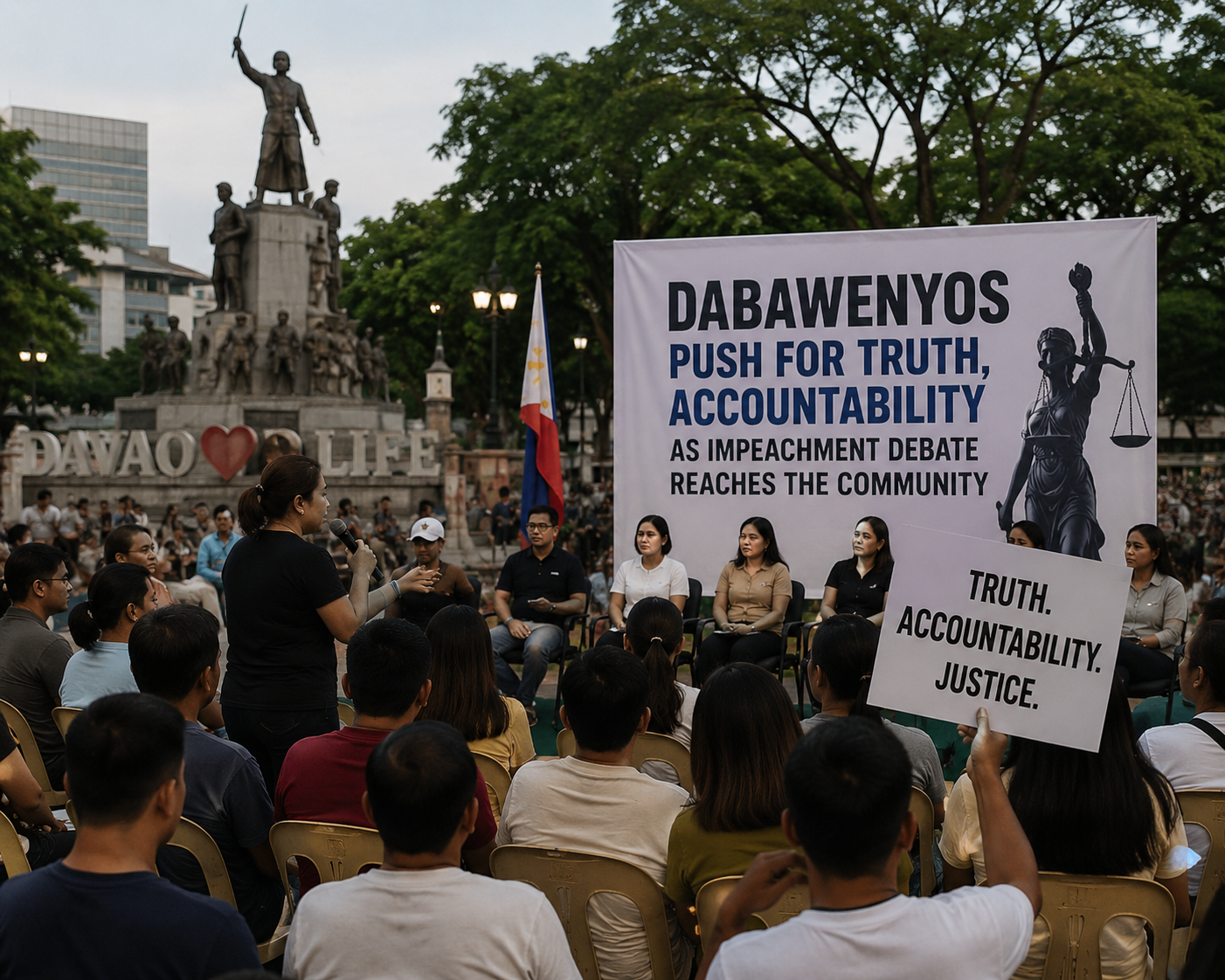
Members of the Stand in Opposition to Plunder (STOP) Corruption Alliance gathered in Davao City for a public forum that sought to explain the impeachment proceedings and encourage citizens to engage in informed discussions about an issue they say has far-reaching consequences for governance and public trust.
The forum brought together speakers including Jose Enrique ‘Sonny’ Africa and Renee Louise Manda Co, who outlined the constitutional basis of impeachment, the allegations against the Vice President, and the role of citizens in safeguarding democratic institutions.
For organizers, the discussion was intended to move the conversation away from political rivalries and toward the broader issue of government accountability.
“The impeachment of Vice President Sara Duterte is not a spectacle nor a quarrel between political clans,” said Dr. Jean Lindo, convener of the STOP Corruption Alliance. “It is a constitutional reckoning over serious allegations that demand the full scrutiny of the nation and the active vigilance of its people.”
Rep. Manda Co told participants that the impeachment complaint is supported by documentary evidence, official audit findings, and government records. She urged the public to examine verified information and resist the spread of disinformation surrounding the case.
Organizers said the complaint includes four Articles of Impeachment—graft and corruption, betrayal of public trust through unexplained wealth, bribery, and grave threats—and stressed that these allegations should be evaluated through the legal process rather than through partisan narratives.
“The real issue is public accountability,” said alliance convener Elmer Jon Mupas. “Public funds are being questioned, public trust is at stake, and the people deserve to know the truth.”
Africa, meanwhile, framed corruption as an issue that directly affects ordinary Filipinos, arguing that public money lost through corruption translates into fewer resources for schools, hospitals, livelihoods, and other essential services.
“Every peso lost to corruption is a peso stolen from workers, farmers, students, and communities that continue to struggle with poverty and neglect,” he said.
The alliance also appealed to the Senate to conduct the impeachment trial independently, transparently, and without political interference, emphasizing that the constitutional process should be allowed to run its course.
The gathering reflected growing efforts by civil society groups to bring the national impeachment debate closer to communities, encouraging citizens to understand how issues of governance, transparency, and the use of public funds affect everyday life.
As the forum concluded, participants renewed their call for the trial to proceed based on evidence and due process.
“Let the impeachment trial proceed with integrity and honesty. Let the evidence be heard. Let the truth be made public,” Mupas said.
For the organizers, the issue extends beyond one public official. They said it is ultimately about strengthening democratic institutions and affirming that accountability under the law should apply to everyone entrusted with public office.