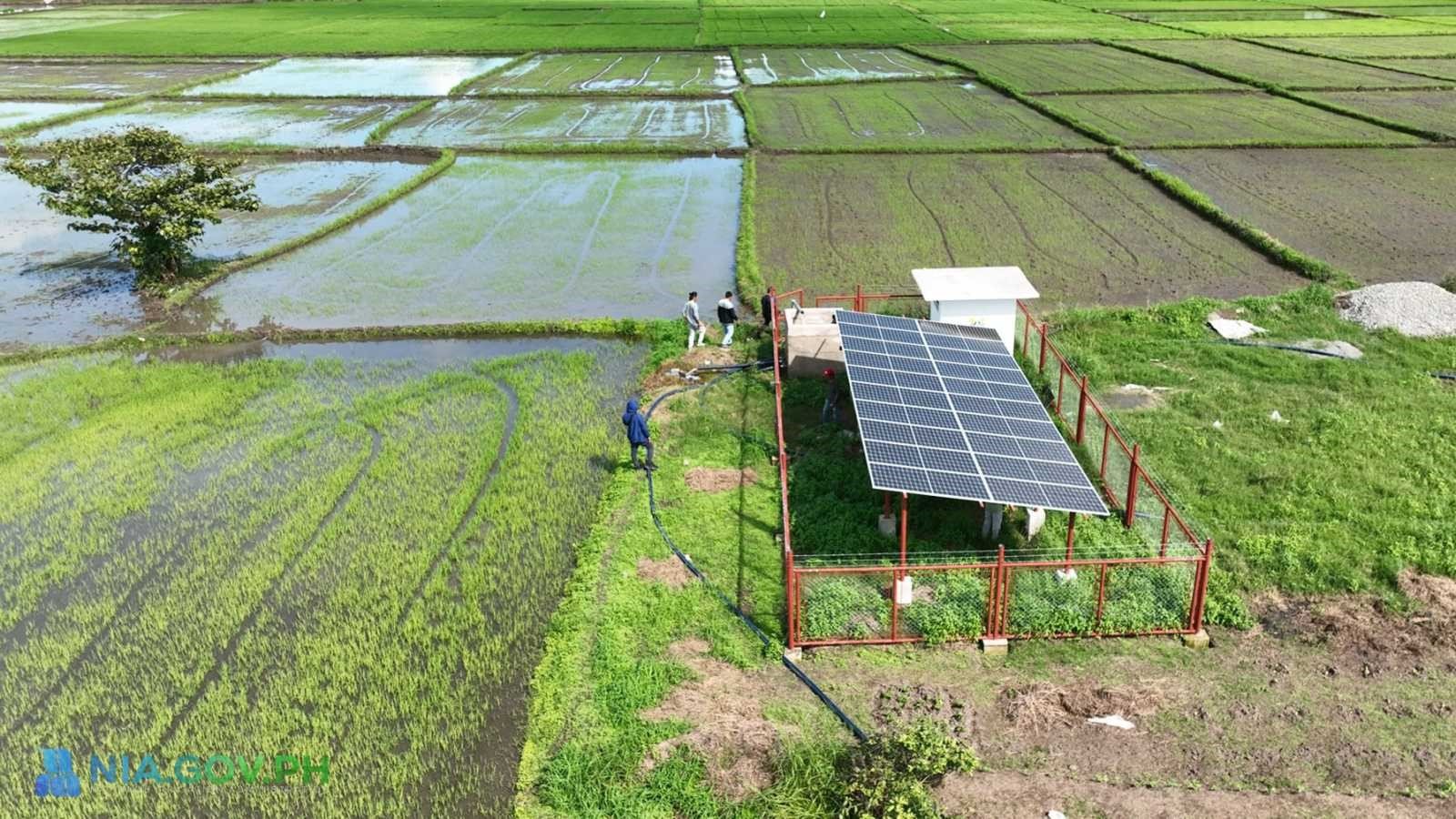
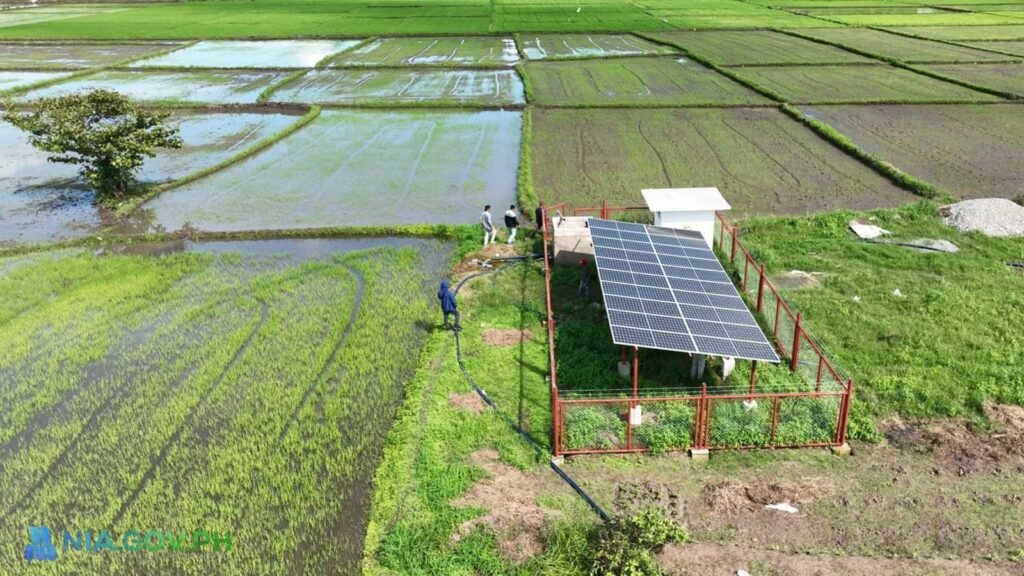
Demonstration of Solar Irrigation photo sourced from NIA
Demonstration of Solar Irrigation photo sourced from NIA
DAVAO CITY – The City Government of Davao, through the City Agriculturist Office (CAgrO), has completed the installation of its second Solar-Powered Irrigation System (SPIS) in Barangay Malabog, Paquibato District, as part of its efforts to boost agricultural productivity and ensure climate-resilient irrigation for farmers.
The new SPIS is funded by the City Disaster Risk Reduction and Management Office (CDRRMO) and aims to provide a cost-effective and eco-friendly water source, especially in remote areas with limited access to electricity.
According to CAgrO Officer-in-Charge Antonio Obsioma, Paquibato District now has two operational solar-powered irrigation systems, with the first SPIS located in Barangay Pañalum.
“Our primary goal is to provide farmers with an affordable and reliable irrigation system for high-value crops such as vegetables and cacao,” Obsioma said in an interview with Madayaw Program on Davao City Disaster Radio (DCDR).
The SPIS will be crucial in mitigating potential El Niño-related drought impacts, ensuring consistent water supply to sustain crop production.
The Patag Farmers Association in Malabog will be the main beneficiary of the system. However, Obsioma noted that neighboring farmers can also access the irrigation service under the association’s management.
“Farmers from nearby areas can also avail of the irrigation services, but the association will be in charge of its operations,” he added.
The solar-powered irrigation system is expected to be fully operational by the second week of March.
Paquibato District, for decades, was considered a red zone due to the presence of communist insurgent groups like the New People’s Army (NPA), but it has slowly transformed into a zone of peace.
In response to these longstanding issues, the Davao City government launched the “Peace 911” initiative on May 10, 2018, to foster development and reduce violence.
The success of Peace 911 has been attributed to its comprehensive approach, which addresses immediate concerns such as hunger and fear while also focusing on long-term development goals. The program’s positive impact has led to its expansion into other districts, including Marilog and parts of Calinan, with plans to implement similar strategies city-wide to sustain peace and development.
The collaborative efforts of local government units, security forces, and community stakeholders have been pivotal in reclaiming Paquibato from decades of insurgency, paving the way for sustainable development and improved quality of life for its residents.