COTABATO CITY (June 24) — A family dispute over marriage, separation, and land ended in bloodshed in Barangay Patot, Pahamuddin, in the Special Geographic Area of the Bangsamoro Autonomous Region in Muslim Mindanao (BARMM), underscoring how private conflicts can quickly escalate into armed violence in parts of Mindanao.
Police said the clash stemmed from a dispute between a separated couple and their families over a two-hectare parcel of land allegedly given as dowry during the marriage. When the relationship broke down, the husband reportedly attempted to reclaim the property, but the wife’s family refused, triggering rising tensions that eventually led to an ambush and armed confrontation.
Private dispute, public violence
What began as a domestic disagreement rapidly widened into a clan-level confrontation, a pattern that authorities say remains a recurring risk in areas where family networks are tightly linked to security dynamics.
In this case, both families reportedly have relatives associated with the Moro Islamic Liberation Front (Moro Islamic Liberation Front), though officials stressed there is no indication the group itself was involved.
Security forces moved quickly to contain the situation and prevent retaliatory attacks or further escalation involving armed actors.
Peace mechanisms activated
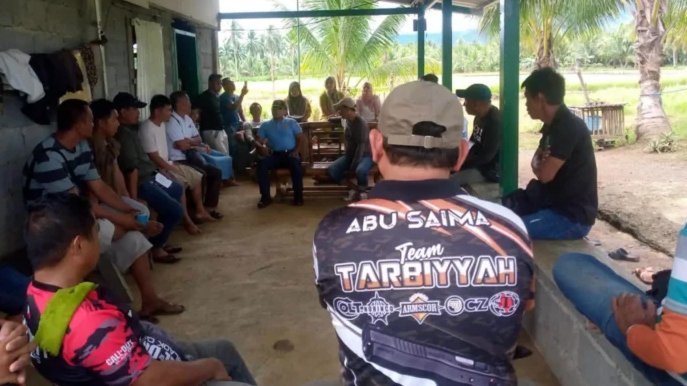
Authorities deployed police, military units, local officials, and members of the Joint Peace and Security Team (JPST), part of the security framework under the Bangsamoro peace process.
The JPST plays a key role in de-escalating local conflicts, monitoring potential flashpoints, and preventing disputes from spreading across communities—particularly in areas transitioning from decades of armed conflict.
Where custom and law collide
The case also highlights a deeper tension between customary marriage practices and formal legal systems.
In some communities, land transferred as part of a marriage arrangement carries both economic and cultural weight. When marriages dissolve, disputes over such property can become highly charged—especially where documentation is unclear or where there are no effective mediation mechanisms.
Without timely resolution, these disagreements can harden into clan conflicts that extend far beyond the original parties involved.
Call for mediation
Authorities have begun efforts to mediate between the two sides and have urged restraint while negotiations continue. Preventing further retaliation is seen as critical to avoiding a wider cycle of violence.
Beyond immediate security response, officials and peace advocates say the incident underscores the need for stronger community-based dispute resolution systems, accessible legal support, and culturally grounded mediation mechanisms.
While BARMM has made significant progress under the peace process, the Pahamuddin killings serve as a reminder that unresolved land and family disputes remain among the most persistent triggers of localized violence.