DAVAO CITY, Philippines — The United States Federal Bureau of Investigation (FBI) has warned that industrial-scale scam compounds, online violent extremism, and transnational drug trafficking are rapidly evolving into some of Southeast Asia’s most pressing security challenges, with the Philippines increasingly finding itself on the frontline of the fight against borderless organized crime.
Speaking during a regional security forum in Bangkok recetnly, FBI Deputy Director Dan Bongino said organized criminal syndicates are exploiting technology, weak borders, and human vulnerability to expand operations that victimize millions of people across the region.
“These criminals don’t care what flag their victims live under. They target Americans and Southeast Asians alike. They profit from misery regardless of national identity,” Bongino said.
His warning comes as Philippine authorities continue to dismantle Philippine Offshore Gaming Operator (POGO)-linked scam hubs, pursue cybercrime syndicates, and strengthen enforcement against illegal foreign workers and other cross-border criminal activities.
Mindanao Cases Reflect Broader Security Challenges
The FBI’s warning resonates in Mindanao, where recent law enforcement operations have uncovered a range of security concerns involving foreign nationals. While not all of these cases have been classified as transnational organized crime, authorities say they illustrate the increasingly cross-border nature of criminal and security issues confronting the country.
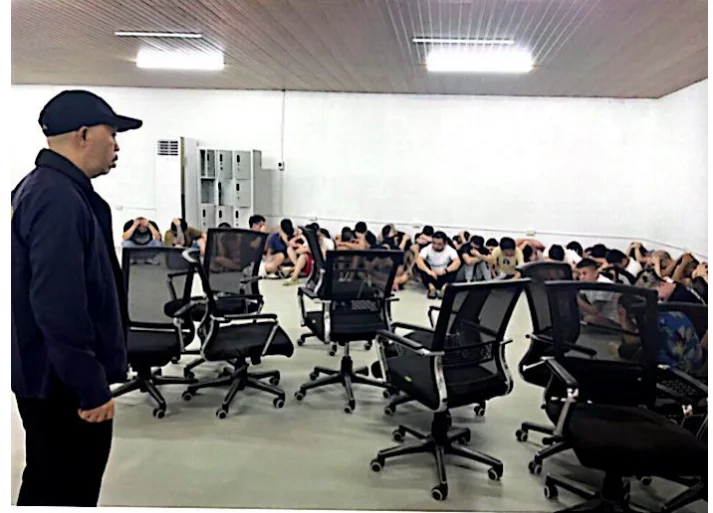
In December 2025, operatives of the National Bureau of Investigation–Southeastern Mindanao Regional Office arrested 56 Chinese nationals, three Malaysians, and one Filipina during a pre-dawn operation in Barangay Manay, Panabo City, Davao del Norte.
Authorities said the operation targeted individuals allegedly linked to Philippine Offshore Gaming Operator (POGO) activities. Investigators have been examining possible connections to cyber-enabled fraud, organized criminal networks, and other cross-border offenses.
In a separate operation on May 25, 2026, the Bureau of Immigration’s Regional Office XI, in coordination with the Philippine Army’s 10th Infantry Division, apprehended 24 Chinese nationals in Barangay New Little Panay, Panabo City, for alleged violations of the Philippine Immigration Act involving unauthorized employment.
Authorities initially verified the documents of 27 Chinese nationals before determining that 24 may have violated immigration regulations. The case remains an immigration enforcement matter.
Meanwhile, authorities raided the Philippine Sanjia Steel Corporation inside the PHIVIDEC Industrial Estate in Tagoloan, Misamis Oriental, where they discovered 69 undocumented Chinese nationals reportedly working inside the facility.
Defense Secretary Gilberto Teodoro Jr. described the incident as raising significant national security concerns, citing the presence of undocumented foreign workers inside a strategic industrial facility. Authorities continue to investigate possible violations of immigration and labor laws.
Digital Recruitment and Violent Extremism
Beyond immigration and cybercrime concerns, security officials in Mindanao continue to monitor attempts by extremist groups to exploit digital platforms for recruitment and radicalization.
Bongino warned that violent extremist organizations have increasingly shifted from physical training camps to online platforms, allowing vulnerable individuals—particularly young people—to be exposed to extremist ideologies through social media, gaming communities, and encrypted communication channels.
“There are no borders when it comes to violent extremism,” Bongino said. “A teenager sitting behind a computer halfway around the world can consume the same violent content as someone in an American classroom.”
He cited the FBI’s partnership with the Philippine government through the FBI-led Anti-Terrorism Fusion Group, which has resulted in 14 joint operations identifying juveniles exhibiting indicators of violent extremist behavior.
According to the FBI, intelligence-sharing efforts led to the intervention and rescue of 21 minors believed to be at risk of mobilization toward violence.
“Those aren’t statistics. Those are lives saved and families protected,” Bongino said.
Expanding Drug Trafficking Networks
The FBI also warned of the growing threat posed by fentanyl and other synthetic narcotics, saying international drug syndicates continue to adapt their operations to evade law enforcement.
According to Bongino, the FBI seized 2,250 kilograms of fentanyl during the past year—an amount capable of killing more than 178 million people.
He said the bureau is working with governments across Asia to identify precursor chemicals, disrupt supply chains, and dismantle trafficking networks before illegal drugs reach consumers.
A Shared Regional Challenge
For the Philippines, the FBI’s warning details how security threats once viewed as distant have become increasingly local.
Authorities have dismantled scam hubs across Luzon, the Visayas, and Mindanao; intensified immigration enforcement against undocumented foreign nationals; expanded monitoring of online extremist recruitment; and continued operations against transnational narcotics trafficking.
Although these incidents involve different offenses and remain under separate investigations, security officials say they collectively demonstrate the growing complexity of cross-border threats confronting the Philippines and the wider Southeast Asian region.
“The threats are global. The criminals are ruthless. But our partnerships throughout Southeast Asia are ironclad,” Bongino said.
“Together, we will make America and the world safer.”-Editha Z Caduaya