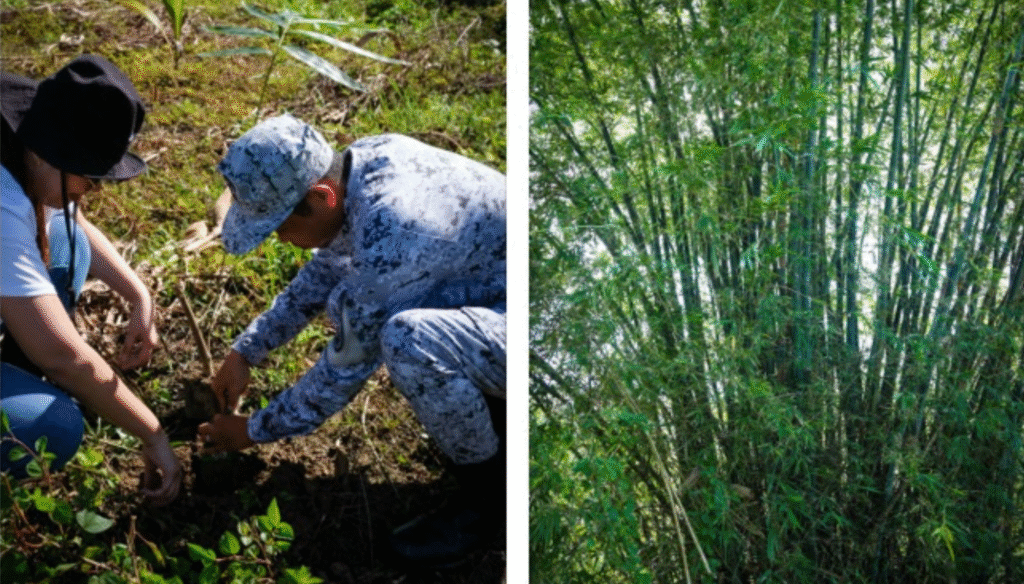
MANILA(February 9) — Long valued in rural homes and farms, bamboo is being positioned as a frontline climate solution for Mindanao and other vulnerable provinces as the Climate Change Commission (CCC) rolls out its campaign “Kawayan: Kabalikat ng Klima at Komunidad.”
The campaign, launched through the CCC’s Facebook and Instagram platforms, promotes progressive bamboo development as a nature-based solution (NbS) that not only addresses climate change but also creates livelihood opportunities for farmers, fisherfolk, and rural communities.
For many areas in Mindanao—frequently hit by flooding, landslides, and strong winds—bamboo offers practical protection. Its deep root systems help stabilize soil, store water, and reduce the impact of extreme weather events, making it especially relevant for upland and river-adjacent barangays.
A natural fit for rural livelihoods
The Philippines has an estimated 39,000 to 53,000 hectares of land suitable for bamboo cultivation, much of which is found in rural and underutilized areas. The CCC said this opens opportunities for communities in Mindanao to diversify income while strengthening climate resilience.
“Bamboo is a powerful partner in climate action,” said CCC Vice Chairperson and Executive Director Robert E.A. Borje.
“It captures carbon, reduces the impact of strong winds and storms, and supports ecosystem stability. With wider and well-planned bamboo development, we can strengthen climate resilience and protect communities, especially those most exposed to climate risks,” Borje said.
Voices from the ground
For farmers and Indigenous Peoples (IP) communities, bamboo is already part of daily life—now gaining new meaning as climate impacts worsen.
“Sa amoang komunidad, kawayan na gyud among ginagamit pang-balay ug pang-uma. Kung itanom kini daplin sa sapa, dili dali ma-anod ang yuta kung kusog ang ulan,” said Datu Dindo Bansalan, an IP leader from an upland community in Bukidnon.
(In our community, bamboo has long been used for houses and farming. When planted along riverbanks, the soil is less likely to be washed away during heavy rains.)
Farmers also see bamboo as a buffer against climate losses.
“Kung mapalapad ang bamboo farming, dili lang ani proteksyon sa uma, naa pud mi dugang kita,” said Rolando P. Dizon, a small farmer from North Cotabato.
(If bamboo farming expands, it won’t just protect our farms—it will also give us additional income.)
Linked to the National Adaptation Plan
The bamboo campaign is anchored in the National Adaptation Plan (NAP)—the government’s main roadmap for climate adaptation developed under the administration of President Ferdinand R. Marcos Jr.
By promoting bamboo as part of the NAP, the CCC aims to support locally led adaptation, where LGUs and communities take an active role in reducing climate risks through nature-based solutions that are both practical and affordable.
In Mindanao, this approach could support flood control along riverbanks, windbreaks for coastal and agricultural areas, and slope protection in upland farms—while providing raw materials for local industries.
Climate action that pays
Beyond protection, bamboo also carries economic promise. Borje said engineered bamboo products could generate up to ₱400 billion in annual revenue, not including thousands of small-scale enterprises that rely on bamboo for furniture, housing materials, handicrafts, and farm structures.
The Philippines is home to about 70 bamboo species, with 21 endemic—many of which thrive in Mindanao’s climate. This biodiversity strengthens the country’s position as the sixth-largest bamboo exporter globally and opens pathways for green jobs in rural provinces.
For communities on the climate frontlines, bamboo represents a solution that grows locally, protects naturally, and provides livelihoods—turning climate action into something that can be planted today and relied on for years to come.