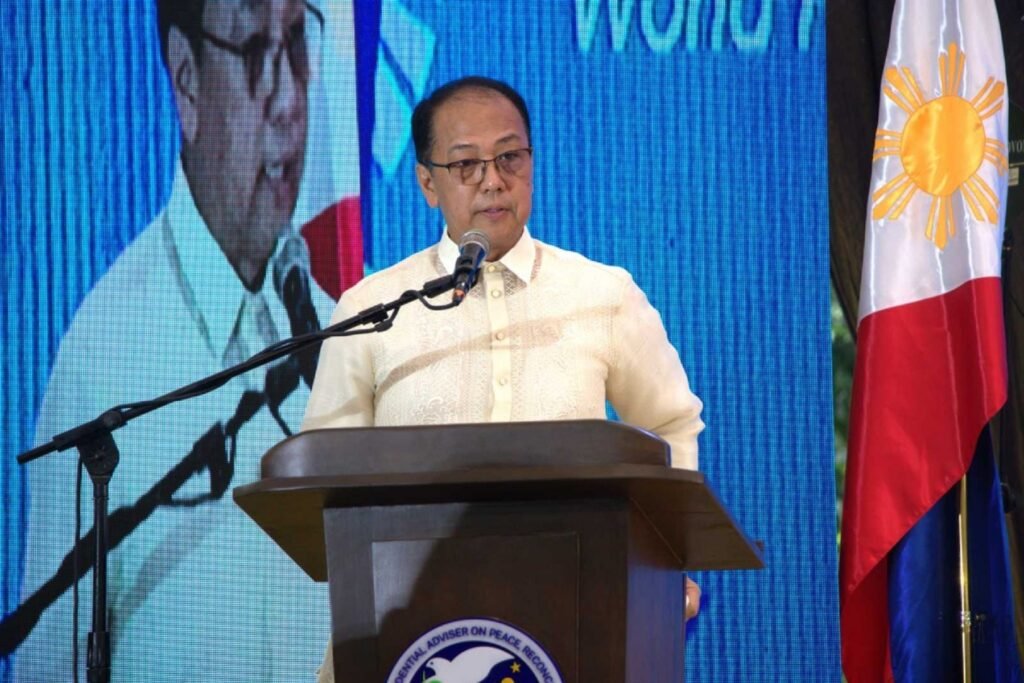
CAGAYAN DE ORO CITY (March 3 — Peace talks will not hold — and communities will not fully heal — if women remain on the sidelines.
That was the pointed message of Carlito Galvez Jr., chief of the Office of the Presidential Adviser on Peace, Reconciliation and Unity (OPAPRU), as the country marked National Women’s Month.
“We strongly believe that the key to strengthening, protecting and moving our peace processes forward is through ensuring the participation and leadership of women across various peace agendas,” Galvez said in a video message.
Beyond Token Seats
For years, women in conflict-affected areas — especially in Mindanao — have acted as informal negotiators, community organizers, and frontline peace advocates. Yet formal peace tables and decision-making bodies remain largely male-dominated.
Galvez stressed that giving women “a seat at the peace table” is not about optics — it is about durability. Studies worldwide show that peace agreements are more likely to last when women are directly involved in negotiations and implementation.
Under this year’s theme, “WE for Gender Equality & Inclusive Society,” OPAPRU says it is pushing to embed gender equality across all aspects of the country’s comprehensive peace process — from talks with armed groups to normalization programs in former conflict zones.
Global Stage, Local Stakes
The Philippines is set to participate in the 70th session of the United Nations Commission on the Status of Women this March, which Galvez described as a “golden opportunity” to showcase the country’s work in women-led mediation and peacebuilding.
The country also continues to hold leadership roles in the ASEAN Women, Peace and Security agenda, positioning itself as a regional advocate for inclusive peace frameworks.
But for many grassroots advocates, the real measure of success will not be speeches abroad — it will be how many women are empowered locally to influence policy, manage reintegration programs, and shape development plans in conflict-hit communities.
A Call to Reflect — and Act
As National Women’s Month unfolds, Galvez urged Filipinos to go beyond celebration and confront the persistent challenges women face — from economic exclusion to vulnerability in times of conflict.
“Women empowerment and gender equality remain on top of the country’s policy agenda,” he said.
For communities rebuilding after decades of armed struggle, the message is stark: peace agreements may be signed on paper — but they endure only when women help write, enforce, and protect them.