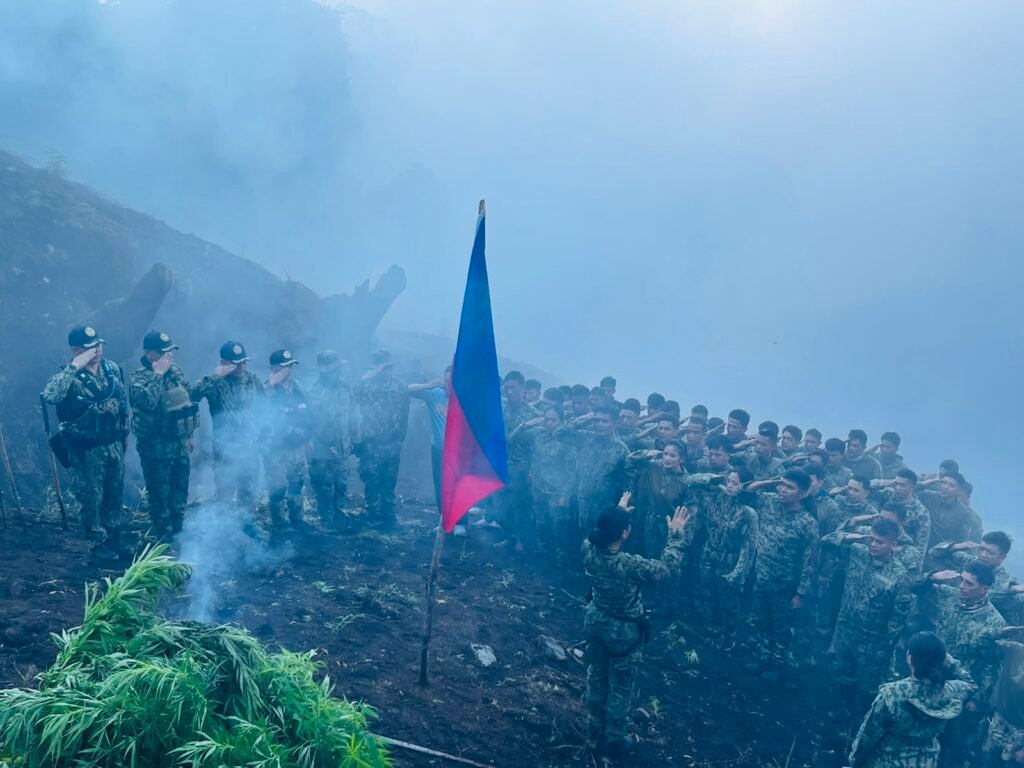
BAGUIO CITY, Philippines (May 19) — Thick smoke drifted across the mountains of Tinglayan as anti-drug operatives burned what authorities described as one of the largest marijuana plantations discovered in the Cordillera this year.
But beyond the ₱228 million worth of marijuana plants destroyed during the two-day operation on Mt. Chumanchil lies a deeper and more complicated reality quietly rooted in parts of the Cordillera hinterlands where some elderly residents have long regarded marijuana not as an illegal narcotic, but as traditional medicine.
The Police Regional Office–Cordillera Administrative Region (PRO-CAR) said operatives destroyed around 1.14 million fully grown marijuana plants spread across nearly 9.5 hectares in Barangay Loccong, Tinglayan, Kalinga during operations conducted from May 17 to 18. Authorities identified the area as among the long-standing marijuana cultivation “heartlands” in the province.
Mt. Chumanchil lies within the mountainous municipality of Tinglayan, home largely to the indigenous Butbut tribe, one of the major subgroups of the Kalinga ethnolinguistic people known for their rice terraces, mountain farming traditions, and deeply rooted tribal culture.
Authorities and local residents alike acknowledged that marijuana has thrived in the Cordillera mountains for decades because of the region’s cold climate, fertile mountain soil, thick forest cover, abundant rainfall, and difficult terrain conditions ideal for marijuana cultivation while also making plantation sites difficult for authorities to detect and access.
Law enforcement agencies have identified portions of Kalinga, Benguet, and Mountain Province as marijuana-growing areas since at least the 1970s and 1980s, though some local oral histories suggest small-scale cultivation existed even earlier in remote upland communities.
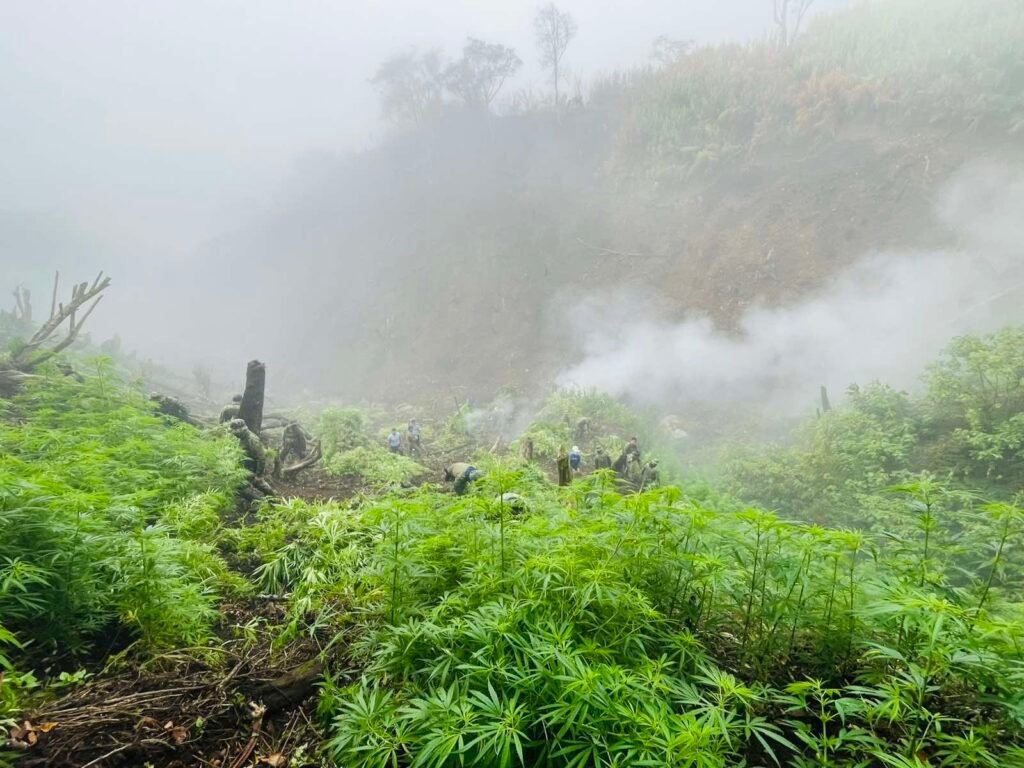
The steep terrain and isolated mountain trails also make law enforcement operations physically difficult, often requiring hours or days of trekking before authorities can reach plantation sites hidden deep in the hinterlands.-Photo-PRO CAR