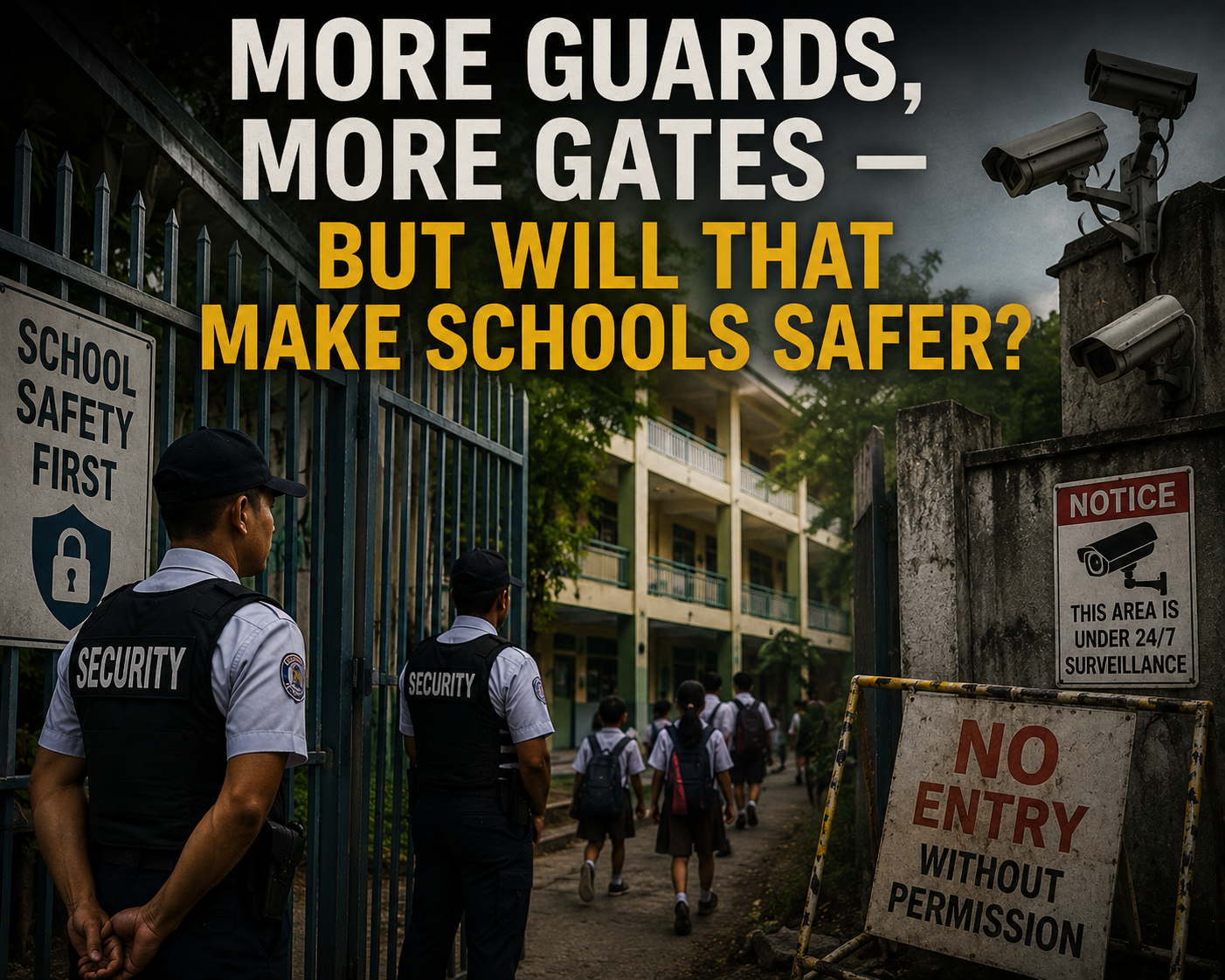
DAVAO CITY(June 26) — In the wake of recent school violence involving minors, Davao City officials are pushing for tighter security in public schools, including a proposal urging the Department of Education (DepEd) to fund the mandatory hiring of security guards nationwide.
The call comes after the fatal school shooting in Tacloban City that claimed the lives of three students and renewed public fears about safety in schools.
“We should prioritize school security above all,” Councilor Luna Acosta told fellow lawmakers, arguing that public schools have long struggled to maintain adequate security because of limited budgets.
The proposal has gained support from other city council members, who have called for increased police visibility around schools, stricter campus access controls, improved lighting and safe walkways, and stronger emergency response systems.
Parents largely welcome the measures.
At several public schools across Davao City, parents expressed relief over stricter bag inspections, tighter visitor screening, and restrictions on campus access. Security guards say inspections are now conducted daily, while visitors are required to present identification and explain the purpose of their visit.
For many families, the heightened security provides reassurance.
But while metal gates, guards, and bag checks may help prevent weapons from entering school grounds, some educators and child advocates warn that physical security alone cannot address the root causes of violence involving children.
The recent Tacloban tragedy revealed troubling allegations that one of the minor suspects had experienced bullying. Days later, authorities intercepted another alleged school attack threat involving a 14-year-old student in Leyte who was reportedly dealing with personal and family problems.
These incidents have prompted difficult questions.
If violence involving children is often linked to bullying, emotional distress, family challenges, social isolation, or unresolved trauma, can schools truly become safer through security measures alone?
Several Davao councilors acknowledged that concern during discussions at the city council.
Councilor Danilo Dayanghirang emphasized the need to strengthen school counseling services, noting that many students remain vulnerable both mentally and emotionally. He proposed increasing support for counseling programs and integrating mental health interventions into the city’s education agenda.
Councilor Enzo Villafuerte likewise urged stronger anti-bullying programs and reporting mechanisms in schools, recognizing that prevention must begin long before a child reaches a crisis point.
Their proposals reflect a growing understanding that school safety is not merely a law enforcement issue but also a child protection concern.
Child rights advocates have long argued that schools should be equipped not only to detect weapons but also to identify warning signs of distress among learners. These include persistent bullying, behavioral changes, social withdrawal, threats of violence, self-harm, and other indicators that a child may need support.
Many public schools, however, continue to face shortages of guidance counselors and mental health professionals despite increasing concerns about the wellbeing of young people.
The challenge is particularly significant in large public schools where a handful of guidance personnel may be responsible for thousands of students.
For parents, the immediate priority remains keeping children safe from harm.
Yet experts caution that creating safer schools requires a balance between security and support. Excessive focus on policing schools can unintentionally create an atmosphere of fear, while neglecting the emotional and social needs of learners.
The goal, they argue, is not simply to build stronger barriers around schools but to build stronger systems around children.
As Davao City considers new policies and ordinances on school safety, the emerging consensus is that effective prevention will require a whole-of-community approach involving schools, families, health professionals, social workers, local governments, and law enforcement agencies.
The recent tragedies have made one thing clear: children deserve protection from violence.
The challenge now is ensuring that protection extends beyond gates, guards, and inspections—and reaches the underlying problems that place young people at risk in the first place.