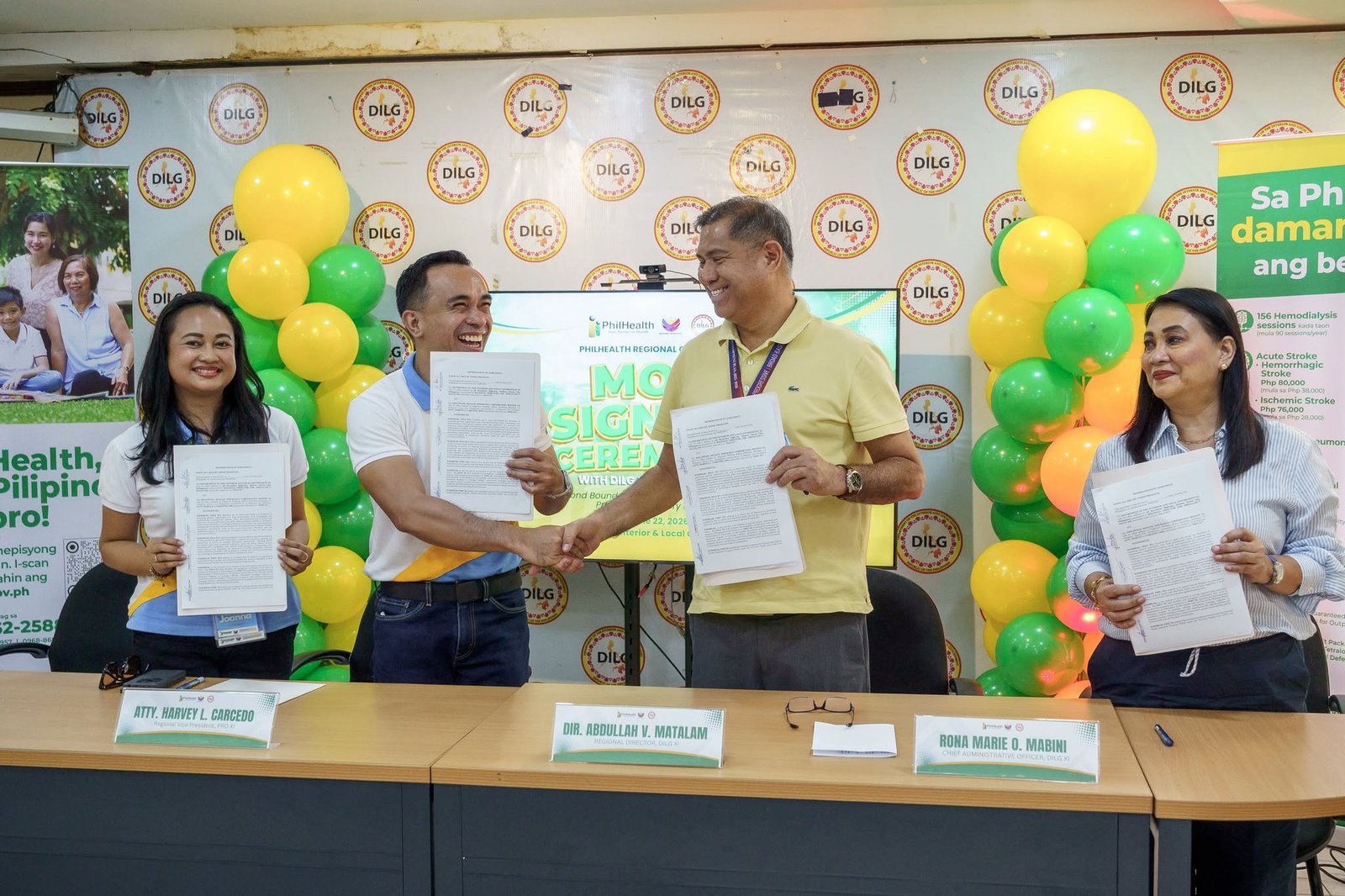
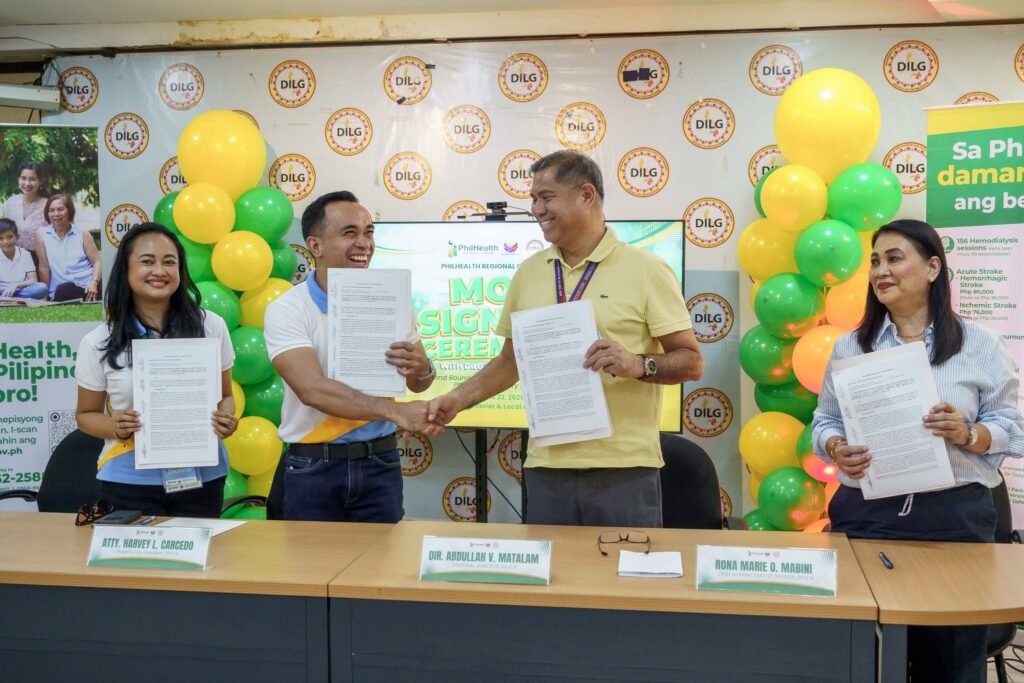
DAVAO CITY (June 23) — The regional offices of Philippine Health Insurance Corporation (PhilHealth) and the Department of the Interior and Local Government (DILG) formalized a partnership on Monday aimed at accelerating the implementation of Universal Health Care (UHC) across the Davao Region.
The memorandum of agreement (MOA) seeks to bring healthcare services closer to communities by leveraging the grassroots reach of local government units and barangay officials, ensuring that more residents are informed, enrolled, and able to access health services through PhilHealth.
PhilHealth-Davao Regional Vice President Harvey Carcedo emphasized that many families continue to delay medical consultations due to financial concerns, while some remote communities still face barriers in accessing healthcare services.
“There are still families who postpone consultations because they worry about costs. There are still communities waiting for services to reach them. That is why this partnership is vital,” Carcedo said.
Bringing Health Services Closer to Communities
The agreement recognizes that Universal Health Care can only succeed if services are accessible at the community level, particularly in barangays where residents often seek their first point of medical assistance.
Through the collaboration, PhilHealth and DILG aim to strengthen local health systems and improve awareness of available benefits under the national health insurance program.
Carcedo noted that barangay leaders play a crucial role as the first point of contact between government and communities.
“We are bringing government closer to the people—closer to the barangay captains who serve as the first point of contact in the communities,” he said.
Five Key Areas of Collaboration
The partnership will focus on five strategic pillars:
- Advocacy and information dissemination on PhilHealth programs and benefits;
- Enrollment through the YAKAP (Yaman ng Kalusugan Program) to expand coverage;
- Empowerment and capacity building of local health advocates and knowledge officers;
- Improved access to primary healthcare services at the community level; and
- Data collection and monitoring to support evidence-based health planning.