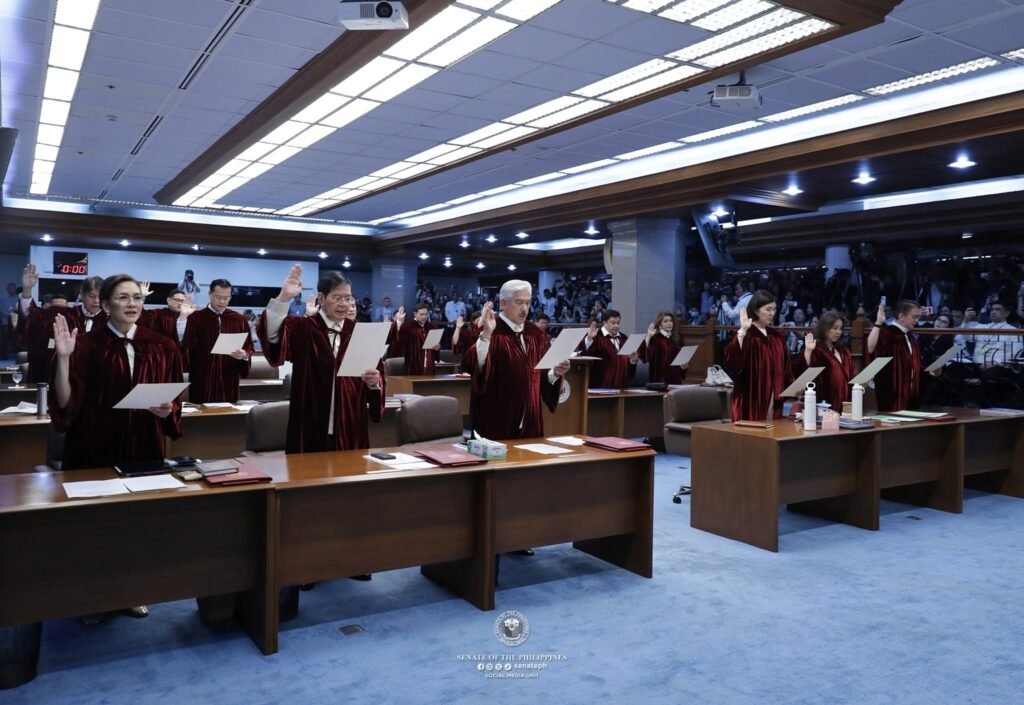
MANILA(July 1) — The impeachment trial of Vice President Sara Duterte is set to move at a faster pace than expected, with the Senate impeachment court approving a 92-day trial schedule beginning July 6.
The timeline, contained in a 14-page Pre-Trial Order signed by Senate President Sherwin Gatchalian on June 29, cuts the proceedings well below earlier estimates that the trial could last seven to eight months.
The court has allotted 62 trial days for the House prosecution panel and 30 days for Duterte’s defense. Hearings will initially be held three days a week before shifting to a revised schedule after President Ferdinand Marcos Jr.’s State of the Nation Address on July 27.
At the heart of the proceedings are four major allegations against the Vice President: her controversial remarks about an alleged assassination plot, the alleged misuse of confidential funds, alleged irregularities during her tenure at the Department of Education, and questions surrounding unexplained wealth.
The confidential funds issue is expected to take up the biggest share of the trial, with 31 hearing days set aside, while the alleged assassination threat will occupy 11 days. Eight days have been allotted for the DepEd-related allegations and 12 days for the unexplained wealth issue.
The prosecution plans to present 57 witnesses, while the defense has lined up 45. Under the Senate’s “One-Day Examination Rule,” each witness must complete testimony and cross-examination on the same day unless the court grants additional time.
As preparations enter the final stretch, House prosecutors are urging senators to allow the trial to proceed instead of dismissing the case before evidence is heard.
House trial spokesperson and Lanao del Sur Rep. Zia Alonto Adiong said the Constitution requires the Senate to hear and decide the case through a full trial, stressing that Filipinos deserve to see the evidence presented in open proceedings.
He also dismissed Duterte’s legal response as largely repeating procedural arguments instead of directly addressing the accusations. Among the Vice President’s defenses are claims that her controversial public remarks were protected speech, that bank secrecy laws shield financial records, and that the impeachment complaint lacks sufficient evidence.
Adiong argued that political opinion and threats should not be treated as the same, adding that the impeachment process exists to determine the facts through witness testimony and documentary evidence.
Under the Constitution, conviction on any one of the Articles of Impeachment would be enough to remove the Vice President from office.
With the trial now days away, the proceedings are expected to become one of the country’s most closely watched political events, testing both the Senate’s role as an impeachment court and the strength of the evidence presented by both sides.