BAROBO, Surigao del Sur (February 11) — National and local authorities are intensifying efforts against illegal mining in Surigao del Sur, highlighting the urgent link between environmental protection, climate resilience, and community safety.
Unregulated extraction continues to degrade ecosystems, increase disaster risks, and threaten livelihoods across Caraga.
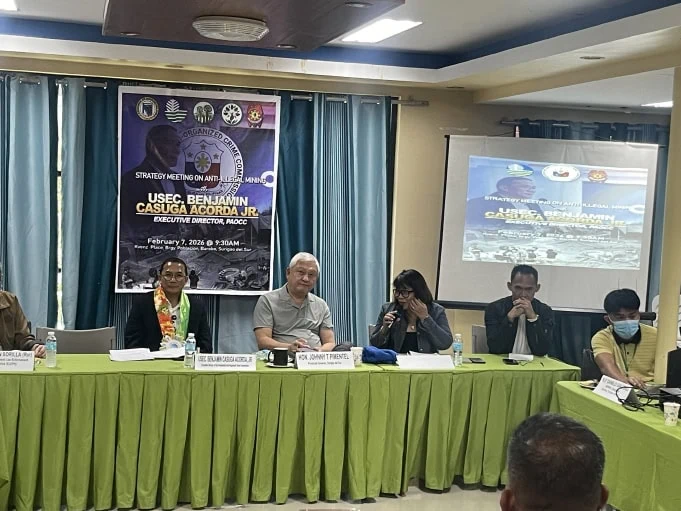
Presidential Anti-Organized Crime Commission (PAOCC) Executive Director Benjamin Casuga Acorda Jr. led a high-level strategy meeting on February 7 in Barobo, bringing together law enforcement, environmental regulators, and local officials to coordinate actions against unauthorized small-scale mining.
Mining, Communities, and Climate Vulnerability
Officials emphasized that illegal mining is more than an economic or regulatory concern. Poorly managed operations exacerbate soil erosion, river siltation, and flooding, particularly during heavy rains — hazards worsened by climate change.
Landslides in mining-affected areas have already endangered communities, underscoring the need for preventive action.
Technical briefings from the Department of Environment and Natural Resources (DENR)-Caraga and the Mines and Geosciences Bureau (MGB) outlined the ecological and regulatory challenges posed by unregulated mining, while Barobo local officials presented the municipality’s historical and ongoing struggles in balancing livelihoods with environmental protection.
“We are very eager to look at this at the national level so we can figure out what the real problems are,” Acorda said. “Understanding the local context is key to crafting interventions that protect both communities and ecosystems.”
Strengthening Collective Action and Accountability
Acorda underscored that protecting natural resources and mitigating climate-related risks requires collaboration. He shared direct PAOCC hotline numbers — 0917-130-0792 and 0917-102-9906 — encouraging the public to report illegal mining activities.
“Para sa ikauunlad ng ating bayan, pagkakaisa ang kailangan,” he said, emphasizing collective action to safeguard communities from environmental hazards.
Governor Johnny T. Pimentel welcomed the PAOCC chief’s visit, noting that illegal mining has long threatened both the environment and the safety of Surigao Sur residents.
“Matagal na po naming problema ito, pero ngayon malinaw na at nakuha na natin ang commitment ng national government at ng kapulisan,” Pimentel said. He added that the provincial government is preparing an executive order to define agency roles and operationalize coordinated enforcement plans.
Protecting Lives, Livelihoods, and the Environment
Authorities highlighted that tackling illegal mining also strengthens climate resilience. By rehabilitating degraded land, protecting watersheds, and enforcing safe mining practices, communities become less vulnerable to flooding, landslides, and other climate-driven hazards.
Environmental advocates stress that safeguarding ecosystems is inseparable from social justice: residents near mining areas often bear the heaviest environmental and health burdens while benefiting the least from extraction profits.
Coordinated enforcement, officials say, is critical to reversing this imbalance, protecting lives, and promoting sustainable development.
As national and local agencies close ranks, the renewed crackdown signals a holistic approach — addressing illegal mining while reinforcing environmental stewardship, disaster preparedness, and long-term resilience for communities across Surigao del Sur.