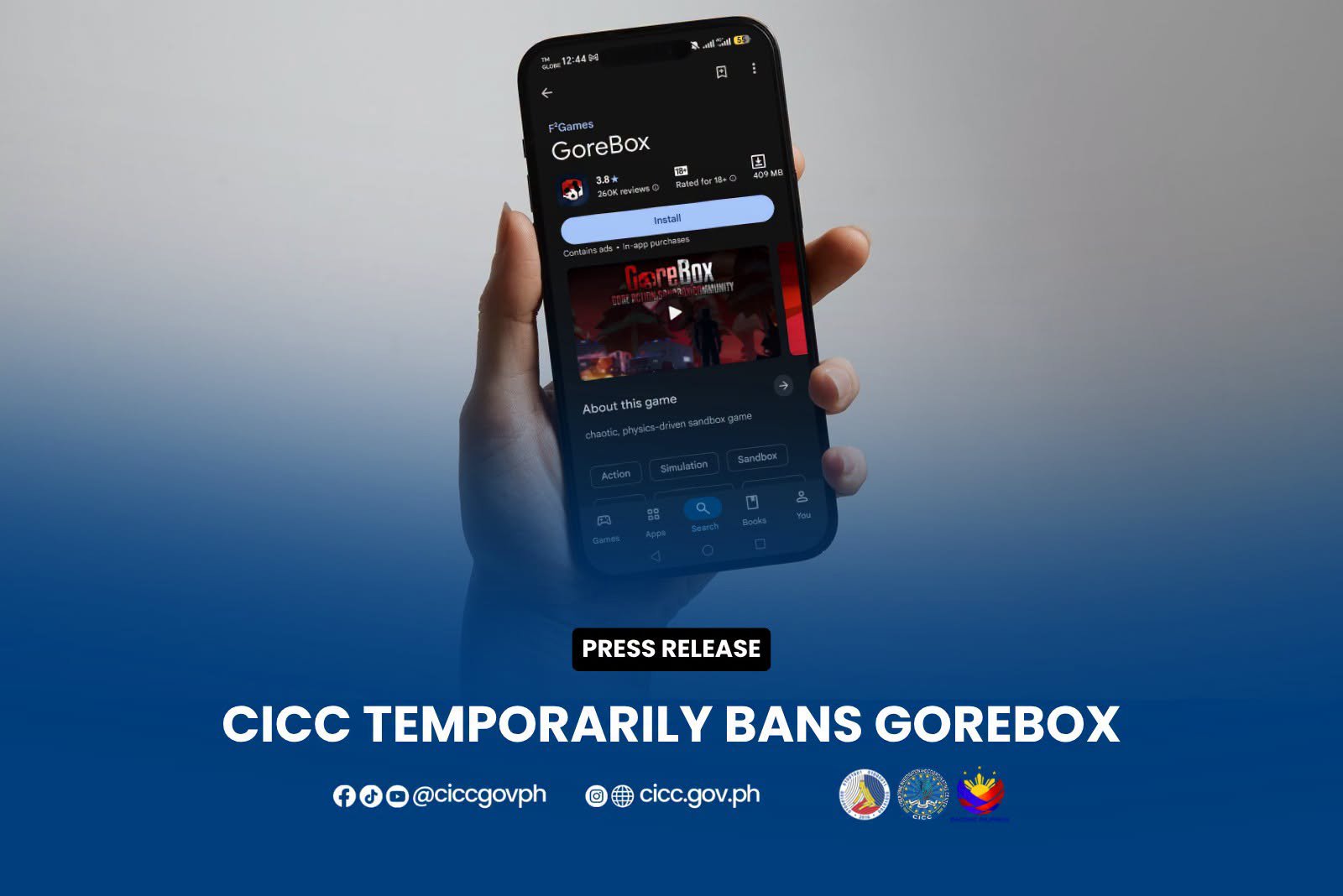
CAGAYAN DE ORO CITY (June 24) — The decision of the Cybercrime Investigation and Coordinating Center (CICC) to temporarily block the video game GoreBox following the deadly school shooting in Tacloban City reflects growing public concern over the possible influence of violent online content on children and adolescents. At the same time, the move raises important questions about evidence-based policymaking, digital regulation, and the deeper drivers of youth violence.
What Happened?
Following the June 22 attack at San Jose National High School that left three students dead and 20 others injured, authorities reported that one of the Grade 9 students involved was a frequent player of GoreBox, a sandbox game that allows users to simulate destruction using weapons and physics-based interactions.
As a precautionary measure, the CICC ordered a temporary block on access to the game while investigators determine whether it had any relevance to the incident. Officials emphasized that the measure is preventive and that no conclusion has been reached regarding the game’s role, if any, in the attack.
Correlation Is Not Causation
The discovery that a suspect played a violent video game does not, by itself, establish a causal relationship between gaming and real-world violence. Millions of young people around the world consume violent media—including video games, films, and online content—without engaging in criminal or violent behavior.
Research over the past two decades has generally found limited evidence that violent games directly cause serious acts of violence such as school shootings. While exposure to violent content may contribute to short-term aggressive thoughts or emotions in some individuals, experts consistently point to a far more complex mix of risk factors, including:
• Mental health challenges and untreated psychological distress;
• Family conflict, neglect, or abuse;
• Exposure to violence and trauma;
• Bullying, social exclusion, or peer victimization;
• Easy access to weapons;
• Poor emotional regulation and coping skills; and
• Harmful online communities that normalize violence or reinforce extremist beliefs.
Understanding what happened in Tacloban therefore requires examining the full context of the young person’s life rather than focusing on a single aspect of media consumption.
A Child Protection Perspective
The tragedy nevertheless highlights legitimate concerns about children’s exposure to violent digital environments. Many online games and platforms contain graphic imagery, user-generated content, and social interactions that may not be suitable for younger users.
The CICC’s expanded monitoring efforts, undertaken in coordination with the Council for the Welfare of Children, reflect increasing recognition that online spaces can present risks alongside opportunities for young people.
However, meaningful child online protection requires more than platform restrictions. Effective responses typically combine:
• Age-appropriate content safeguards;
• Strong parental guidance and supervision;
• Digital literacy and critical thinking education;
• Accessible mental health and psychosocial support services;
• Early identification and intervention for at-risk children; and
• Responsible moderation by digital platforms.