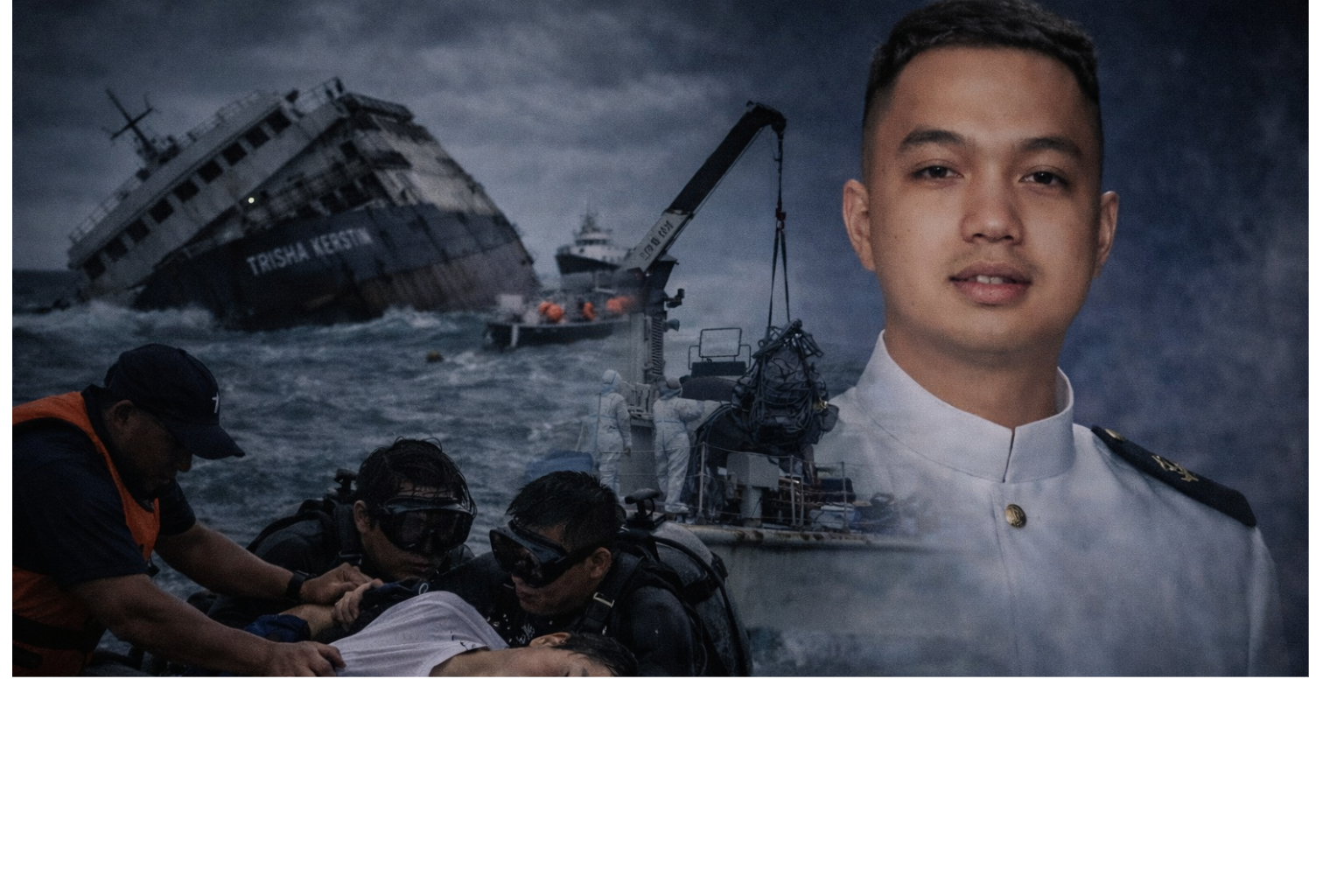
DAVAO CITY (February 16) —At 12:56 a.m., on January 26, as darkness swallowed the sea near the Baluk-baluk Islands, a 22-year-old cadet sent a message that would soon haunt a nation:
“Me tagilid among barko. Tabangggg.” (Our ship is tilting. Help.)
Minutes later, the M/V Trisha Kerstin began to sink.
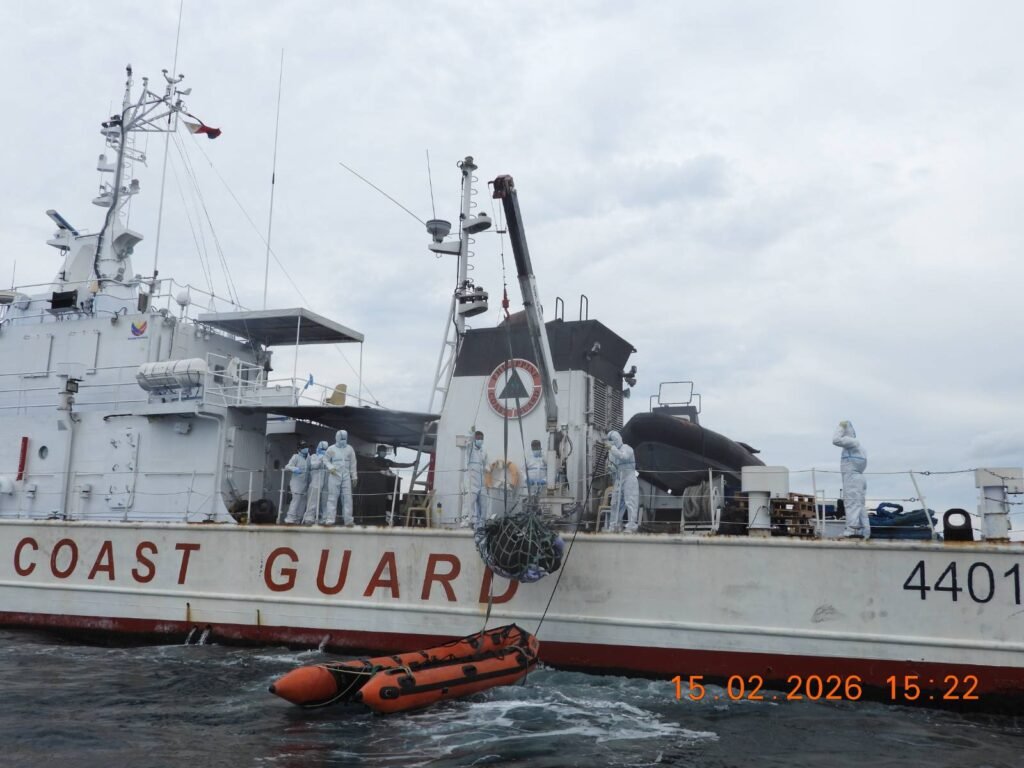
Twenty days after that desperate plea, search teams recovered and formally identified the body of Cadet Kyle Dave Punsalang. His family confirmed the identification on February 15, ending weeks of agonizing uncertainty.
But closure has not brought peace. Because this was not just a maritime accident. It was a catastrophe that left 57 people dead and 316 survivors pulled from the sea and it has ignited urgent questions about the state of the Philippine shipping industry.
The Night the Ship Listed
According to initial accounts from survivors, the vessel began to tilt shortly before midnight. Some described a sudden, violent listing. Others said the lean grew gradually before panic erupted onboard.
What remains unclear:
- Was the vessel overloaded?
- Was cargo properly secured?
- Did mechanical failure occur?
- Were weather advisories ignored?
- Was distress communication immediately activated?
Maritime experts say sudden listing often points to stability issues — a shift in cargo weight, water ingress, structural weakness, or ballast mismanagement.
Each scenario carries a different implication. Each demands accountability.
A Pattern in Philippine Waters?
The Philippines, an archipelago of more than 7,000 islands, relies heavily on inter-island shipping. Thousands of vessels operate daily, transporting passengers and cargo across unpredictable waters.
Yet maritime disasters are not rare.
Industry analysts point to recurring concerns:
- Aging fleets still in operation
- Inconsistent safety inspections
- Weak enforcement of loading limits
- Gaps in crew training standards
- Delayed emergency response protocols
The sinking of M/V Trisha Kerstin now joins a long list of tragedies that often lead to public outrage, followed by investigations, recommendations, and eventually, silence.
Families of the victims fear history repeating itself.
Among the 316 survivors, several described confusion as the vessel leaned dangerously. Life jackets were reportedly distributed amid panic. Some passengers jumped before orders were given.
The difference between survival and death came down to seconds. Some were rescued quickly. Others were trapped below deck. Some never surfaced.
For 20 days, divers and search teams combed the waters. One by one, bodies were recovered.
For the Punsalang family, hope faded slowly, replaced by the unbearable wait for confirmation.
The Human Cost Behind the Numbers
Cadet Kyle Punsalang was beginning his maritime career, a young man who chose the sea as his future. His body was retrived on Sunday and was marked Cadaver #56 but latyer his parents identified their son,
His final message was not dramatic. It was instinctive. It was a son reaching for home. His words went viral not because they were poetic, but because they were real.
And behind every number 57 dead is a story like his.
A family that will forever measure time by a text message sent at 12:56 a.m on January 26.