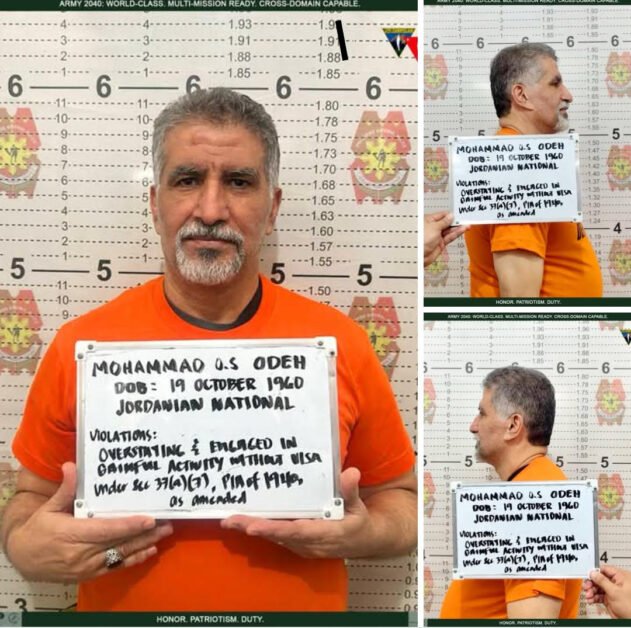
ZAMBOANGA CITY(March 3) — A 65-year-old Jordanian national tagged as a person of interest in connection with suspects in the December 2025 terror attack near Bondi Beach was arrested Monday in Pagadian City — not on terrorism charges, but for immigration violations.
Authorities identified the foreign national only as alias “Odeh,” who was apprehended at his business establishment during a joint operation led by the 1st Infantry Division (1ID) of the Philippine Army.
According to 1ID, Odeh was arrested for violating the Philippine Immigration Act of 1940 — specifically for overstaying and engaging in business without the proper visa or permit.
Triggered by International Security Information
The operation followed a security review by the 1ID and Joint Task Force-Zampelan after partner security channels flagged that Odeh’s Philippine-based business had alleged links to suspects in the Dec. 14, 2025 attack during the Jewish community’s “Chanukah by the Sea” celebration near Bondi Beach.
Australian authorities classified the incident as an antisemitic terrorist attack that left multiple casualties and injuries.
Philippine security agencies subsequently designated Odeh as a person of interest, prompting inter-agency coordination and scrutiny of his immigration status.
Expired Visa, Years of Travel
Records show Odeh secured a temporary residence visa in 2023, which expired in March 2025. Authorities said he frequently traveled between 2014 and 2025 to Jordan, Saudi Arabia, Australia, Indonesia, the United Arab Emirates, Qatar, and Malaysia.
As of initial investigation, officials stressed that no direct involvement in the Sydney attack has been established.
Still, the case has raised pointed questions about immigration monitoring and post-visa compliance.
If Odeh’s visa expired months ago, how long was he operating a business undetected? Were regular compliance checks conducted?
And how closely are foreign nationals with international travel histories screened once they establish commercial operations locally?
Immigration Violation — or Wider Probe?
For now, the arrest rests solely on immigration grounds. But authorities say coordination with national and international partners will continue to assess broader security implications.
The case underscores a delicate balancing act for Philippine authorities: enforcing immigration laws without prematurely attributing criminal liability — while ensuring that potential security risks are not overlooked.
In a region long sensitive to cross-border threats, Monday’s arrest is both a procedural enforcement action and a reminder that global security concerns can surface in the most local of settings — even inside a neighborhood business in Pagadian City.