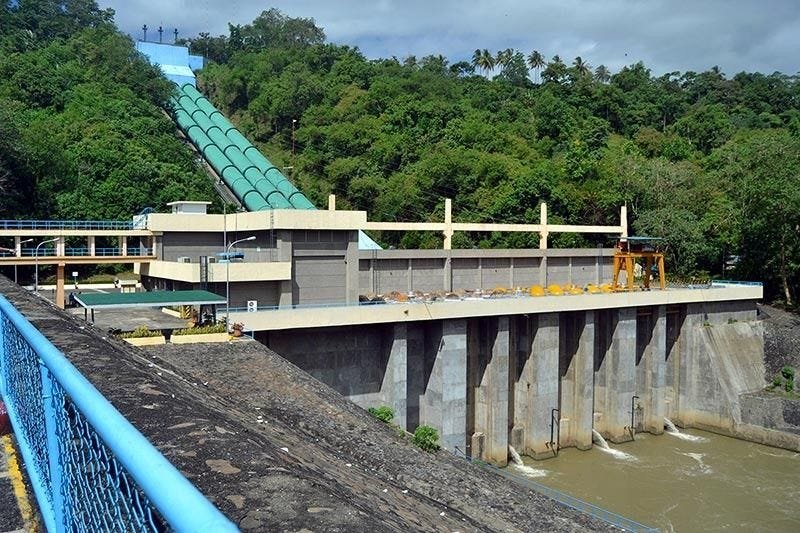
DAVAO CITY (March 24) — As the government weighs a multibillion-peso proposal to rehabilitate the Agus-Pulangi Hydroelectric Complex (APHC), consumer groups in Mindanao are raising a pointed question: will the long-delayed fix to the region’s most important renewable energy asset come at the public’s expense—again?
At a recent stakeholder consultation, advocates warned that the current direction—opening the state-owned complex to private takeover—risks repeating a familiar pattern under the country’s deregulated power regime: privatized profits, socialized costs.
“Power rates will definitely increase sharply,” said Dr. Melchie Ambalong of the Mindanao Power Consumers Federation, citing past experiences where privatized generation assets led to higher electricity prices passed directly to consumers.
The warning is not speculative. Since the passage of the Electric Power Industry Reform Act (EPIRA) in 2001, government power assets have steadily been transferred to private firms, with generation costs rising alongside exposure to market-driven pricing.
While EPIRA promised efficiency and lower rates, consumer groups argue that, in practice, it has weakened state control over pricing and reduced public safeguards.
Two decades on, the Agus-Pulangi complex—one of the few remaining major government-owned hydropower assets—has become a test case of whether those reforms will be revisited or reinforced.
A consortium led by San Miguel Global Power Holdings and Sta. Clara International Corporation has offered to spend nearly ₱70 billion to rehabilitate and operate the facility through a joint venture. The proposal is framed as a solution to years of government inaction: the complex now runs at only about 60 percent of its capacity due to aging infrastructure.
But critics say the real issue is not just rehabilitation—it is accountability for why the facility was allowed to deteriorate in the first place.
“For decades, the government failed to invest in maintaining this asset, despite it generating billions annually,” one stakeholder noted during the consultation. “Now the solution is to hand it over to private corporations—and let consumers pay for the rehabilitation through higher rates.”
The APHC currently provides some of the cheapest electricity in Mindanao—around ₱3 per kilowatt-hour—serving as a crucial counterweight to the island’s heavy dependence on fossil fuels. Coal and oil still make up about 70 percent of the energy mix, leaving consumers vulnerable to global price shocks.
Losing that low-cost buffer, even gradually, could have cascading effects on household expenses, business costs, and regional competitiveness.
Consumer advocate BenCyrus Ellorin stressed that the issue goes beyond economics. “This is a public asset built to ensure affordable and secure power for Mindanao. The people who depend on it should have a decisive voice in its future,” he said.
Yet decisions appear to be moving faster than reforms meant to guide them.
Despite repeated calls to review EPIRA—including from President Ferdinand Marcos Jr. in his 2024 State of the Nation Address—no significant amendments have been passed. This leaves policymakers navigating a legal framework that effectively mandates privatization, even as its outcomes remain contested.
The result is a policy contradiction: a government acknowledging the need to reassess deregulation, while simultaneously advancing projects that deepen it.
Historical precedent adds to the tension. In 2012, then-president Benigno Aquino III halted the planned sale of the Agus-Pulangi complex after strong public opposition, recognizing its strategic role in keeping electricity affordable in Mindanao.
Today, that same question has resurfaced—only now with higher stakes.
With nearly ₱70 billion on the table, the proposed rehabilitation raises unresolved issues: Who determines electricity pricing under the joint venture? What guarantees exist to protect consumers from rate hikes? And why has no publicly detailed alternative—such as state-led rehabilitation—been seriously advanced?
For many stakeholders, the absence of clear answers is itself a warning sign.
As consultations continue, consumer groups and civil society organizations are pressing the government to make its assumptions—and commitments—transparent before moving forward.
Because for Mindanao’s electricity users, the concern is not just whether the lights stay on.